
Latest posts
-
AI Sperm Selection: Can It Assess DNA Integrity?
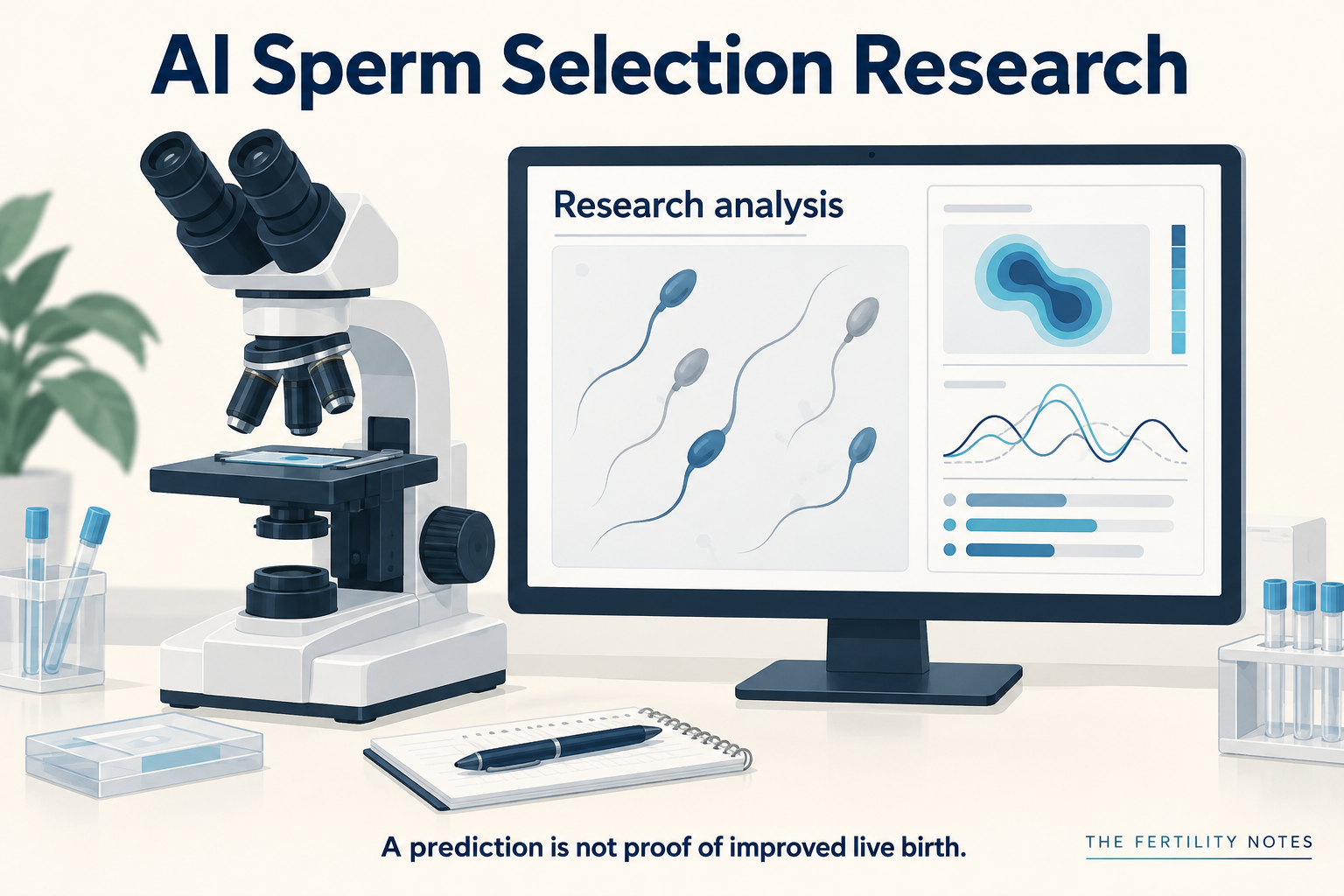
AI studies have predicted sperm DNA integrity from images and assisted laboratory assay scoring. These achievements are distinct from demonstrating improved pregnancy or live-birth outcomes.
-
Seminal Microbiome and Male Fertility: An Emerging Research Area
Human microbiome studies show associations that vary by species and population. Mouse research offers mechanistic clues, while clinical benefits from routine probiotic treatment remain uncertain.
-
Diet and Sperm DNA Fragmentation: Interpreting the Reported Links
A case-control study linked dietary patterns with high sperm DNA fragmentation. This article explains the odds ratios, clinical context and limits of observational evidence.
-
Sperm DNA Fragmentation: Lifestyle, Oxidative Stress and Fertility
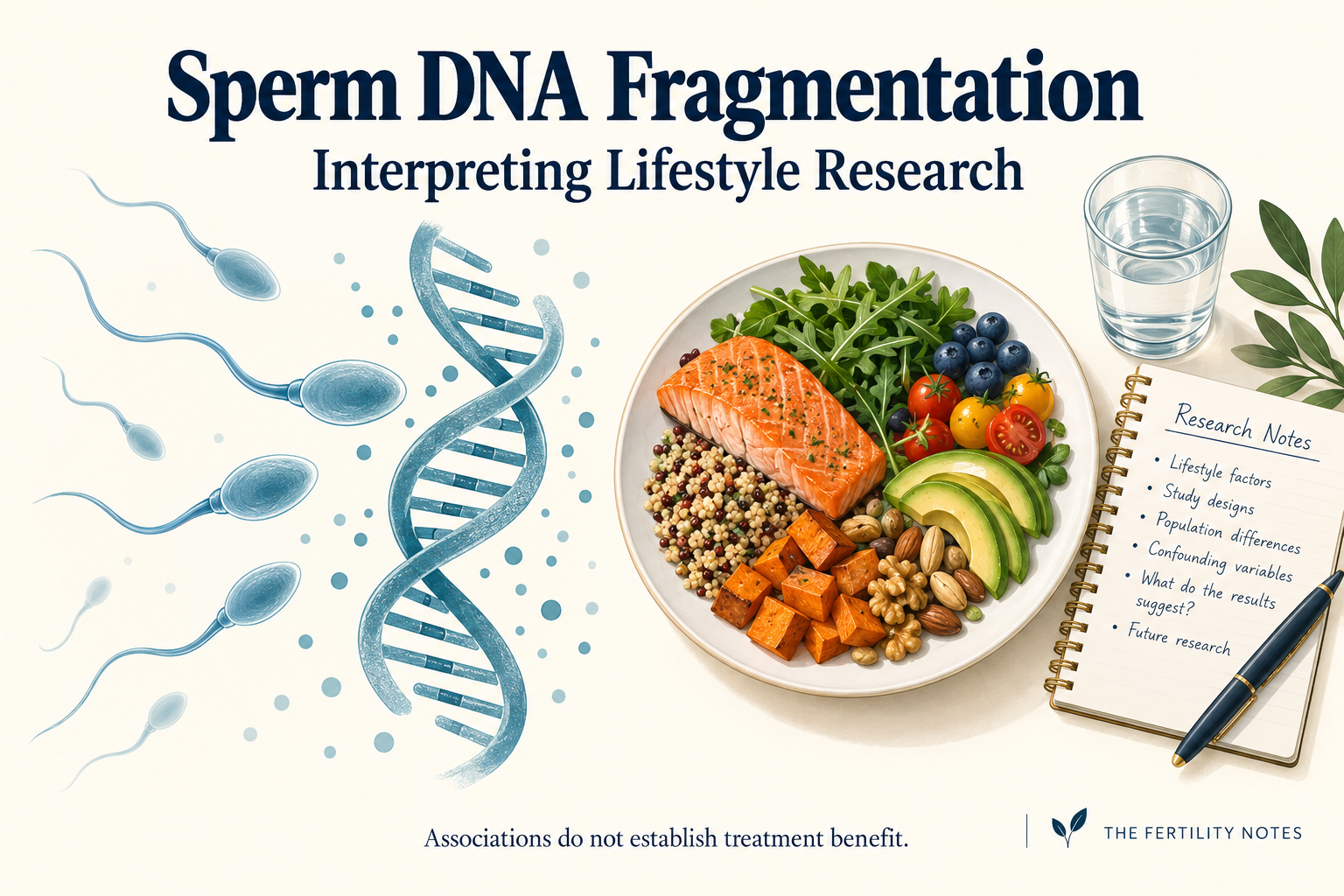
Sperm DNA fragmentation adds information in selected clinical settings. Diet associations and antioxidant evidence must be interpreted separately from proven pregnancy or live-birth benefits.
-
Paternal Health and Fertility: How Much Does Sperm Carry Forward?

Paternal health matters in fertility assessment, alongside the reproductive circumstances of both partners. Sperm DNA and epigenetic research raise questions about embryo development and offspring health. Associations and animal findings do not establish that one habit determines a future child’s health.
-
Male Fertility and Age: Sperm DNA Beyond the Semen Analysis
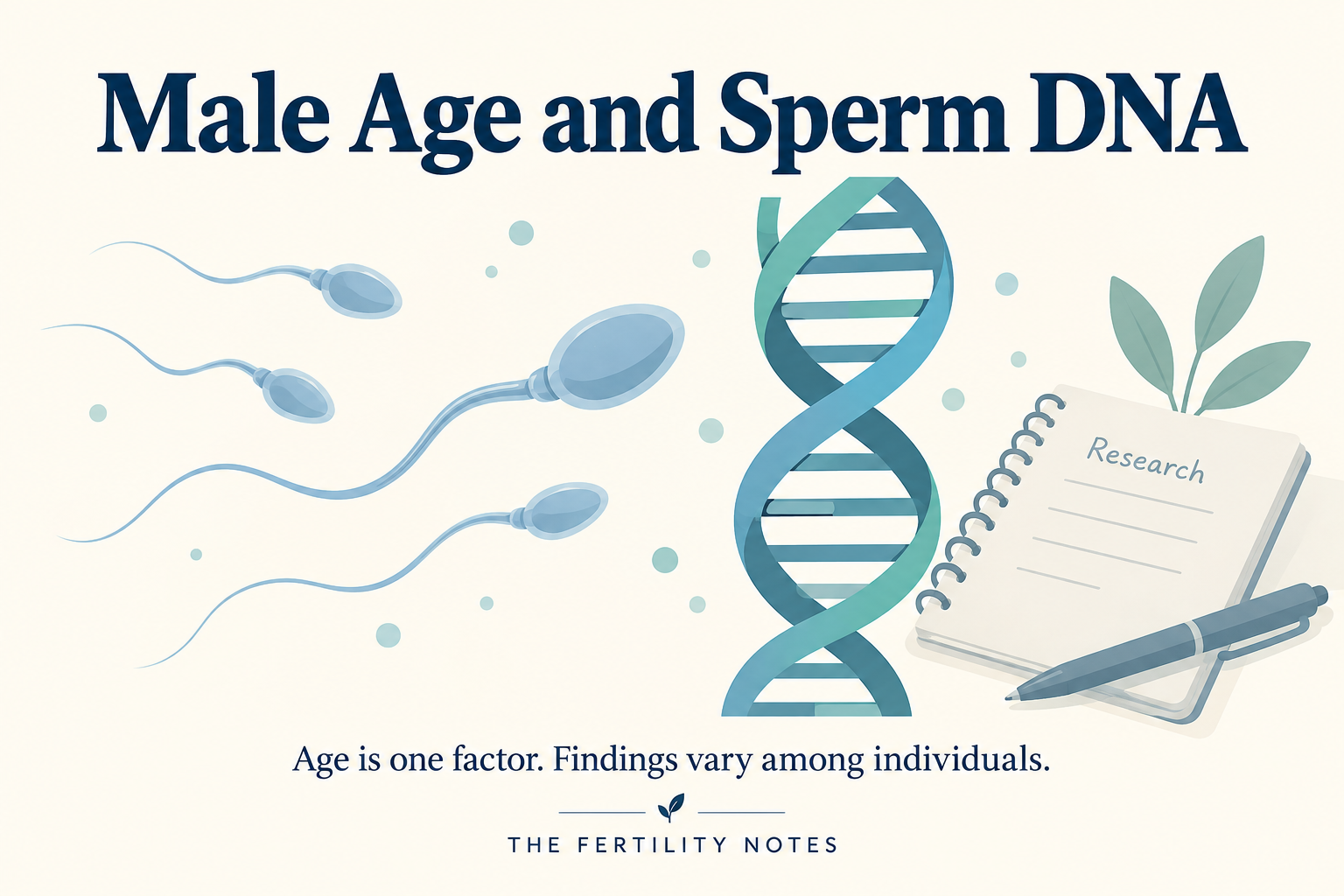
Paternal age is associated with changes in sperm DNA and reproductive outcomes, but no universal decade defines fertility. Clinical history and both partners’ circumstances remain essential.
-
Junk Food and Sperm Count: Is the Hamburger Really the Culprit?

Dietary patterns and sperm count have been associated in observational research, including a large study of young Danish men. Such findings cannot show that one hamburger damages fertility. The comparison, measured outcome and possible confounding deserve as much attention as the headline.
-
Smoking and Y-Chromosome Loss: What Blood Cells Can—and Cannot—Tell Us

Smoking has been associated with mosaic loss of the Y chromosome in blood cells. That finding is not equivalent to loss of the Y chromosome in sperm or proof of inherited damage. Smoking cessation remains valuable without stretching one genetic study beyond its design.
-
Non-Obstructive Azoospermia: Testosterone, hCG and Sperm Production
Testosterone, hCG and FSH have different roles in sperm production. The diagnosis matters, and evidence for routine hormone treatment before NOA sperm retrieval remains limited.
-
Undescended Testicles and Male Fertility: Sperm Count and Heat
Cryptorchidism can affect future sperm production. Treatment timing, semen studies and heat exposure answer different questions, and none alone predicts an individual’s fertility.