
Latest posts
-
Microplastics in Semen and Testes: A Discovery Is Not Yet a Diagnosis
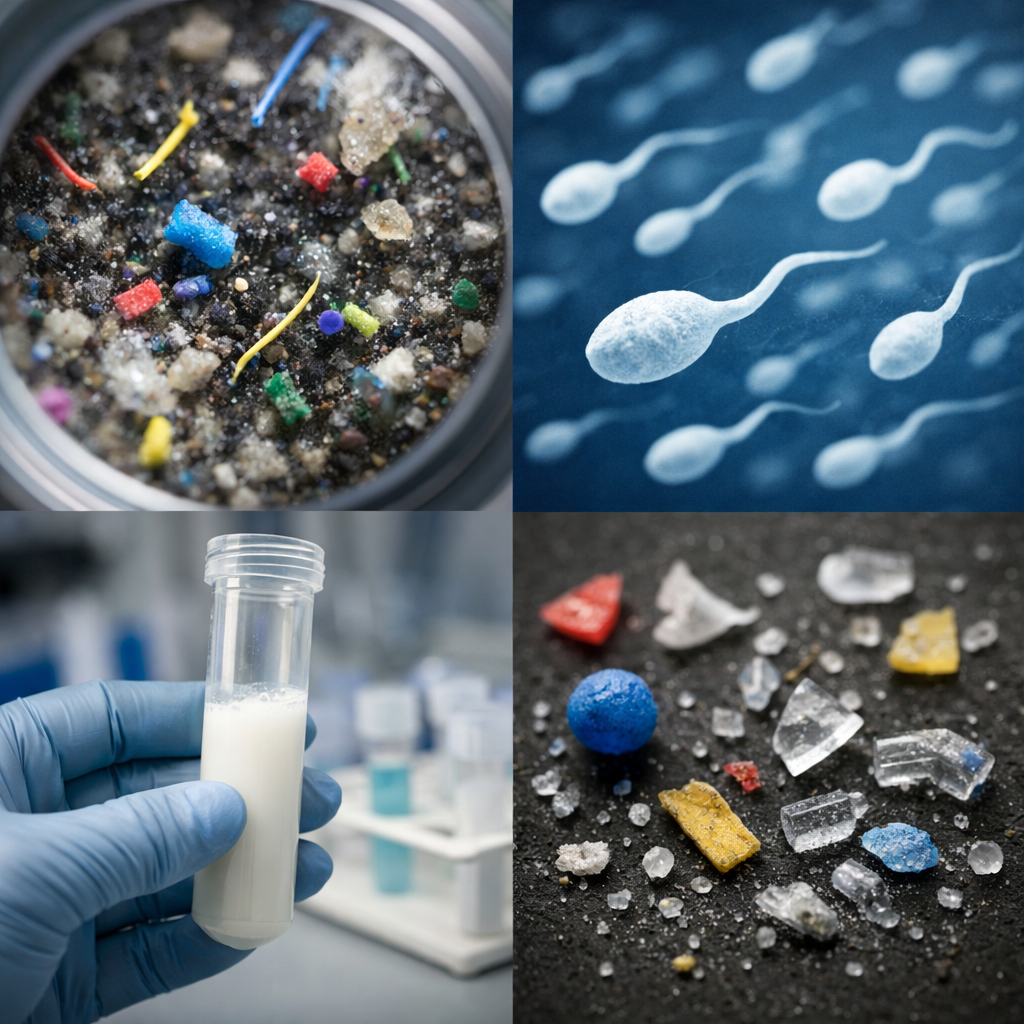
Microplastics in semen and testes have prompted urgent questions about male fertility. Detecting particles establishes exposure in the samples studied; it does not by itself prove reduced fertility or explain global sperm trends. Human observational findings, animal experiments and proposed mechanisms must be kept distinct.
-
Semen Quality and Lifespan: Can Sperm Offer a Clue to Long-Term Health?
Semen quality and lifespan were associated in a Danish cohort of 78,284 men assessed because of couple infertility. The study found differences in estimated life expectancy across sperm measures. It does not show that raising a sperm count extends life or turn a semen analysis into an individual survival forecast.
-
Sperm Abstinence Before Testing: Is Saving Up Really Better?
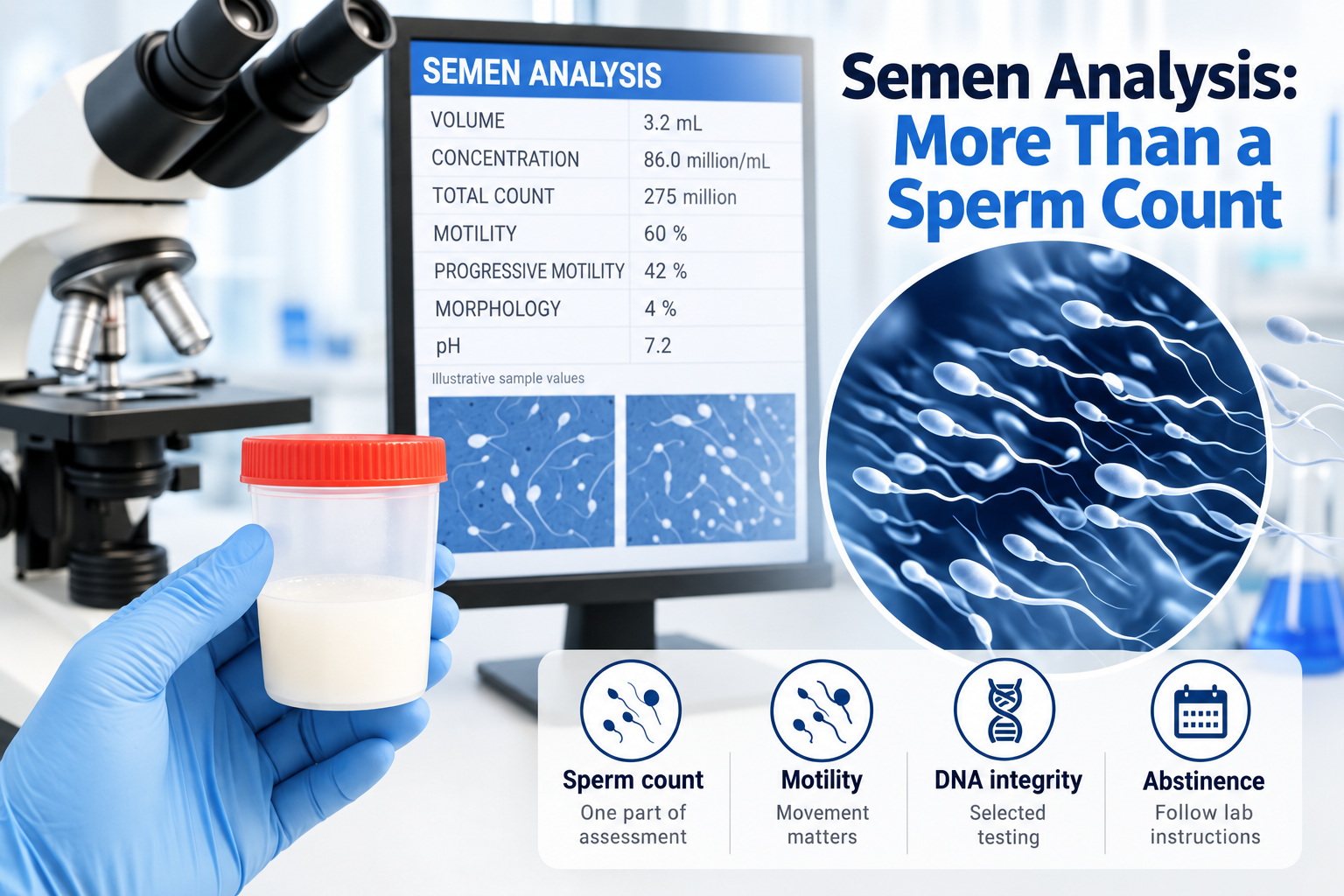
Sperm abstinence before testing is about following a standardized collection protocol, not maximizing every fertility measure. WHO guidance uses a 2–7-day interval for diagnostic semen collection. That interval is different from advice about intercourse when trying to conceive or a clinic’s instructions before a specific treatment.
-
At-Home Sperm Tests: A Useful First Look—or False Reassurance?
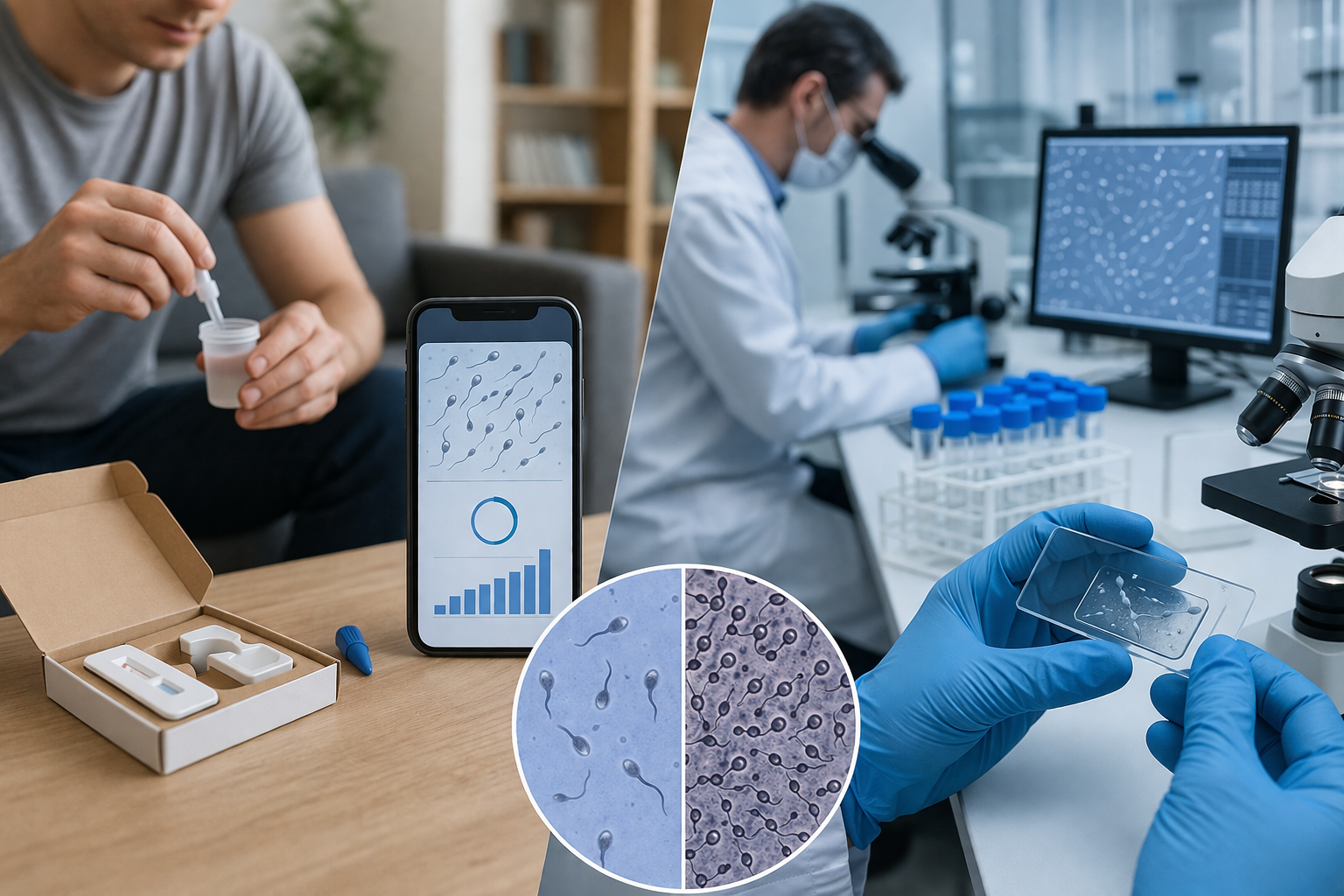
At-home sperm tests can offer privacy and a convenient first look at selected semen measures. Capabilities differ by product, and a reassuring result does not rule out every male fertility problem. A clinical assessment interprets results with history and other findings rather than treating a home score as a diagnosis.
-
Ejaculation Frequency Before IVF: Is Saving Up Sperm Always Better?
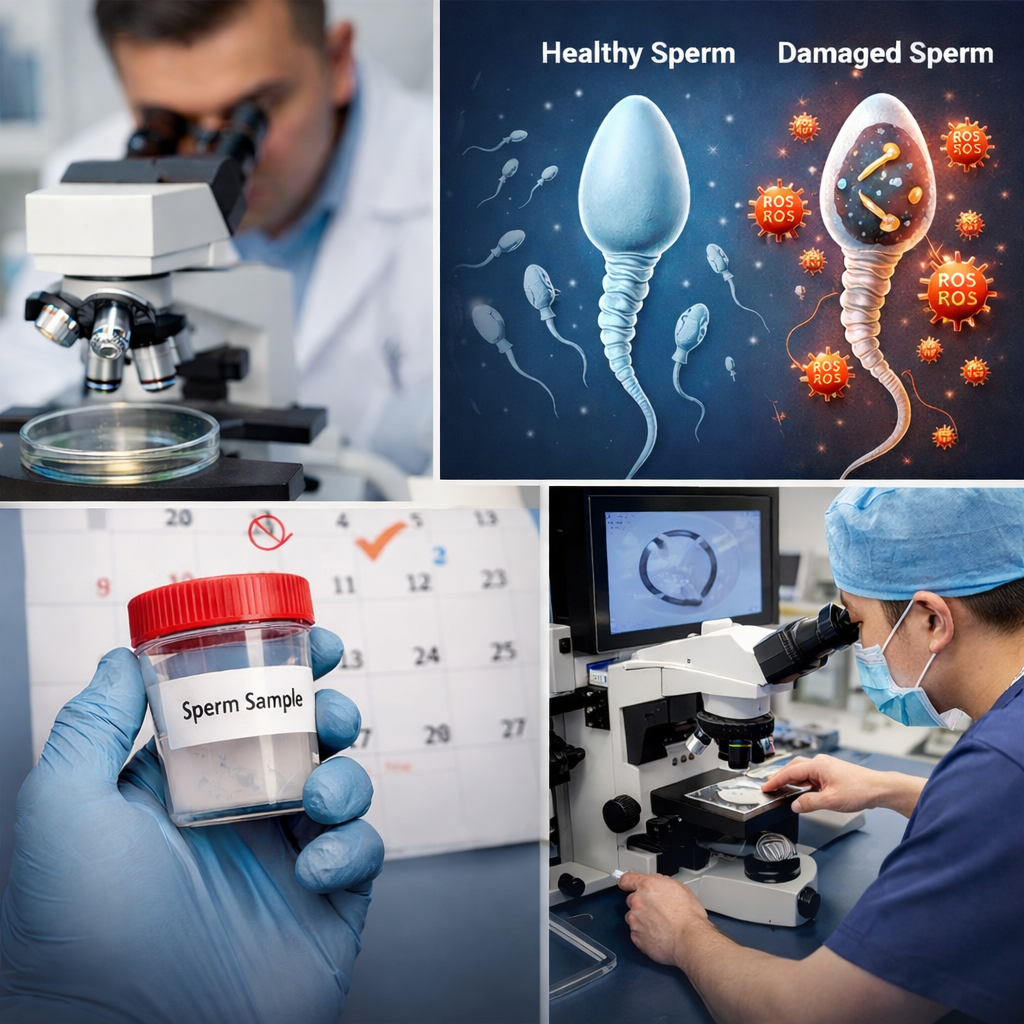
Ejaculation frequency before IVF raises a practical question: should sperm be saved up or collected sooner? Abstinence can change semen characteristics, but diagnostic collection instructions and treatment protocols serve different purposes. A shorter interval is not a universal prescription for a higher live-birth rate.
-
Lifestyle and Male Fertility: Sperm Do Not Live on Diet Alone

Lifestyle and male fertility cannot be reduced to a single hamburger, supplement or perfect daily routine. Health habits deserve attention, but infertility has many causes and is not evidence of personal failure. The challenge is to support general health while investigating the specific reasons a couple is having difficulty conceiving.
-
Metabolic Health and Male Fertility: The Risk Hidden Behind a Normal Count

Metabolic health and male fertility deserve attention together. Diabetes, obesity and other health conditions may complicate reproductive care, but a sperm count or one DNA test cannot explain every outcome. Later parenthood makes timely, individualized assessment more useful than blame, blanket testing or promises of a quick metabolic fix.
-
Sperm Morphology: Does 96% Abnormal Really Mean Infertile?
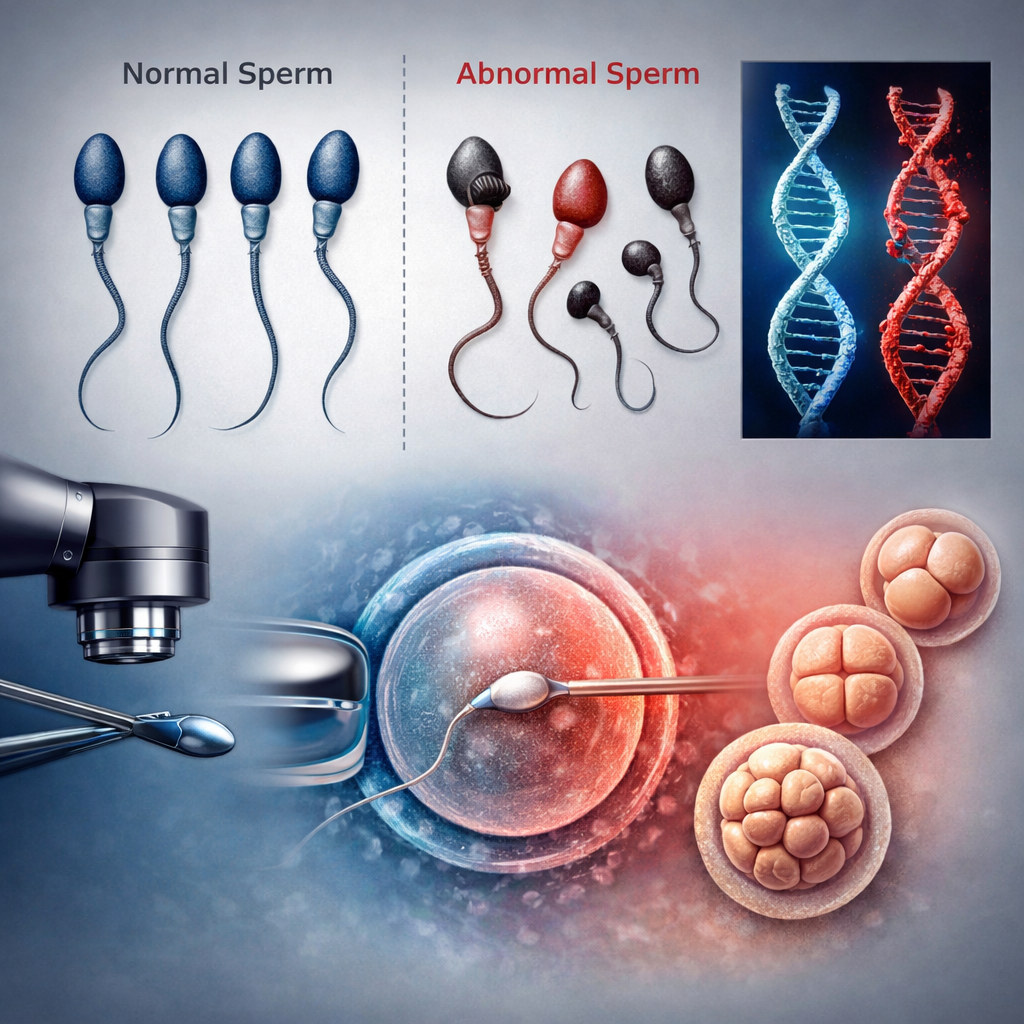
Sperm morphology reports can look alarming when most cells are classified as abnormal. Strict morphology criteria make the percentage easy to misread. A value near or below a reference limit is not a verdict on fertility, embryo development or a future child’s health; it needs the rest of the clinical picture.
-
Alcohol and Male Fertility: When Liquid Courage Meets a Reluctant Body

Alcohol and male fertility are often discussed through jokes about intimacy. Heavy drinking can contribute to sexual difficulties, but one encounter does not diagnose infertility. The more useful question is how drinking patterns, symptoms and general health fit together—not whether a birthday or a single drink determines reproductive capacity.
-
Pregnancy After Vasectomy: Reversal or Sperm Retrieval with IVF?

Pregnancy after vasectomy can involve reversal or surgical sperm retrieval with IVF and ICSI. Neither route is automatically best or guaranteed to be faster. Both partners’ fertility, the procedure’s prospects, treatment burden, costs and family plans belong in the comparison.