
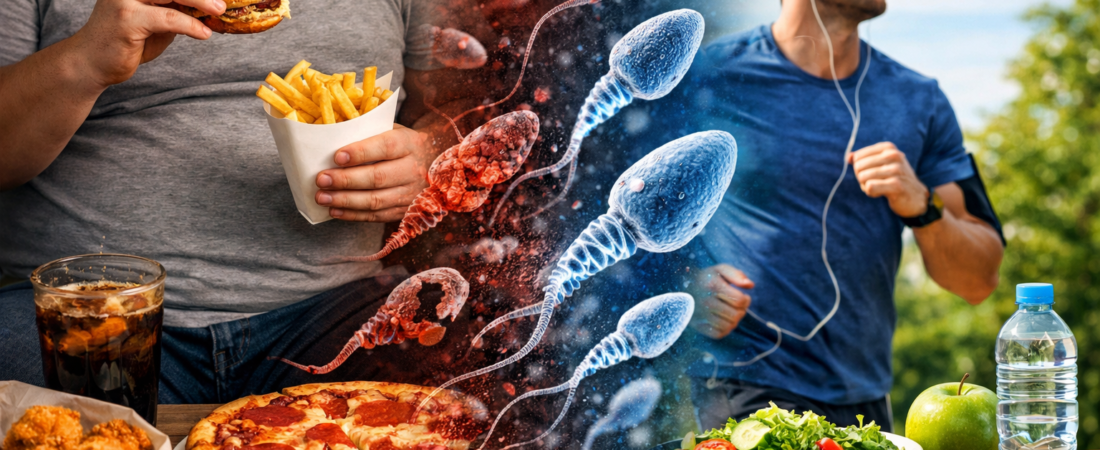
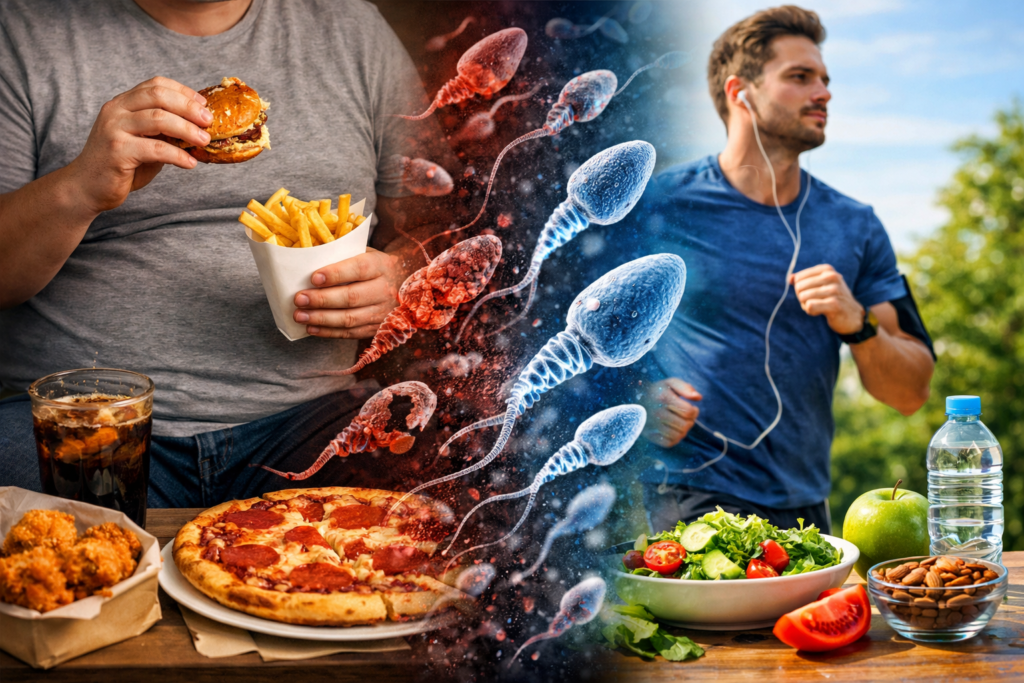
The statement is uncomfortable, yet accurate: sperm may not have a mouth, but they are shaped by everything we consume. However, a common misconception in modern reporting is the reductionist claim that “ultra-processed food ruins sperm.” This is only half the story. A single hamburger does not dismantle sperm health; rather, it is the lifestyle structure that leads to that hamburger—and everything surrounding it—that dictates the biological outcome.
We skip breakfast, rush through lunch, and eat dinner late. We spend most of the day sedentary, lack regular exercise, and suffer from chronic sleep deprivation. Between these habits, convenience store snacks and food delivery apps fill the gaps. In this pattern, ultra-processed food is not the cause—it is a symptom. This aggregate of daily life creates systemic inflammation, shifts metabolic pathways, and disrupts hormonal balance. These changes are mirrored, with profound sensitivity, in the most delicate of cells: the sperm.
Male Infertility: A Result of Lifestyle, Not Just Diet
Sperm are not simply “ruined” by a single dietary choice. Instead, they respond with remarkable honesty to the body’s internal environment. They record the rhythm, the stress, and the systemic state of the life they inhabit. Sperm are not destroyed; they are designed. And that design is the cumulative result of daily choices.
Sperm are continuously regenerated cells. Over an average cycle of 70 days, they integrate the environment of the body into their very structure. If blood glucose levels are erratic, that instability is encoded. If inflammation is high, that environment is mirrored. If sleep is insufficient, that dysregulated rhythm is replicated.
Therefore, your lifestyle today becomes the sperm of two months from now. If we reduce this issue to a mere matter of “diet,” we miss the essential truth. Sperm health is not dismantled at the dining table; it is forged across the entirety of one’s existence. Ultra-processed food is merely a signal; the true culprit is the pattern of life—late nights, fragmented sleep, sedentary habits, chronic fatigue, and the dietary choices layered upon them.
The good news is that because sperm are among the fastest-changing cells in the body, they are remarkably responsive. If you change your lifestyle, you change the record. By adjusting what you eat, resetting your sleep cycle, and moving your body, that physiological change is reflected in the sperm produced.
Sperm is not a fixed genetic destiny—it is a biological record. And that record is currently being rewritten, day by day, in this very moment.
Sources: Jensen et al., American Journal of Clinical Nutrition (2020); Salas-Huetos et al., Human Reproduction (2019).
Disclaimer: This content is provided for informational purposes, based on reporting on infertility and various public data. Medical judgments and treatment decisions must always be made in consultation with professional medical personnel. Image: AI-generated (ChatGPT, OpenAI) / Visual reference for illustrative purposes only.