
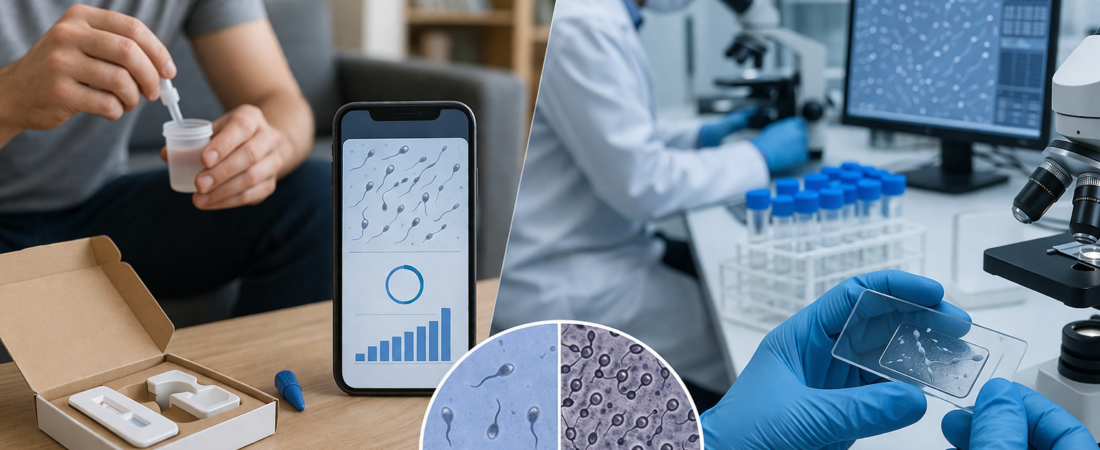
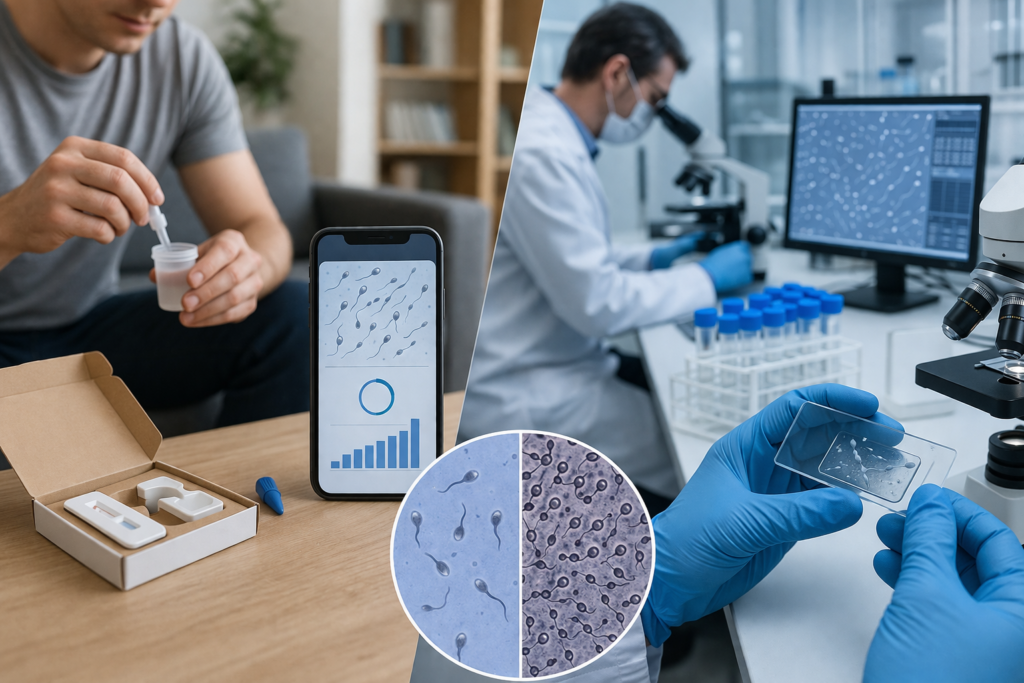
Sperm testing is moving out of the laboratory and into the home. With a few drops of semen on a test kit and a smartphone camera, users receive an automated analysis of sperm count and motility within minutes. With some products now gaining FDA approval, the market for home-based fertility screening is expanding rapidly.
On the surface, this is a victory for convenience. It removes the need for hospital visits, ensures anonymity, and reduces time and costs—offering a viable alternative for men who face high psychological barriers to clinical fertility screening.
However, the reproductive medicine community remains cautious. The consensus is clear: home-based sperm testing can serve as a reference, but it cannot replace clinical diagnosis.
The Limitations of Simplified Testing The primary issue lies in the scope of analysis. Most home kits focus on “concentration” or raw sperm count. Clinical semen analysis, however, is a multidimensional process. To meet WHO guidelines, professionals must evaluate motility, forward progression, morphology, and DNA integrity. Home kits rarely capture these nuances. A man might have a “normal” sperm count but suffer from low motility or high DNA fragmentation, both of which significantly impair reproductive potential. Conversely, low counts do not always equate to infertility. Relying on isolated figures provides an incomplete picture of reproductive health.
The Variable of the Environment In a hospital setting, the environment is strictly standardized: abstinence duration, collection technique, temperature control, and time-to-analysis are all regulated to minimize error. In a home environment, consistency is difficult to achieve. Delays in analysis or improper temperature regulation can distort results, leading to false negatives or misleading data.
The Critical Missing Link: Clinical Context Fertility specialists emphasize that “interpretation” is where the true medicine happens. Embriologists note that the same test result can carry different clinical implications depending on the patient’s medical history, the partner’s status, and previous treatment outcomes. Differentiating between “normal” and “abnormal” is insufficient; clinicians must synthesize this data within a clinical narrative—a process that neither AI nor automated home kits can currently replicate.
The Role of Home Screening This is not to say that home kits are meaningless. They serve a useful function as an initial screening tool, potentially encouraging men to seek professional care earlier. However, using these results to definitively categorize oneself as “fertile” or “infertile” is dangerous.
The trend is undeniable: fertility testing is expanding beyond the hospital walls. But while technology has successfully increased accessibility, “convenience” has yet to achieve parity with “accuracy.” Precise diagnosis and the formulation of therapeutic strategies remain firmly in the clinical domain. While a home test can be a useful starting point, the complex, clinical work of ensuring reproductive success belongs in the hands of specialists.
Sources: World Health Organization (WHO), “Laboratory Manual for the Examination and Processing of Human Semen”; FDA Medical Device Guidelines; Zini A & Sigman M, “Clinical utility of sperm DNA damage testing,” Human Reproduction.
Disclaimer: This content is provided for informational purposes, based on reporting on infertility and various public data. Medical judgments and treatment decisions must always be made in consultation with professional medical personnel. Image: AI-generated (ChatGPT, OpenAI) / Visual reference for illustrative purposes only.