
Historically, the evaluation of male fertility was straightforward: sperm count, motility, and morphology. These three metrics were the definitive barometers for distinguishing “normal” from “abnormal.” However, this standard often failed to explain a perplexing group of patients—those whose routine semen analysis results were perfectly normal, yet who remained unable to conceive. This diagnostic blind spot led to the rise of “unexplained male infertility,” and in this gap, the focus has shifted toward “Sperm DNA Integrity.”
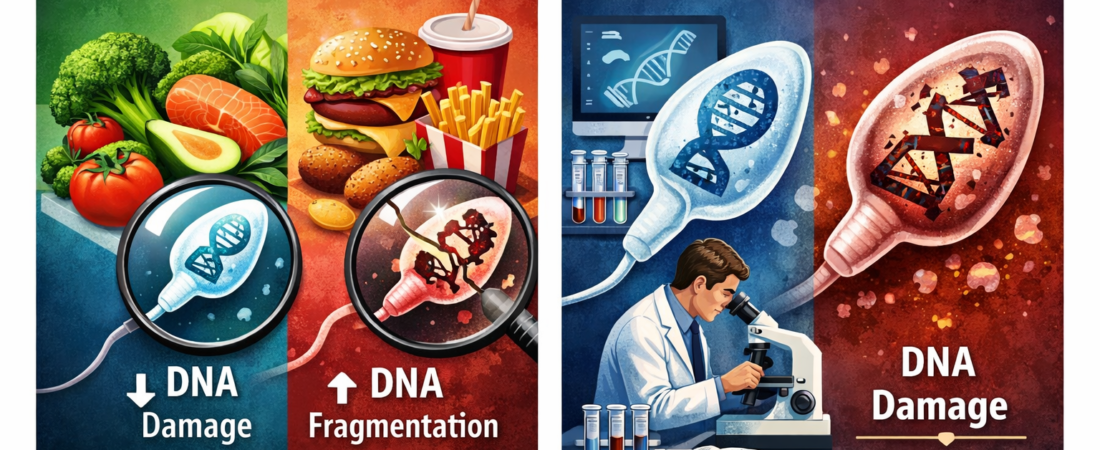
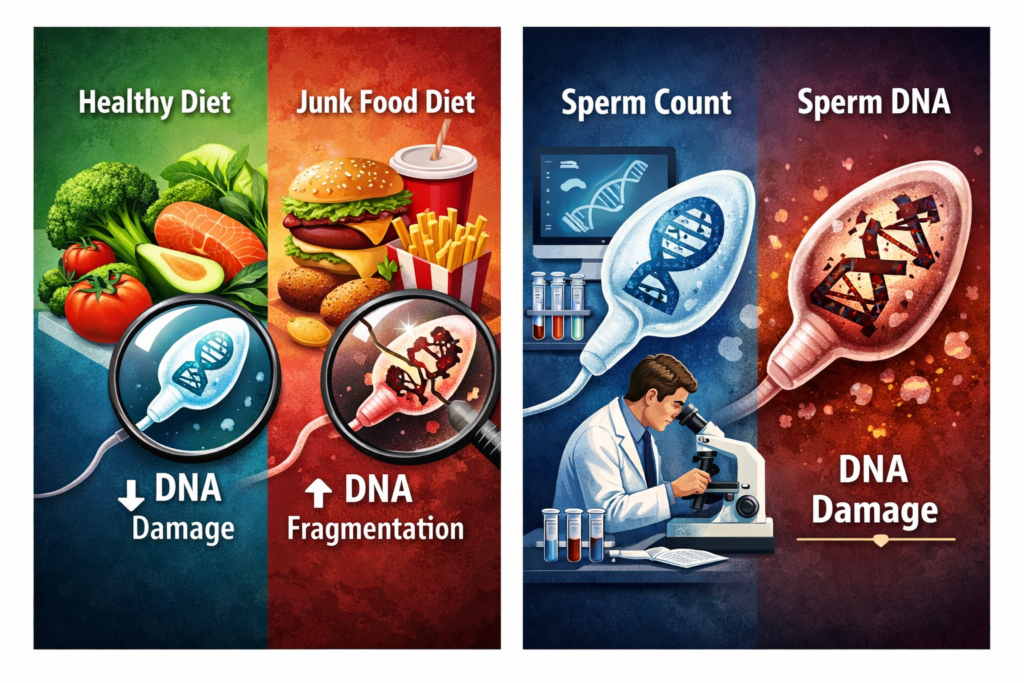
A 2026 study published in Scientific Reports illustrates this paradigm shift. After analyzing 300 men with unexplained infertility, researchers found that those who followed a plant- and fish-based diet exhibited a significantly lower Sperm DNA Fragmentation Index (DFI), while those consuming diets high in ultra-processed foods and “Western-style” meals showed notably higher DFI levels.
While this observational study does not definitively prove that diet causes DNA damage, the direction is clear: sperm health is not merely a question of quantity; it is a question of quality—specifically, the integrity of its DNA.
Why Sperm DNA Integrity Matters Sperm is not just a biological courier; it provides the essential blueprint for the initial stages of embryonic development. A sperm with damaged DNA may be capable of fertilization, but the embryo may fail to progress, leading to implantation failure or recurrent miscarriage. In clinical practice, it is not uncommon to find patients with normal semen analysis who exhibit high DFI levels, explaining their repeated IVF failures.
The culprit behind this is “oxidative stress.” Reactive oxygen species (ROS) attack cells, particularly causing DNA strand breaks. Modern lifestyle factors—smoking, alcohol consumption, sleep deprivation, obesity, and diets saturated with ultra-processed foods—create an environment that gradually degrades sperm DNA. Conversely, the protective factors are equally clear: antioxidant-rich vegetables, fruits, fish high in Omega-3 fatty acids, and a disciplined lifestyle.
The Evolution of Male Fertility Care The concept of “managing sperm health” is no longer a fringe idea. Sperm has a production cycle of approximately 70–80 days; the lifestyle choices made today are shaping the sperm of two months from now.
In response, fertility clinics are evolving. Some centers now evaluate oxidative stress markers alongside DFI testing, integrating lifestyle modifications and antioxidant therapy into their treatment protocols. We are transitioning from an era that asks, “How many sperm are there?” to one that asks, “How healthy is the DNA within this sperm?”
However, we must remain cautious. There is currently a lack of definitive evidence confirming that clinical interventions to lower DFI directly increase live birth rates. We must also guard against the over-supplementation market and the misuse of antioxidants. Science proposes a direction, but clinical practice must speak through proven results.
Nonetheless, one thing is certain: Male infertility is no longer an “arithmetic of numbers.” It has expanded into a “medicine of quality”—a domain defined by DNA and oxidative stress.
The question has irrevocably changed. It is no longer “How many?” but “How healthy?” This research serves as a reminder that the most fundamental aspect of fertility—our daily lifestyle—is the most potent influence on the quality of our future. Male fertility care is diving deeper into the unseen—the DNA level—and this shift holds the potential to fundamentally rewrite our strategies for IVF, embryo selection, and long-term reproductive health management.
Disclaimer: This content is provided for informational purposes, based on reporting on infertility and various public data. Medical judgments and treatment decisions must always be made in consultation with professional medical personnel. Image: AI-generated (ChatGPT, OpenAI) / Visual reference for illustrative purposes only.