

The global fertility rate is on a steady decline.
According to recent estimates by the United Nations (UN), the average total fertility rate across 201 countries between 2015 and 2020 stood at a mere 2.47. Compared to the average of 4.47 recorded between 1970 and 1975, this represents a sharp 44.8% decrease. The “total fertility rate” refers to the average number of children a woman is expected to bear over her reproductive lifespan (ages 15 to 49).
What does the landscape look like in South Korea? The nation’s total fertility rate plummeted to 0.98 (based on 2018 statistics), making it the only country in the world to record a sub-1.0 fertility rate. This figure sits significantly lower than other Asian regions known for low birth rates, such as Taiwan (1.15), Singapore (1.21), and Macau (1.20).
What is driving this decline? According to sociologist Ben Wattenberg, it is the cumulative result of complex, interconnected shifts: rising educational attainment among women, social dynamics leading to delayed marriages, avoidance of marriage and childbirth altogether, and an aging demographic at first marriage. Consequently, fertility clinics worldwide are seeing an influx of couples struggling to conceive, more than half of whom are of advanced reproductive age (37 and older).
When it comes to infertility, where does the cause lie? Broadly speaking, infertility can stem from either female reproductive factors or male reproductive factors. Statistically, male-factor infertility accounts for roughly 40% of all cases.
A primary driver behind the surge in male infertility is a decline in sperm counts.
On average, a single human ejaculation yields approximately 3 mL of semen, which typically contains between 200 million and 500 million sperm cells. However, an increasing number of men are presenting with below-average sperm counts. In reproductive medicine, a minimum threshold of 60 million sperm cells within a 3 mL sample is generally considered sufficient to achieve natural conception.
Once ejaculated, sperm cells must actively swim through the female reproductive tract to reach the fallopian tubes where the egg awaits. Clinically, if more than 20% of the sperm exhibit progressive motility and more than 60% possess a completely normal morphology (shape), natural conception or simple Intrauterine Insemination (IUI) can proceed without significant hurdles.
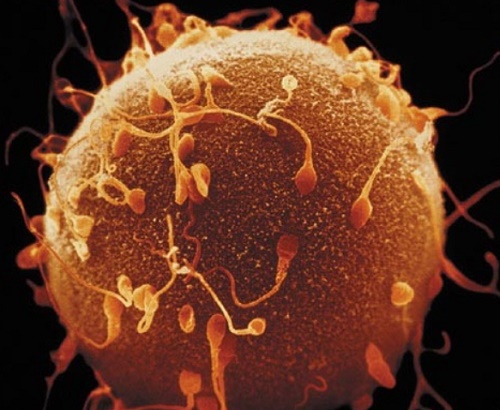
Regrettably, more and more men are failing to meet these baseline standards.
Consider a sperm analysis study published last May by a research team at the University of Geneva in Switzerland. The researchers collected semen samples from 2,523 young men aged 18 to 22 to rigorously evaluate sperm count, motility, and morphology. Strikingly, only 38% of the participants met the universal criteria established by the World Health Organization (WHO) for fertile male semen.
Among the participants, 17% had an average sperm concentration below 15 million cells per mL. Furthermore, one in four men exhibited a progressive sperm motility rate of less than 40%, and within that group, the proportion of sperm with completely normal morphology was a mere 4%.
Undeniably, data indicates that the average male sperm count has plummeted by more than half over the past 40 years, alongside a steep decline in overall sperm concentration. Dr. Hagai Levine of the Hebrew University of Jerusalem and researchers from the Icahn School of Medicine at Mount Sinai warned, “The pace of sperm count decline among men in Western regions may accelerate even further.”
Why Are Sperm Counts and Quality Deteriorating?
The reproductive medicine community points to a sharp rise in undescended testicles (cryptorchidism) and testicular cancer as major underlying catalysts behind the growing rates of male infertility.
“Undescended testicles” refers to a congenital condition where a newborn boy’s testes fail to fully descend into the scrotum, remaining trapped anywhere between the abdominal cavity and the upper scrotal tract.
Typically, the testes develop inside the fetal abdomen during gestation and gradually migrate downward into the scrotum around 3 to 6 months after birth. However, in some infants, the testes remain lodged along the pathway of descent rather than settling securely inside the scrotal sac.
If an undescended testicle does not self-correct naturally by the age of 24 months, the infant must undergo a corrective surgical procedure (orchiopexy) performed by a pediatric urologist to position the testicle safely outside the body. Leaving cryptorchidism unaddressed causes a progressive, irreversible loss of germ cells.
According to a study by the Korean Society of Pediatric Urology, a healthy infant under the age of 1 possesses an average of 0.36 germ cells per seminiferous tubule. This count naturally increases to 0.65 at ages 1 to 2, and further rises to 0.74 between the ages of 2 and 4.
In sharp contrast, an infant with an undescended testicle starts with an average of 0.85 germ cells per tubule within the first year of life. However, this figure drops precipitously to 0.49 between ages 1 and 2, plummets to 0.26 between ages 2 and 4, and dwindles to a meager 0.21 after the age of 4. This cellular depletion severely degrades reproductive capacity by the time the child reaches adulthood, frequently manifesting as male-factor infertility.
Furthermore, recent clinical reports show that men in sedentary office professions exhibit higher rates of infertility compared to men engaged in manual labor. Sitting at a desk for extended periods traps body heat, causing the ambient temperature of the scrotum enveloping the testes to climb.
Biologically, the testes must remain approximately 2°C cooler than core body temperature. This cooler environment is a strict prerequisite for smooth, optimal spermatogenesis (sperm production) and the efficient synthesis of testosterone.
Consequently, men should avoid sitting for hours on end without breaks or working with a laptop computer resting directly on their lap for prolonged periods. Allowing the scrotal temperature to rise exerts a directly hostile impact on sperm production.