
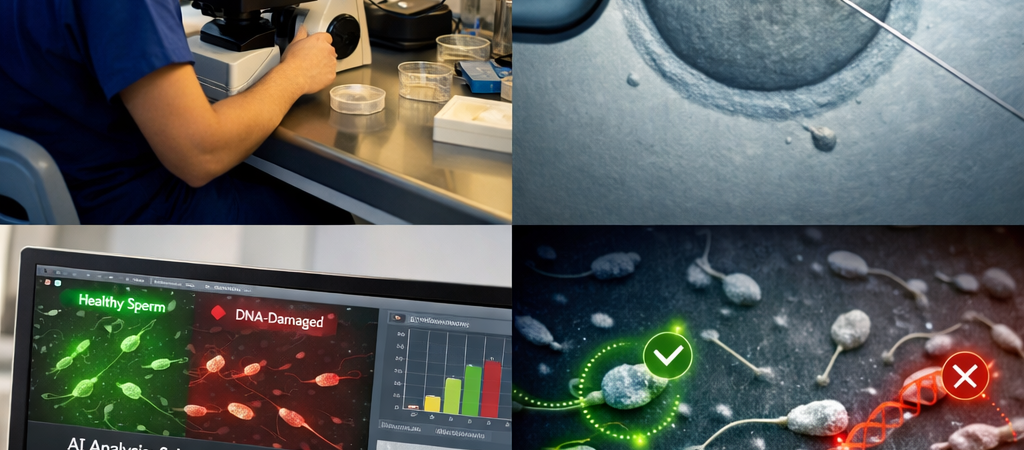
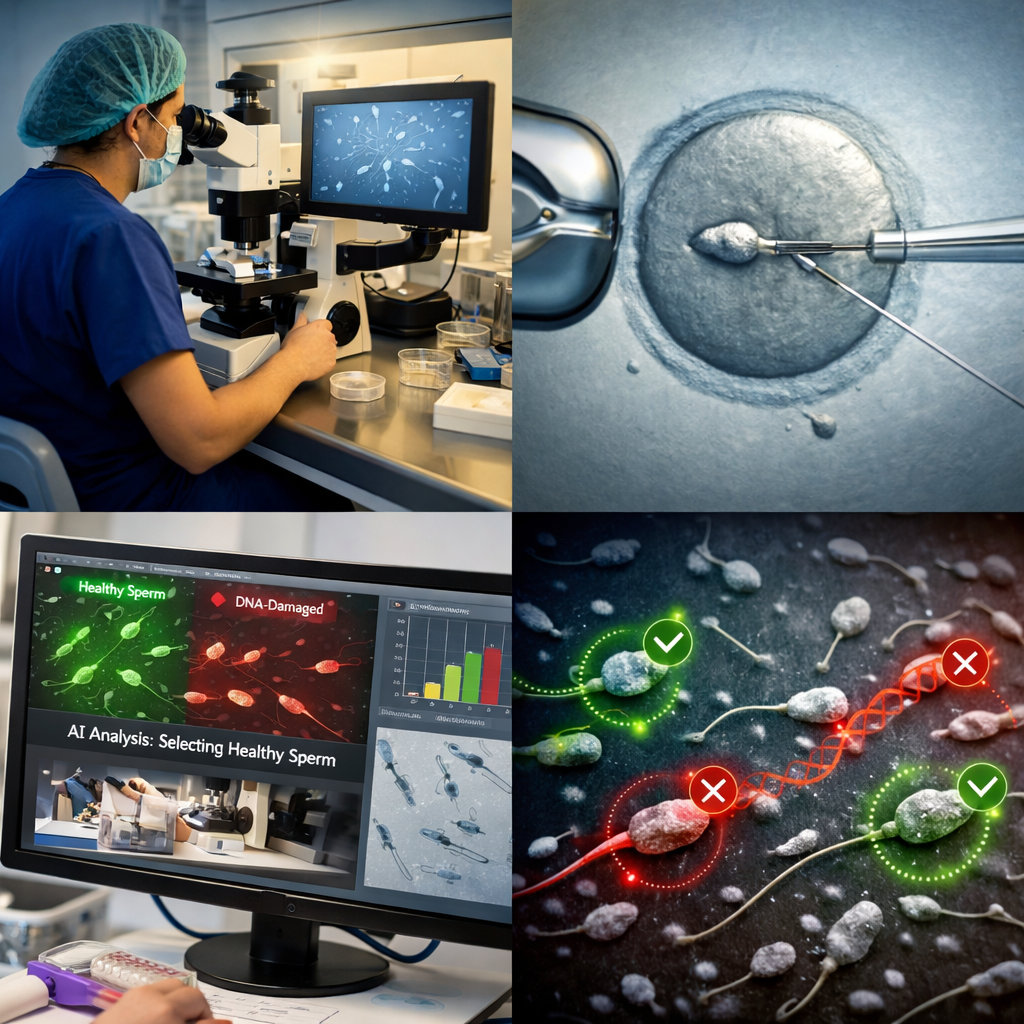
The most iconic scene in the world of In Vitro Fertilization (IVF) is simple: an embryologist sits at a microscope, selecting a single sperm based on its “appearance.” The beginning of a new life has long been decided by these tiny morphological criteria—how well the tail moves, whether the head is shaped normally, and so on.
However, this scene is rapidly changing. We are entering an era where sperm are selected not by what we “see,” but by what remains “unseen.”
One of the fastest-growing technologies in reproductive medicine is the AI-based sperm selection system. This technology goes far beyond simple image analysis; it estimates and selects sperm based on the likelihood of DNA integrity in real-time. Simply put, the field is moving away from choosing the “best-looking sperm” toward selecting the “genetically intact sperm.”
Traditional methods had clear limitations: a normal appearance is no guarantee of genetic normality. In many clinical cases, even when sperm appeared morphologically perfect, a high DNA Fragmentation Index (DFI) led to fertilization failure, arrested embryonic development, or implantation failure. In short, these sperm were “passing the grade” on the outside while harboring internal damage.
AI penetrates this diagnostic gap. By training algorithms on data from tens of thousands of sperm, the system analyzes minute movement patterns, asymmetry in morphology, and intracellular signaling to estimate the probability of DNA damage. Some studies have reported that this approach allows for the selection of sperm with significantly lower DFI compared to traditional selection methods. While not yet the global standard, the direction is unmistakable.
This shift signifies more than just a technological upgrade—it represents a fundamental reorientation in how we approach the causes of IVF failure. For years, the blame for IVF failure was largely placed on “embryo grading” or “uterine environment.” Now, the question has changed: “Have we been using flawed building blocks from the very beginning?”
Sperm is no longer viewed merely as a biological courier. It is the starting point of fertilization and a critical variable that dictates the final outcome. For cases of unexplained infertility, recurrent implantation failure, and recurrent miscarriage, this technology offers an entirely new interpretive framework.
Of course, challenges remain. The standards for AI-based selection are not yet fully standardized, and large-scale data confirming that this technology consistently leads to higher live birth rates are still required. Technology may move at lightning speed, but medicine demands rigorous validation.
Yet, the trend is clear: reproductive medicine is evolving from the “art of selecting embryos” to the “science of selecting sperm.” For a long time, when we asked why IVF success rates were plateauing, we looked only at embryos and the uterus. But if the starting point is compromised, everything built upon it becomes inherently unstable. The problem was not the process—it was the beginning. Only now, through advanced technology, are we beginning to prove that truth.
Disclaimer: This content is provided for informational purposes, based on reporting on infertility and various public data. Medical judgments and treatment decisions must always be made in consultation with professional medical personnel. Image: AI-generated (ChatGPT, OpenAI) / Visual reference for illustrative purposes only.