

Non-obstructive azoospermia (NOA) raises questions about hormone treatment, sperm production and micro-TESE. Exogenous testosterone, hCG, FSH and LH have different roles. Distinguishing deficient hormonal stimulation from primary testicular dysfunction is essential when interpreting treatment claims and the evidence for sperm retrieval.
For men diagnosed with NOA, the question is whether a hormone treatment addresses the underlying problem or merely changes a laboratory value.
Obstructive versus non-obstructive azoospermia
Azoospermia means that sperm are absent from the ejaculate on semen analysis, including examination after centrifugation. It is broadly divided into obstructive azoospermia and non-obstructive azoospermia; an abnormal result requires appropriate confirmation and evaluation.
- Obstructive Azoospermia (1): A state where sperm is actively produced within the testes, but a physical blockage along the reproductive tract prevents it from being ejaculated into the semen.
- Non-obstructive Azoospermia (2): Absence of sperm in the ejaculate due to impaired sperm production rather than obstruction. Some men retain focal sperm production that may permit surgical retrieval; this cannot be predicted from one universal success percentage.
For obstructive azoospermia, sperm may be retrieved from the testis or epididymis for IVF with intracytoplasmic sperm injection (ICSI). Successful retrieval and achieving a pregnancy are distinct outcomes; neither should be presented as automatic.
For non-obstructive azoospermia, micro-TESE is a recommended sperm-retrieval approach, but it cannot guarantee that sperm will be found.
Hormones are sometimes considered before sperm retrieval, but testosterone replacement and hCG-based stimulation are different interventions. Their effects cannot be inferred simply from a shared aim of raising testosterone.
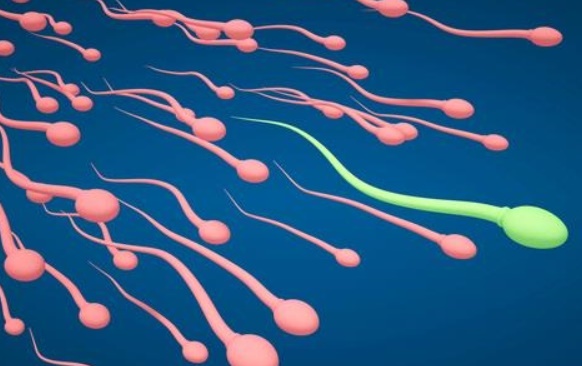
Testosterone and hCG: why the diagnosis matters
AUA/ASRM guidance advises against testosterone monotherapy for men interested in current or future fertility. The role of hCG depends on the diagnosis; limited evidence for pretreatment before NOA surgery is not proof of zero benefit in every patient.
The distinction starts with how the hormones act:
EAU guidance describes hCG as acting like LH to stimulate testosterone production within the testes. It is not an FSH replacement, and its rationale should not be described as directly making the pituitary release more FSH.
FSH may be normal or elevated in testicular forms of NOA. That variation does not establish a single response to treatment, and a claim of universal ineffectiveness goes beyond the evidence.
A 2012 study by Shiraishi and colleagues included 48 men after unsuccessful micro-TESE. Sperm were retrieved on a second attempt in 6 of 28 receiving hCG-based treatment, with FSH added when indicated, compared with none of 20 untreated men. This small comparison concerns repeat retrieval; it does not establish routine benefit or a live-birth benefit.
FSH and LH come from the anterior pituitary. FSH acts on Sertoli cells, which support developing germ cells; LH acts on Leydig cells to stimulate testosterone production. Testosterone is not a byproduct of sperm formation. Low testosterone and raised FSH may coexist in testicular dysfunction, but impaired sperm production does not establish that causal sequence.
In hypogonadotropic hypogonadism, deficient LH and FSH stimulation is a distinct treatment target. hCG, with FSH added when appropriate, can support sperm production; this rationale is different from empiric stimulation before surgery for primary testicular dysfunction.
Current EAU recommendations advise against hormonal stimulation before sperm extraction for NOA outside clinical trials. The recommendation reflects limited evidence for routine use; it should not be applied as a claim that treatment for hormone deficiency never works.
FSH, LH and testosterone in sperm production
FSH and LH also participate in ovarian function. Comparing the two reproductive systems helps explain their roles, while avoiding the assumption that the ovarian cycle models testicular hormone production.
During the follicular phase, FSH supports developing ovarian follicles. As follicles grow, estradiol production rises and the uterine lining develops. These are coordinated hormonal processes, rather than a complete reset at the first day of bleeding.
The LH surge triggers ovulation. The remaining follicular tissue becomes the corpus luteum, which produces progesterone and helps prepare the estrogen-primed endometrium for implantation. This physiology does not guarantee that an embryo will implant.
In the testes, the roles of FSH, LH and testosterone must be distinguished:
In the testes, LH stimulates Leydig cells to produce testosterone, while FSH acts on Sertoli cells. Testosterone supports spermatogenesis; it is not a substance that appears only after sperm production has begun.
Sperm development takes many weeks. A classic human study by Heller and Clermont estimated testicular spermatogenesis at about 64 days. That estimate is not a fixed timetable for epididymal maturation, ejaculation or a clinical response to treatment.
Exogenous testosterone, hormonal feedback and micro-TESE
The distinction matters: a change in testosterone and a change in sperm production are related questions, but they are not interchangeable measurements.
Exogenous testosterone can suppress hypothalamic-pituitary signalling and reduce LH and FSH secretion. Spermatogenesis may decline or cease; the feedback system should not be understood as simply monitoring the number of sperm already produced.
Elevated FSH can indicate impaired sperm production, but hormone results must be interpreted with the history, examination and semen analysis. FSH alone does not reliably predict whether sperm will be recovered surgically.
The remaining question is whether pretreatment improves the chance of retrieving sperm:
Clomiphene is a selective estrogen receptor modulator. It has been used to alter endogenous hormonal stimulation, but its use before NOA surgery is not supported by a universally established benefit. The probability of retrieval cannot be reduced to one general description such as very low.
AUA/ASRM guideline part II (2020) describes the supporting pretreatment evidence as limited and low quality. Better hormone values, successful sperm retrieval and live birth are separate outcomes; evidence for one should not be presented as proof of the others.
For men pursuing fertility, hormone treatment therefore requires a diagnosis-specific assessment. Testosterone replacement, hCG and FSH are not interchangeable, and the evidence reviewed here does not establish routine hormonal pretreatment before micro-TESE as a proven way to improve live birth.
Research sources and clinical guidance
AUA/ASRM guideline part I (2020); AUA/ASRM guideline part II (2020); EAU Guidelines — Male Infertility; Shiraishi et al., Human Reproduction (2012), doi:10.1093/humrep/der404; Endotext, hypothalamic-pituitary-testis axis; Endotext, The Normal Menstrual Cycle and the Control of Ovulation; Heller and Clermont, Science (1963), doi:10.1126/science.140.3563.184.