
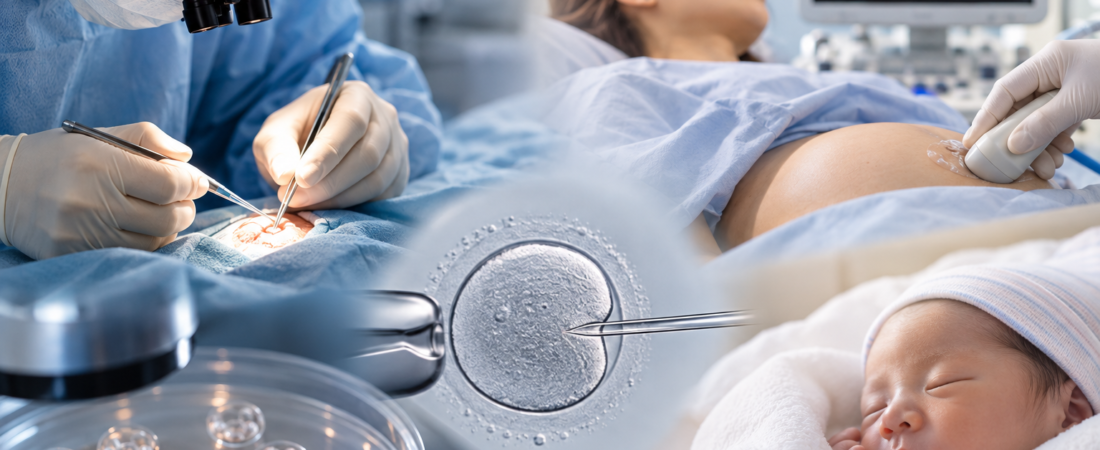
A 129-cycle study reported a 26-percentage-point live-birth difference, although fertilization rates were similar.
The interval between micro-TESE sperm retrieval and egg retrieval may matter in IVF with ICSI. In a Canadian study, live birth occurred in 56% of cycles in which eggs were retrieved 24 hours after testicular sperm retrieval, versus 30% with a 48-hour interval.
Researchers at McGill University analyzed 129 IVF cycles using sperm obtained by microdissection testicular sperm extraction (micro-TESE). Their study was published in the Journal of Assisted Reproduction and Genetics on October 9, 2026.
The analysis examined more than whether sperm could be found: it asked how the timing of the male and female procedures related to pregnancy and birth outcomes.
A 56% versus 30% live-birth rate
Azoospermia means that no sperm are detected in the ejaculate. For some men, surgery to find sperm within testicular tissue may provide an opportunity to have a biological child.
Micro-TESE uses an operating microscope to identify seminiferous tubules more likely to contain sperm. Retrieved sperm are used for ICSI, in which an individual sperm is injected into an egg.
The researchers compared 104 cycles with a 24-hour interval between sperm and egg retrieval against 25 cycles with a 48-hour interval.
Fertilization rates were similar: 67% versus 65%. Blastocyst formation rates were also similar, at 50% versus 49%.
Differences emerged later. Positive pregnancy-test rates were 72% and 35%, and clinical pregnancy rates were 65% and 35%, respectively.
Live-birth rates were 56% and 30%, a difference of 26 percentage points that was statistically significant (P=0.03).
Why might birth outcomes differ when fertilization looks similar?
Fertilization rate describes the proportion of eggs that fertilize normally after sperm injection. Blastocyst formation measures the proportion of fertilized eggs reaching the developmental stage used for transfer or freezing.
Neither fertilization nor blastocyst development guarantees a birth. Implantation and continued pregnancy must also occur.
Sperm retrieved directly from the testes may differ physiologically from ejaculated sperm. Storage, processing and the interval before ICSI could potentially affect their condition.
However, the study cannot show that time-dependent changes in sperm caused the live-birth difference. Female age, ovarian response, embryo characteristics and the causes of infertility could also have influenced outcomes.
Coordinating sperm and egg retrieval
IVF involving azoospermia can require complex scheduling: testicular surgery must be coordinated with ovarian stimulation and egg retrieval.
This can be particularly challenging in non-obstructive azoospermia, when successful sperm retrieval is uncertain. The findings suggest that the interval between procedures is worth studying as a possible contributor to outcomes.
The sample was not limited to non-obstructive azoospermia. It also included cryptozoospermia and severe sperm abnormalities, so the results cannot be applied uniformly to every man with azoospermia.
The groups were unequal in size—104 versus 25 cycles—and the study retrospectively analyzed records from one center.
It therefore does not establish a rule that eggs must be retrieved exactly 24 hours after micro-TESE, or prove that the 24-hour interval itself improves live birth.
The study highlights coordination of male and female treatment schedules as a research question alongside sperm-retrieval technique. Larger prospective studies are needed to clarify the optimal interval and its relationship with live birth.
Research source
McGill University researchers. “Evaluating the time interval between oocyte retrieval and micro testicular sperm extraction: a single-center retrospective cohort study.” Journal of Assisted Reproduction and Genetics, October 9, 2026. DOI: https://doi.org/10.1007/s10815-026-04047-1. PMID: 42850542.
Related reading
- Abstinence and Sperm DNA Damage: Does Waiting More Than Four Days Help?
- First Fertility Clinic Visit: AMH, Ovulation, Tubal and Semen Tests
The illustration was generated with ChatGPT (OpenAI); any depicted people are fictional.
Copyright © 2026 Fertility Information TokTok Fertility News | THE FERTILITY NOTES. All rights reserved. Unauthorized republication, reproduction, redistribution, scraping, AI training and data use of any content, including articles, photographs and images, are strictly prohibited. Violations may result in legal liability.