
A Canadian study found no significant difference in IUI pregnancy rates between ZyMot microfluidic sperm selection and conventional density-gradient preparation.
Pregnancy rates were 12.3% with a DNA fragmentation index of 20–30% and 3.9% above 30%, but this difference was also not statistically significant.

Some couples have difficulty conceiving even when sperm count and motility are normal. One additional measurement clinicians may consider is the sperm DNA fragmentation index (DFI), because apparently healthy sperm can still contain damaged genetic material.
Microfluidic devices are increasingly used to select sperm with less DNA damage. Does this translate into more pregnancies?
A Canadian study published in Andrology in October 2026 addressed that question. It found no statistically significant difference in intrauterine insemination (IUI) pregnancy rates between microfluidic selection and conventional preparation.
A specialized device did not significantly improve pregnancy rates
Researchers at Université de Montréal and OVO Fertility retrospectively analyzed IUI outcomes in 132 men with DFI of at least 20%, treated between December 2022 and December 2024.
Fifty used the ZyMot microfluidic device; 82 used conventional density-gradient centrifugation.
ZyMot uses small channels to select motile sperm. Avoiding centrifugation may reduce physical stress and additional DNA damage during preparation.
However, pregnancy rates were 8.0% with ZyMot and 9.8% with density-gradient preparation.
The difference was not statistically significant. A technical advantage in sperm preparation does not necessarily produce an improvement in pregnancy outcomes.
A lower numerical pregnancy rate above 30% DNA fragmentation
Another finding concerned the degree of sperm DNA damage.
Pregnancy rates were 12.3% in the group with DFI of 20–30% and 3.9% in those above 30%.
Numerically, the latter rate was approximately one-third of the former.
This difference was also not statistically significant. The small overall sample and group sizes prevent a firm conclusion that higher DFI reduced IUI pregnancy rates in this study.
The finding nevertheless supports further investigation of how DNA damage relates to IUI outcomes.
Normal semen parameters do not rule out DNA damage
Routine semen analysis measures count, concentration, motility and morphology. These assessments do not directly measure DNA damage inside sperm.
Sperm DNA damage can be associated with oxidative stress, varicocele, reproductive-tract inflammation, smoking and testicular heat exposure. Severe damage has been proposed as a factor affecting embryo development or pregnancy maintenance after fertilization.
Results and thresholds vary by testing method. A DFI value of 30% should therefore not be treated as an identical risk threshold for every patient.
Nor does every man with infertility require DNA fragmentation testing. Clinicians may consider it in selected circumstances, including repeated treatment failure or particular male-factor conditions.
Pregnancy and birth outcomes are the key test of a technology
The study highlights the distinction between introducing new technology and demonstrating better treatment outcomes.
A device may help obtain sperm with less DNA damage without establishing higher pregnancy or live-birth rates.
This study concerned IUI. Its results should not be assumed to apply equally to IVF or intracytoplasmic sperm injection (ICSI).
It was also a small, exploratory retrospective study rather than a randomized trial. Limited statistical power may have prevented it from detecting a difference that truly exists.
Larger randomized trials are needed to clarify the effect of microfluidic selection on pregnancy outcomes.
The relevant question is how much a technology improves the chance of pregnancy and birth, rather than how advanced the equipment appears.
For men with substantial DNA damage, assessment of possible causes and consideration of the female partner’s age, duration of infertility and previous treatment results are important before choosing a device or treatment pathway.
This article is based on “Pregnancy Outcomes of Intrauterine Insemination Using Microfluidics ZyMot Device for Patients With High Sperm DNA Fragmentation: An Exploratory Retrospective Study,” published online in Andrology on October 24, 2026, by researchers at Université de Montréal, OVO Fertility and the University of Balamand, Lebanon. DOI: 10.1111/andr.70419. PMID: 42920326.
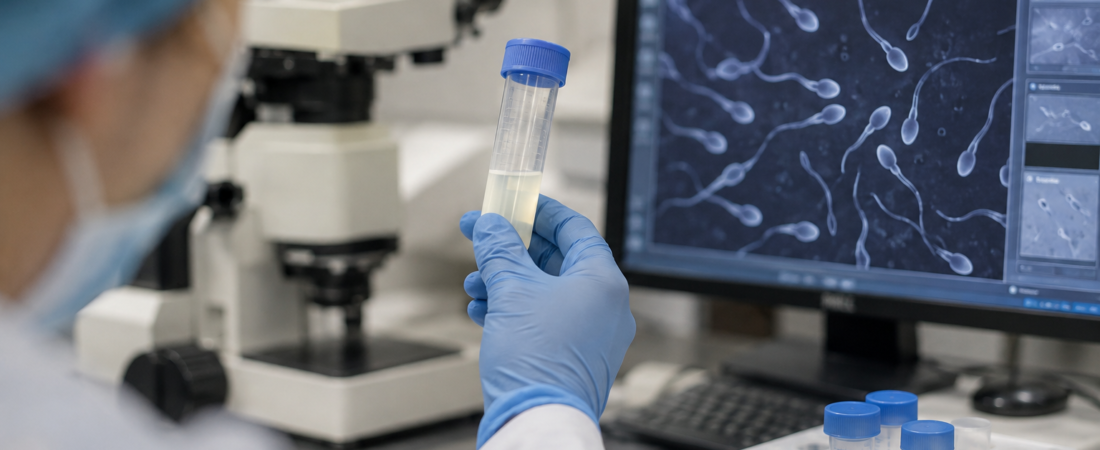
The accompanying image was created using generative AI (ChatGPT, OpenAI); any people depicted are fictional.
Related reading: Understanding the tests at a first fertility clinic visit
Copyright © 2026 Fertility Information TokTok Fertility News | THE FERTILITY NOTES. All rights reserved. Unauthorized reproduction, copying, redistribution, scraping, AI training, and other data use of any articles, photographs, images, or other content are strictly prohibited. Violations may result in legal liability.