
Estimated Live Birth Rates: 12.5% for Cleavage-Stage Transfer vs. 10.1% for Blastocyst Transfer
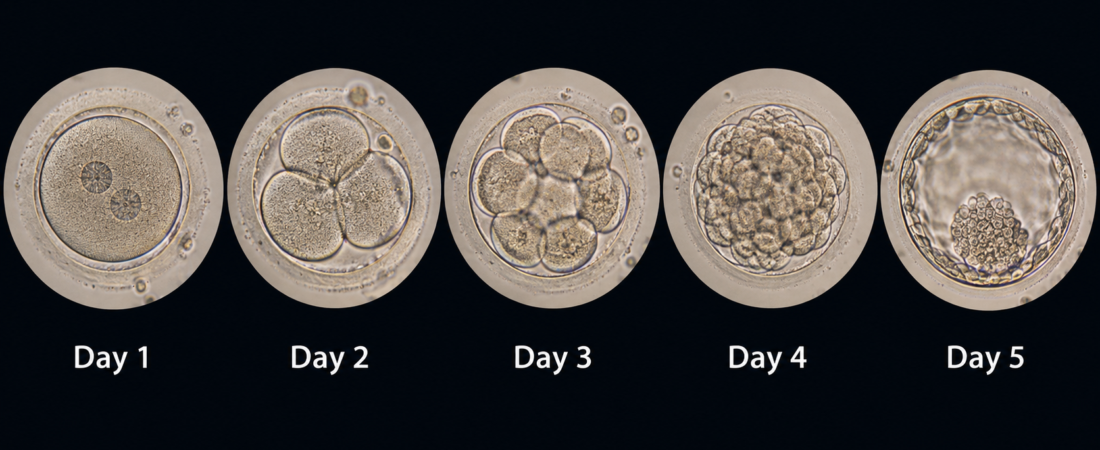
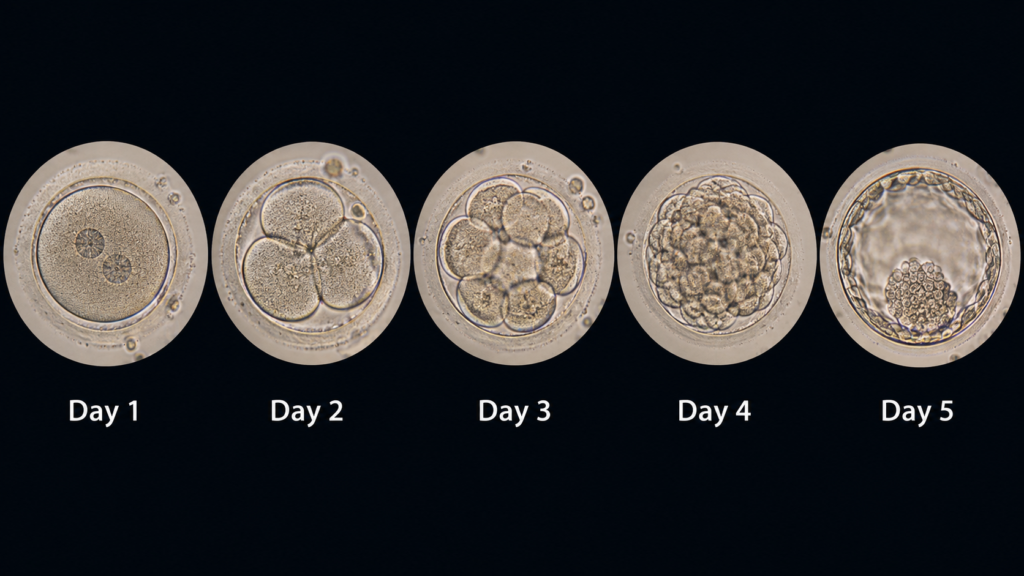
For patients undergoing In Vitro Fertilization (IVF), a ‘Day 5 embryo’—known as a blastocyst—is often treated like the ultimate objective. The rationale is that nurturing a fertilized egg in the laboratory for around 5 days and selecting an embryo that survives to the blastocyst stage allows clinicians to choose an embryo with a higher implantation potential.
In actual fertility treatment settings, transferring a Day 5 blastocyst rather than a Day 2–3 cleavage-stage embryo has become widely adopted. However, a recent research study suggests that if there is only a single fertilized egg, the story may change entirely.
The question posed by this new study is remarkably practical: “Even when there is only one fertilized egg, do we really have to culture it until Day 5?”
Cleavage-Stage vs. Blastocyst Transfer for Single Embryos
Using real IVF treatment data from Australia and New Zealand, researchers analyzed patients who produced only a single fertilized egg during their first IVF cycle. The findings revealed that the estimated live birth rate was 12.5% when transferred at the cleavage stage around Day 3 post-fertilization, compared to 10.1% when transferred at the blastocyst stage on Day 5. Statistically, the live birth probability for the earlier cleavage-stage transfer was roughly 24% higher.
What draws even more attention is that this disparity widened as the woman’s age increased. According to the study’s predictive model, at age 35, the relative risk of live birth for cleavage-stage transfer was 1.34 times higher than for blastocyst transfer, climbing to 1.51 times higher at age 40.
Why did this outcome occur, and does the formula “Day 5 embryos are always better” apply to everyone?
Why a Single Embryo Changes the Logic
Ordinarily, the advantages of blastocyst culture are clear. Among multiple fertilized eggs, observing which ones thrive through Day 5 allows clinicians to pick out the embryos with superior developmental competence. When you have multiple embryos, a kind of ‘selection process’ becomes possible.
However, when there is only one fertilized egg, this logic breaks down. There are no competing embryos, and no alternatives to select from. If that single fertilized egg is cultured to Day 5 and its growth stalls midway, the embryo available for transfer vanishes entirely. Conversely, transferring it into the uterus on Day 2 or 3 ensures that at least an opportunity for transfer is secured.
Put simply, if you have ten embryos, a strategy of culturing them to Day 5 to find the best performers makes sense. But if you have only one, the concept of “selecting the best embryo” collapses. Waiting a few more days in the incubator can instead act as a risk of losing the chance for transfer altogether.
This presents a particularly sensitive dilemma for older patients or low-responder groups with diminished ovarian reserve who yield only one or two eggs per cycle. When a patient retrieves a single egg and creates a single embryo, that embryo is far more than just the number ‘1.’ It represents the virtually sole opportunity gained after enduring a cycle of ovarian stimulation, injections, and egg retrieval.
Interpreting the Findings with Nuance
Up to now, the prevailing perception in IVF has been that “embryos that make it to the blastocyst stage are good embryos.” Numerous studies indeed support that blastocysts can hold an advantage in implantation rates. Yet this study steps one layer deeper.
We must evaluate not just the ‘success rate per transfer’ of a single embryo, but also view the situation from the perspective of a first-time patient—accounting for instances where the embryo ceases development during culture, robbing the patient of the transfer itself.
That said, these results should not be blindly translated into a rigid rule that “if there is one embryo, it must always be transferred on Day 3.”
The study was not a randomized clinical trial dividing patients into two comparative groups; rather, it was a “target trial emulation” study that replicated conditions similar to a randomized trial using real-world treatment data from Australia and New Zealand. Unmeasured variables—such as embryo morphology, patient health status, or laboratory-specific culturing strategies—may have influenced the outcomes.
Conclusion: Tailoring Strategies Beyond Fixed Rules
Even so, the message delivered by this study is unequivocal: the principle that “Day 5 embryos are better” may not apply equally to every patient.
For a patient with multiple embryos, Day 5 culture serves as a sorting mechanism. But for a patient with a solitary fertilized egg, those extra days can turn into a gamble staking their entire opportunity for a transfer.
Ultimately, the core question is not a simplistic binary of “Are Day 3 embryos better, or are Day 5 embryos better?” Strategies must be individualized, factoring in the patient’s age, ovarian reserve, number of fertilized eggs, historical embryo development records, and laboratory performance metrics.
For a patient with a single fertilized egg, that embryo is not just a statistical ‘1.’ We must never forget that it represents the single chance at transfer available in that cycle.
※ This article was written to help general readers understand clinical experiences and recent research data in the fields of obstetrics, gynecology, and reproductive medicine. It does not replace a specific individual’s diagnosis or treatment, and actual medical judgment must be made through consultation with a specialist.
※ Images: Created using generative AI (ChatGPT, OpenAI); depicts fictional individuals, not real people.