
“Will Selecting Better Sperm Also Increase Success Rates?”
Sperm Selection ‘Add-Ons’ Did Not Work for Everyone PICSI Increases Blastocyst Formation Rate from 31.1% to 44.0% in Patients with Prior ICSI Failure and Low Hyaluronic Acid Binding Microfluidic Sperm Selection Offers No Live Birth Benefit in Normozoospermic Cohorts… “Identifying the Right Patient Comes Before Choosing Advanced Tech”
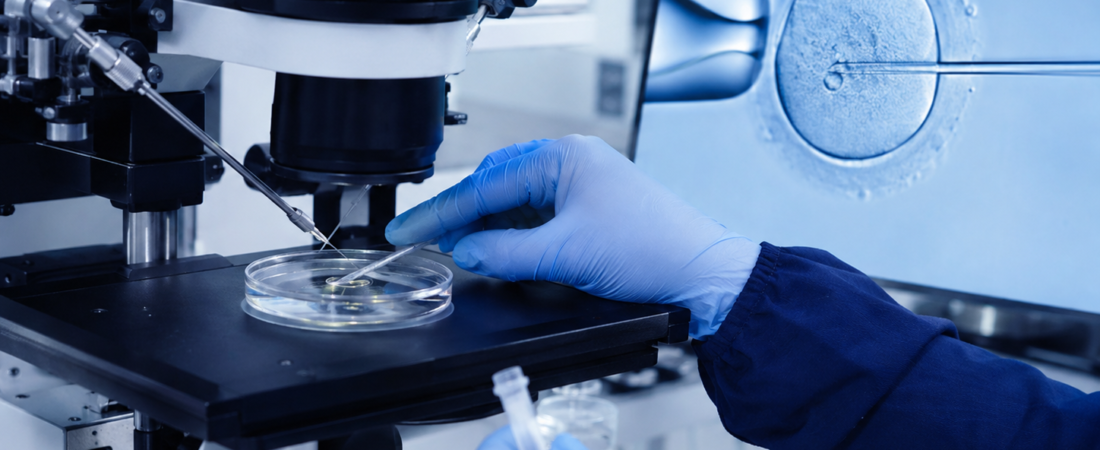
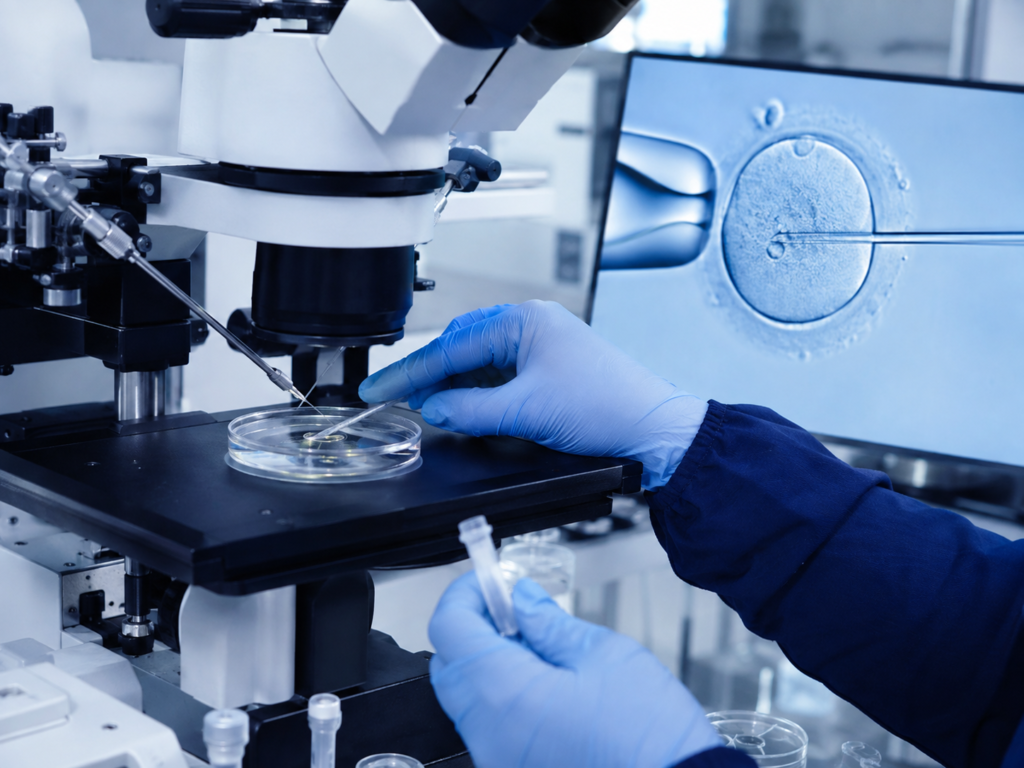
During Intracytoplasmic Sperm Injection (ICSI) in In Vitro Fertilization (IVF), where a single sperm is injected directly into an egg, an embryologist manually selects a sperm exhibiting optimal morphology and motility under a microscope. But if clinics take this a step further and add advanced technologies designed to isolate “superior sperm,” will pregnancy and live birth rates rise accordingly?
Research presented at the Annual Meeting of the European Society of Human Reproduction and Embryology (ESHRE 2026) suggests the answer is far from straightforward.
While blastocyst development improved markedly in certain patient subsets, other cohorts saw zero improvement in live birth rates. Sperm selection technologies cannot serve as universal “add-ons” applied indiscriminately to all fertility patients; instead, they must be chosen based on the specific underlying pathology of the patient.
PICSI: Enhancing Embryo Yield in Cases of Low Hyaluronic Acid Binding
The first technology in the spotlight was Physiological ICSI (PICSI).
Unlike standard ICSI, where embryologists rely primarily on visual morphology and motility, PICSI selects and injects sperm based on their ability to bind to hyaluronic acid (HA)—a primary component of the cumulus matrix surrounding the oocyte. This approach leverages the biological principle that sperm with high HA-binding capacity are more mature and carry significantly lower rates of DNA damage.
Researchers from the Kyono ART Clinic in Japan compared prior standard ICSI cycles with subsequent PICSI cycles across 95 patients who had previously experienced poor ICSI outcomes.
Fertilization rates were comparable (72.6% vs. 76.6%), and the proportion of good-quality Day-3 embryos remained similar.
The divergence surfaced as culture progressed:
- Blastocyst formation rate: Increased from 31.1% with standard ICSI to 44.0% with PICSI.
- Good-quality blastocyst rate: Rose from 5.0% to 13.5%.
- Usable blastocyst rate: Expanded from 23.8% to 39.9%.
The disparity was especially pronounced in patients whose sperm HA-binding score was below 65%. In this subgroup, blastocyst formation after PICSI jumped from 32.7% to 43.0%, and usable blastocysts rose from 23.4% to 32.5%.
Conversely, no distinct difference was observed in the cohort with an HA-binding score of 65% or higher. This indicates that PICSI is not a universally superior technology for all men, but rather demonstrates efficacy under the specific condition of impaired HA-binding capacity.
Pregnancy outcomes were also notable. Following frozen blastocyst transfers, the pregnancy rate was 25.0% for prior ICSI versus 41.2% for PICSI, though this difference did not reach statistical significance. Miscarriage rates differed substantially at 70.0% versus 14.3%, but because actual clinical pregnancies totaled only 10 and 21 cases respectively, concluding definitively that PICSI reduces miscarriage rates remains premature based on these numbers alone.
The researchers acknowledged that the sample size for clinical outcomes was small, optimal HA-binding cutoffs require further validation, and the retrospective, self-controlled design represents a key study limitation.
Microfluidic Sperm Sorting: No Routine Advantage in Normozoospermic Cohorts
In contrast, research evaluating microfluidic sperm selection yielded almost opposite conclusions when applied routinely.
Unlike traditional density gradient centrifugation (DGC), microfluidic technology selects motile sperm that actively swim through microscopic channels. It mimics aspects of the natural sperm selection occurring within the female reproductive tract and minimizes oxidative stress caused by centrifugation. While numerous studies show that microfluidic sorting isolates sperm with lower DNA damage, whether this translates into higher live birth rates has remained unclear.
A study presented at ESHRE 2026 involving POSEIDON Group 3 women (younger patients with low ovarian reserve) clearly illustrated this gap.
The researchers analyzed 268 ICSI cycles involving male partners with normal semen parameters (normozoospermia), comparing 151 microfluidic sorting cycles against 117 double density gradient cycles:
- Fertilization rate: 87% vs. 90% (no significant difference).
- Blastocyst formation rate: 59% in the microfluidic group vs. 51% in the conventional group (statistically non-significant).
When evaluating ultimate childbirth outcomes, any potential advantage disappeared:
- Live birth rate: 50% for microfluidics vs. 56% for density gradient (no significant difference).
- Implantation rate: 44% for microfluidics vs. 63% for density gradient (statistically significantly lower in the microfluidic group).
- Clinical pregnancy rate: 55% vs. 66% (statistically non-significant).
The research team concluded that there is no evidence supporting the routine use of microfluidic sperm sorting in POSEIDON Group 3 cycles when the male partner exhibits normal semen parameters.
Targeted Utility: High DNA Fragmentation and Advanced Paternal Age
This does not imply that microfluidic sperm selection is inherently ineffective.
Another study presented at ESHRE 2026 analyzing 1,600 repeat ICSI cycles found that in men with moderate-to-high sperm DNA fragmentation (SDF 30–49%), microfluidic sorting yielded superior implantation and live birth outcomes.
Similarly, an analysis of 2,957 cycles showed potential benefits in cohorts characterized by high DNA fragmentation, advanced paternal age, or previous IVF failures, while finding insufficient evidence to support its indiscriminate use under normal conditions. Both studies, however, must be interpreted within the context of their retrospective and non-randomized designs.
Conclusion: Matching Technology to Specific Indications
The overarching message from these studies departs from the simplistic notion that “more sophisticated technology invariably produces better clinical results.”
Whether utilizing PICSI or microfluidic sorting, these techniques hold therapeutic potential for patients with specific sperm defects, but applying them indiscriminately to patients with normal sperm does not automatically elevate childbirth rates.
In fertility treatments, novel diagnostic assays, culture systems, and selection protocols frequently emerge supported by sound biological rationales. However, reducing sperm DNA damage or slightly increasing the yield of good blastocysts does not automatically equate to a higher probability of taking home a baby.
A comprehensive review of sperm selection technologies published in 2025 similarly concluded that while microfluidic sorting effectively isolates sperm with lower DNA damage, clinical evidence demonstrating that routine application raises live birth rates remains limited.
For couples navigating treatment, the pertinent question is not “Should we use the latest sperm selection technology?” but rather “Do we have a specific clinical indication for using this technology?”
Clinicians must first assess whether specific criteria are present—such as repeated poor embryonic development in prior ICSI cycles, elevated sperm DNA fragmentation, or reduced hyaluronic acid binding capacity.
The findings presented at ESHRE 2026 converge on a single principle: rather than adding advanced technology to every patient’s protocol, identifying the patients who genuinely need that technology is what truly matters.
※ This article was synthesized based on research findings concerning PICSI and microfluidic sperm selection presented at the European Society of Human Reproduction and Embryology Annual Meeting (ESHRE 2026). It does not replace individual medical diagnosis or clinical care, and specific medical decisions must be made in consultation with a qualified specialist.
※ The images used in this article were generated using generative AI (ChatGPT, OpenAI) as visual references to aid understanding and do not depict real individuals.