
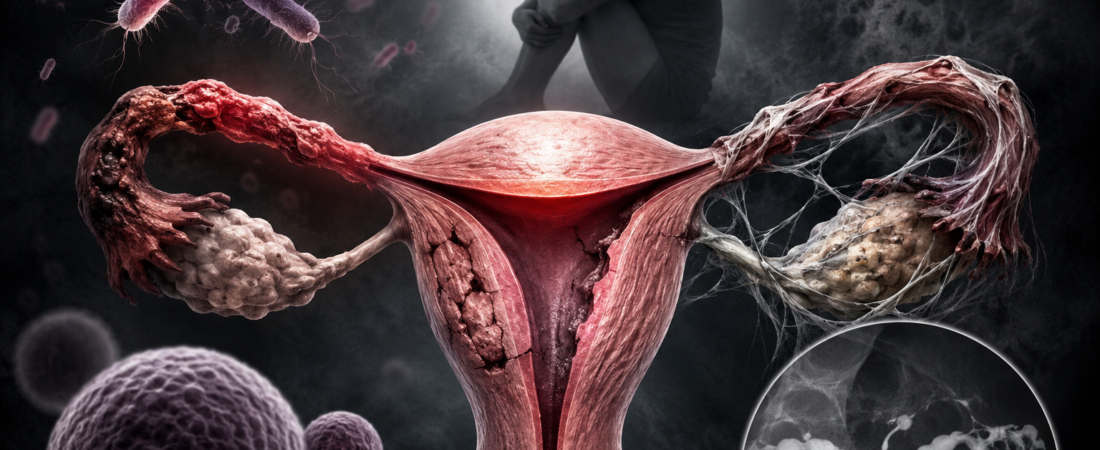
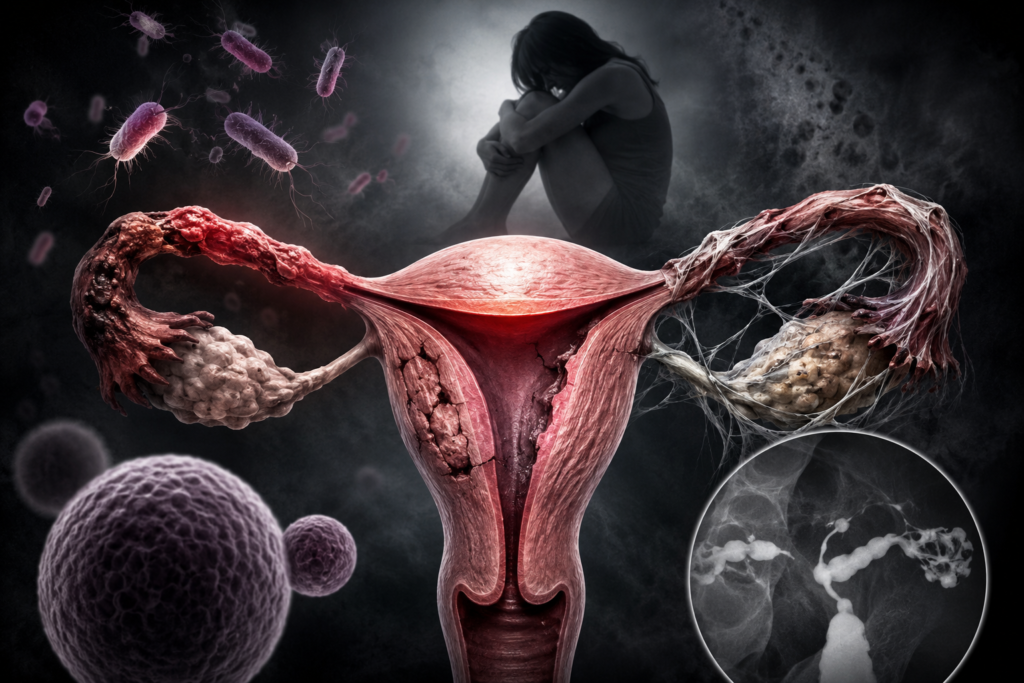
Pelvic Inflammatory Disease (PID) is perhaps the most underestimated condition in gynecology. While many patients dismiss it as a minor infection or a passing discomfort similar to vaginitis, reproductive medicine views PID as a primary architect of female infertility. The most alarming reality is that a significant number of women are diagnosed with infertility without ever knowing they suffered from PID in the first place.
The Anatomy of Destruction: Beyond the Infection PID occurs when bacteria from the vagina or cervix ascend into the upper reproductive tract, infecting the uterus, fallopian tubes, and ovaries. Common culprits include Chlamydia trachomatis and Neisseria gonorrhoeae, though the disruption of the vaginal microbiome is increasingly recognized as a major trigger.
However, the medical danger of PID lies not in the active infection itself, but in the long-term biological scarring that follows. The fallopian tubes are the vital conduits where fertilization occurs and through which the embryo must travel to reach the uterus. When inflammation strikes, immune cells attack the delicate tissues of these tubes. Long after the infection has been cleared by antibiotics, the damage remains: fibrosis and adhesions. The tubes may appear “healed” on the surface, but internally, they are often permanently scarred and functionally compromised.
The “Silent Destroyer” Chlamydia is often dubbed a “silent infection” because it frequently presents without pain or noticeable discharge. The U.S. Centers for Disease Control and Prevention (CDC) warns that untreated chlamydial infections are a leading cause of PID, which in turn significantly elevates the risk of tubal damage and involuntary infertility. Because many women remain asymptomatic, they are unaware that their reproductive anatomy is being slowly destroyed.
Cumulative Damage and Reproductive Risk Reproductive medicine now classifies PID not as a transient infectious disease, but as a “tubal-destructive process.”
- Functional Damage: Chronic inflammation damages the ciliated cells inside the fallopian tubes, preventing the healthy transport of embryos.
- Cumulative Effect: PID is not a “one-and-done” threat. Recurrent episodes have a multiplicative effect on tubal damage. Each infection increases the risk of both infertility and ectopic pregnancy—a life-threatening condition where an embryo implants outside the uterus.
- The Myth of Safety: Absence of symptoms does not equate to absence of harm. Many patients found to have tubal occlusion (blocked tubes) report no history of PID, yet their antibody tests reveal traces of past, undiagnosed infections.
Prevention as the Ultimate Treatment While IVF technology continues to advance, the ability to restore a damaged, scarred fallopian tube to its original, functional state does not yet exist. In this field, prevention remains the only truly effective strategy. Regular screening for sexually transmitted infections (STIs) and aggressive early treatment are the most robust defenses against infertility.
The tragedy of PID is that the pain eventually fades, but the biological record remains. The scars etched onto the fallopian tubes are lifelong. Years later, these scars resurface as a singular, heartbreaking question: “Why can’t I conceive?” Protecting your fertility means recognizing that PID is not just a passing infection—it is a condition that potentially writes the future of your reproductive life.
Sources: CDC guidelines on PID and Chlamydia; NIH research on tubal factors in infertility; recent international reproductive medicine and infectious disease analyses (2025–2026).
Disclaimer: This report is for informational purposes. If you suspect an infection or are planning for pregnancy, please consult a gynecologist for screening and appropriate management.