
For women preparing for In Vitro Fertilization (IVF), few moments are as jarring as the discovery of a hydrosalpinx—a blocked fallopian tube filled with fluid—followed by a recommendation for surgery. To be told that an organ essential for natural conception must be removed in order to achieve pregnancy feels inherently contradictory.
This creates one of the most contentious debates in reproductive medicine: Is surgical excision the gold standard, or can we preserve the fallopian tube while neutralizing its negative effects on implantation?
The Biological Conflict Hydrosalpinx occurs when a fallopian tube is obstructed, causing fluid to accumulate and distend the tube. In the context of IVF, the clinical concern is not the blockage itself, but the fluid. This accumulated fluid can reflux back into the uterine cavity, creating a toxic environment that disrupts embryo attachment. Multiple studies have confirmed that untreated hydrosalpinx significantly lowers implantation and clinical pregnancy rates.
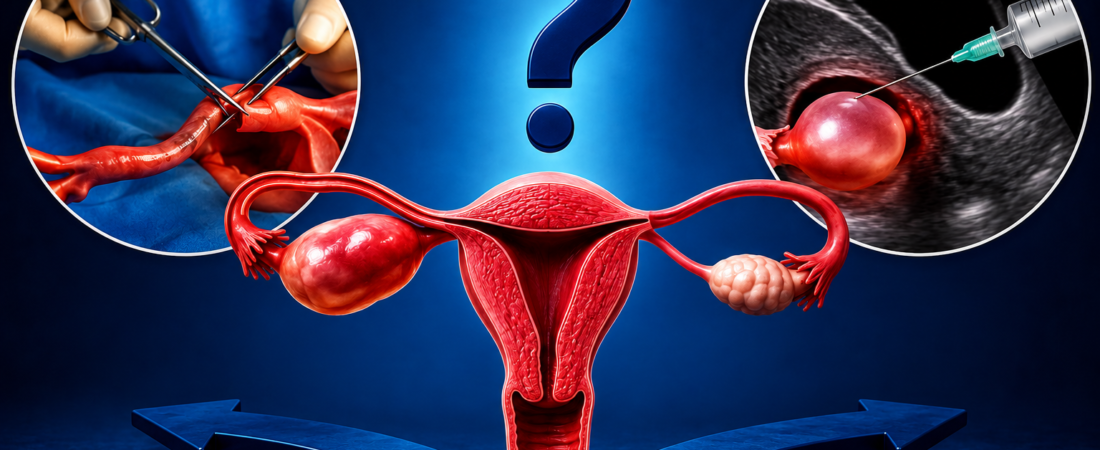
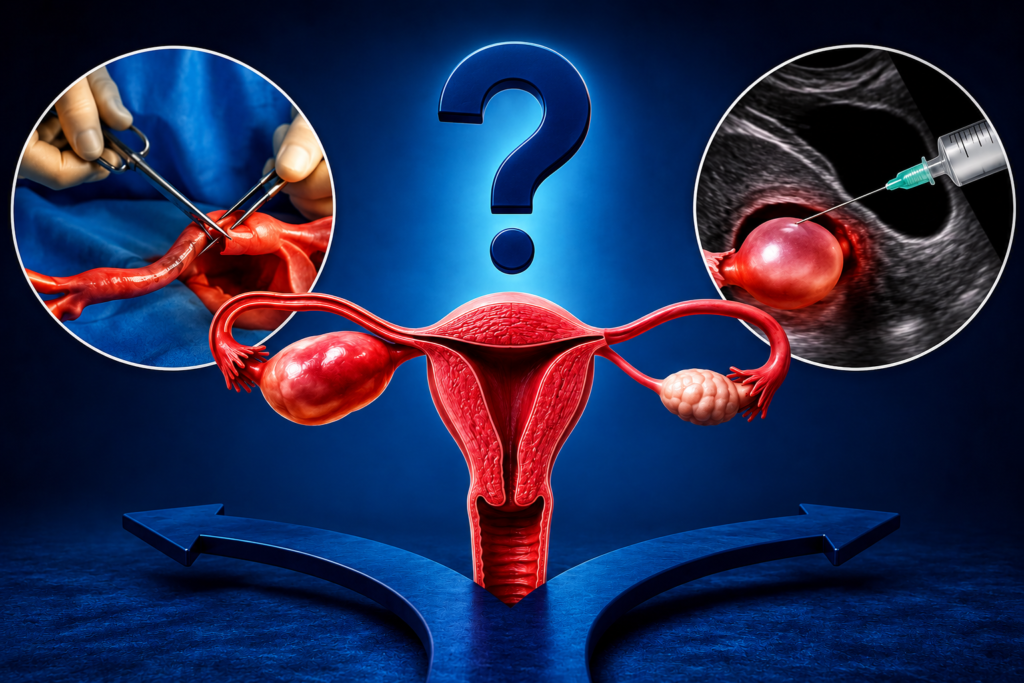
The Case for Salpingectomy (Excision) The traditional, evidence-based approach is a salpingectomy—the surgical removal of the affected tube. Numerous studies, including those originating from European cohorts, have demonstrated that removing the hydrosalpinx prior to IVF significantly improves pregnancy and live birth rates. For many specialists, this remains the standard of care, particularly when the hydrosalpinx is large and clearly visible on ultrasound.
The Case for Preservation and Alternatives However, critics of aggressive surgery point to the proximity of the fallopian tubes to the ovaries. Surgical intervention can potentially compromise ovarian blood supply, a devastating outcome for patients with diminished ovarian reserve or advanced maternal age.
This has led to the emergence of alternative strategies:
- Proximal Tubal Occlusion: Instead of removing the entire tube, clinicians can block the portion of the tube connected to the uterus. This effectively creates a barrier, preventing the toxic fluid from entering the uterine cavity while leaving the anatomy intact.
- Aspiration and Sclerotherapy (Alcohol Sclerosis): This minimally invasive technique involves using transvaginal ultrasound to aspirate the fluid and inject ethanol to harden (sclerose) the tube. Because it avoids surgery altogether, it is increasingly attractive for patients with low ovarian reserve. While long-term safety data is still being compared to traditional surgery, extensive clinical experience by select centers has shown it to be a viable, less taxing alternative.
The “Standard” is Not One-Size-Fits-All The reality of modern fertility practice is that we are moving away from dogmatic protocols toward personalized strategies. The choice between excision, occlusion, or sclerotherapy depends on a mosaic of individual factors:
- Ovarian Reserve: A patient with low AMH may favor sclerotherapy to protect ovarian blood flow.
- Symptom Severity: Large, inflamed hydrosalpinges may necessitate surgery to prevent pelvic pain or secondary infection.
- History of Implantation Failure: A patient who has faced repeated IVF failures may opt for the most definitive surgical approach (excision) to eliminate all possible variables.
Conclusion: The Goal is Pregnancy, Not Anatomy The debate surrounding hydrosalpinx is not about “saving” versus “cutting.” It is about prioritizing the ultimate goal: a healthy pregnancy. The danger lies not in one method or the other, but in an inflexible adherence to a single protocol without considering the patient’s specific clinical landscape.
Medical consensus is currently in a state of evolution. We recognize the harm that hydrosalpinx fluid causes, but we are also becoming increasingly sophisticated in how we mitigate that harm. Today’s fertility clinics are moving toward a future where treatment is a customized negotiation between the surgical risks and the reproductive benefits, ensuring that every patient receives the strategy most likely to lead to a successful birth.
Sources: Guidelines from ESHRE and ASRM; clinical reviews in Human Reproduction and Fertility and Sterility; ongoing clinical data on surgical vs. minimally invasive hydrosalpinx management.
Disclaimer: This report is for informational purposes. Clinical decisions regarding hydrosalpinx require a comprehensive consultation with a reproductive endocrinologist to weigh individual surgical risks against the potential for IVF success.