

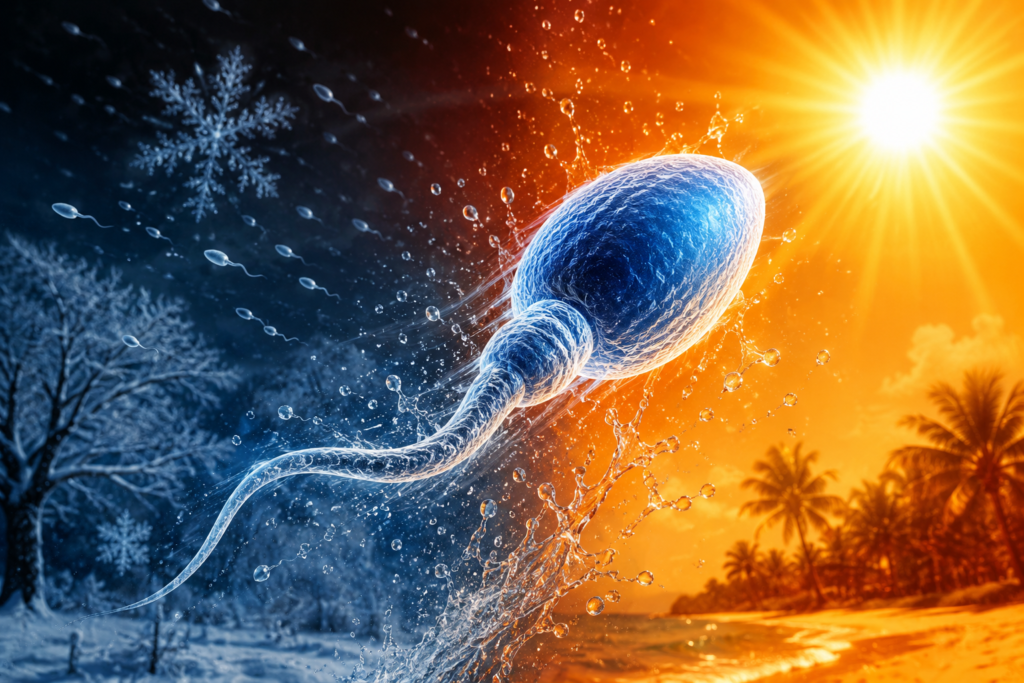
We are accustomed to the idea that our moods and activity levels shift with the changing seasons. However, recent scientific evidence suggests that our reproductive biology is similarly tuned to the calendar. A study analyzing approximately 15,000 semen samples has revealed a striking trend: sperm motility—the ability to swim toward an egg—peaks in early summer (June–July) and reaches its lowest point during the winter months.
The Role of Temperature and Biology Testicular health is famously sensitive to temperature, requiring an environment roughly 2–3°C cooler than the core body temperature for optimal spermatogenesis. Given this, it might seem counterintuitive that sperm health thrives in the warmth of early summer.
Experts point to a complex interplay of factors rather than temperature alone:
- Sunlight and Hormones: Increased exposure to sunlight alters the secretion of melatonin and testosterone, the primary male sex hormone.
- Lifestyle Shifts: Summer months often bring increased physical activity, higher consumption of fresh fruits and vegetables, and higher circulating Vitamin D levels.
- The Winter Slump: Conversely, winter is often characterized by indoor inactivity, decreased Vitamin D, and seasonal dietary habits that may not support optimal reproductive health.
The 80-Day Delay: Understanding the Cycle A crucial takeaway for those planning pregnancy is the timeline of sperm production. It takes approximately 70 to 80 days for a sperm cell to mature. This means the sperm being analyzed or utilized for fertilization today is a reflection of lifestyle habits from two to three months ago. If you are preparing for a pregnancy in the summer, the groundwork must be laid in the spring.
Lifestyle: The Greater Constant While seasonal fluctuations are statistically significant, they are not the primary drivers of fertility. An individual’s health status remains the most powerful variable.
- The “Fertility Killers”: Smoking remains the most significant threat to sperm DNA integrity, while excessive alcohol consumption directly suppresses testosterone.
- The Impact of Obesity: Obesity elevates scrotal temperature and triggers chronic inflammation, which can profoundly impair sperm production.
- The Foundation of Health: Regular exercise, adequate sleep, and a diet rich in antioxidants are the most reliable methods to enhance sperm quality, regardless of the season.
Conclusion: A Shared Health Project The findings of this study serve as a necessary reminder that male reproductive health is not static; it is deeply responsive to our environment and choices. The era of viewing infertility solely as a “female issue” has long passed.
If environmental shifts as subtle as the seasons can leave a trace on sperm health, it reinforces a critical message: preparing for a baby is a shared health project. Success is not found in waiting for the “perfect month”; it is built through the daily commitment to a healthy lifestyle, sustained throughout the year.
Sources: Analysis of semen quality trends published in ‘Human Reproduction’; international studies on environmental factors in male fertility.
Disclaimer: This report is for informational purposes. If you are experiencing fertility challenges, please consult a urologist or reproductive specialist for a personalized clinical assessment.