
The success of In Vitro Fertilization (IVF) is intrinsically linked to the quantity and quality of the eggs retrieved. For this reason, controlled ovarian stimulation (COS)—the process of inducing the maturation of multiple follicles—has always been the cornerstone of fertility treatment. However, the philosophy behind how we stimulate the ovaries is undergoing a profound transformation.
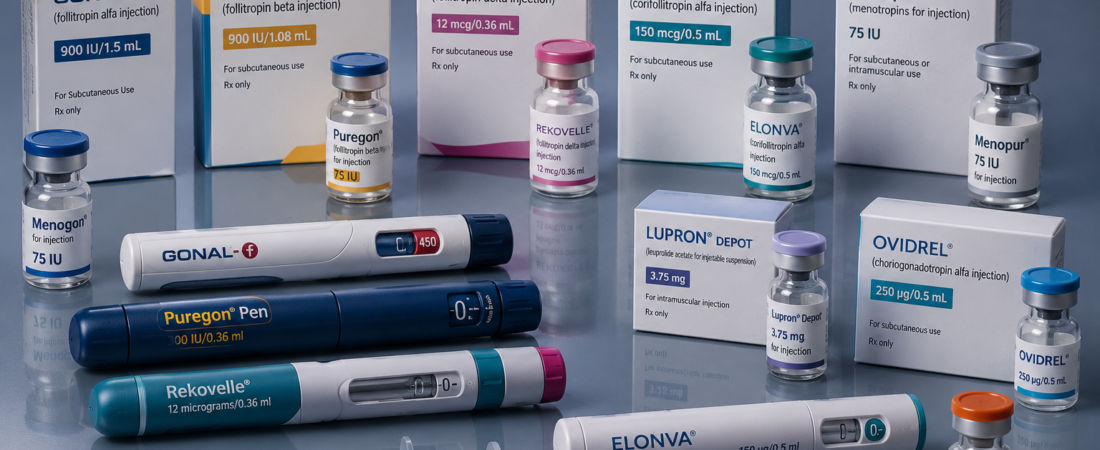
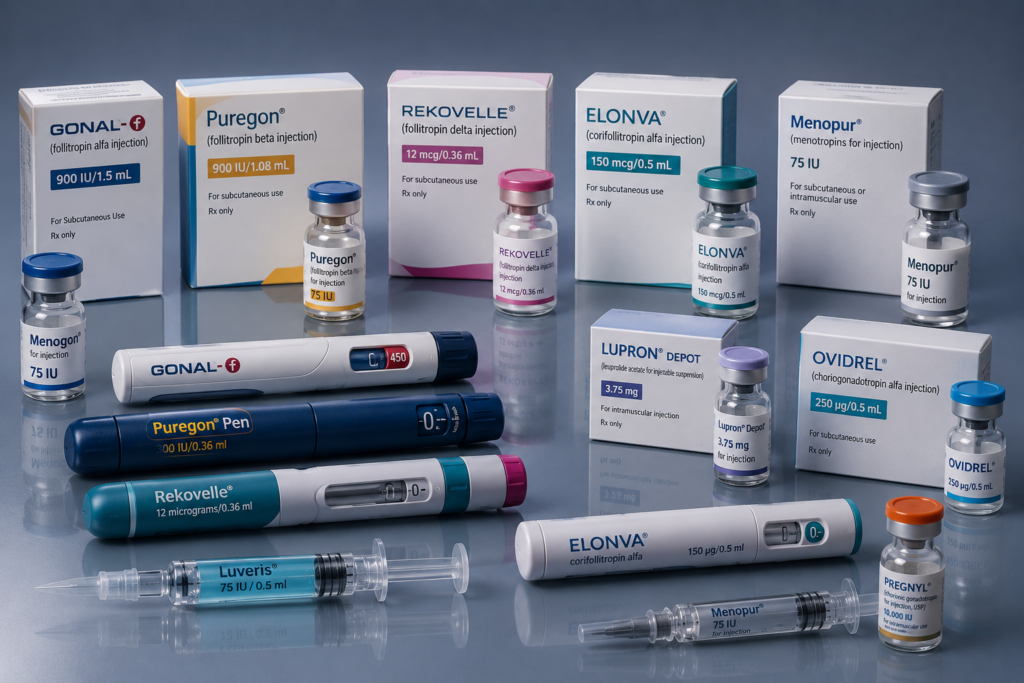
The Historical Arc: From Crude Extraction to Recombinant Precision Three decades ago, stimulation protocols relied on gonadotropins (hMG) extracted from the urine of postmenopausal women. While groundbreaking, these early methods lacked the purity and consistency required for modern clinical standards. The subsequent introduction of recombinant FSH (Follicle-Stimulating Hormone), such as Gonal-F and Puregon, brought a new era of reliability. These high-purity, bio-engineered hormones became the global standard, allowing for more predictable treatment cycles.
The Shift in Philosophy: Efficiency Over Volume For years, the IVF industry operated under the “more is better” mantra. The goal was often to maximize the number of retrieved eggs, under the assumption that volume equated to higher pregnancy rates. However, clinical experience revealed a dangerous trade-off: Ovarian Hyperstimulation Syndrome (OHSS). Excessive stimulation did not guarantee proportional increases in live birth rates; instead, it jeopardized patient safety, leading to complications like ascites, thrombosis, and systemic distress, particularly in young patients or those with Polycystic Ovary Syndrome (PCOS).
The Era of Precision Stimulation Today, global authorities like ESHRE (European Society of Human Reproduction and Embryology) and ASRM (American Society for Reproductive Medicine) are championing a shift toward “patient-tailored” protocols. The new standard is no longer defined by how many eggs one can harvest, but by how accurately one can dose the medication to the patient’s biological profile.
- Weight- and AMH-Based Dosing: New-generation drugs like Rekovelle (follitropin delta) have revolutionized this space by calculating the exact dosage based on the patient’s body weight and Anti-Müllerian Hormone (AMH) levels. This moves away from the “one-size-fits-all” approach, recognizing that a woman with a robust ovarian reserve requires a vastly different stimulus than one with diminished reserve.
- Convenience and Compliance: Long-acting formulations like Elonva (corifollitropin alfa) have addressed the physical and emotional toll of daily injections by providing a week’s worth of hormonal support in a single dose, significantly reducing the “burden of treatment.”
The Next Horizon: AI and Predictive Medicine The most exciting frontier is the integration of Artificial Intelligence. Emerging algorithms analyze a patient’s age, BMI, AMH, antral follicle count (AFC), and historical responses to previous cycles to predict the optimal stimulation window with unprecedented accuracy. We are transitioning from a reliance on the clinician’s intuition to a data-driven model where the dose is optimized by machine learning.
Conclusion: Smarter, Not Stronger The history of ovarian stimulation is a journey toward sophistication. We have moved from the coarse, natural-origin extracts of the 1990s to the precise, data-optimized protocols of the 2020s.
Modern reproductive medicine is no longer a contest to see who can force the ovaries to produce the most eggs. It is a scientific endeavor to read the unique biological signature of each patient and provide the most gentle, efficient, and safe stimulus possible. The goal of the future is not more stimulation, but “smarter” stimulation—ensuring that every cycle is not just productive, but fundamentally safe.
Sources: ESHRE and ASRM clinical guidelines on controlled ovarian stimulation; recent meta-analyses on individualized dosing protocols in IVF.
Disclaimer: This report is for informational purposes. Ovarian stimulation protocols must be personalized by a reproductive endocrinologist based on individual clinical diagnostic markers.