
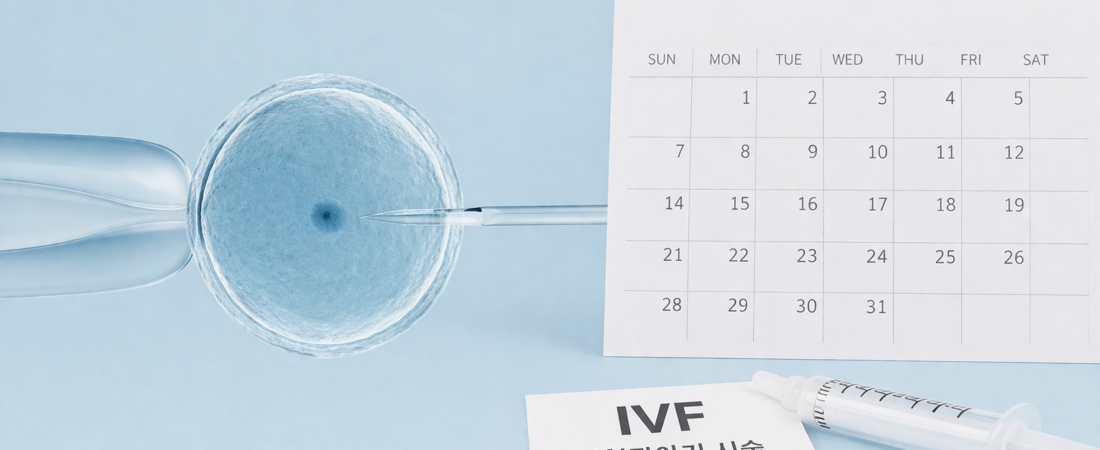
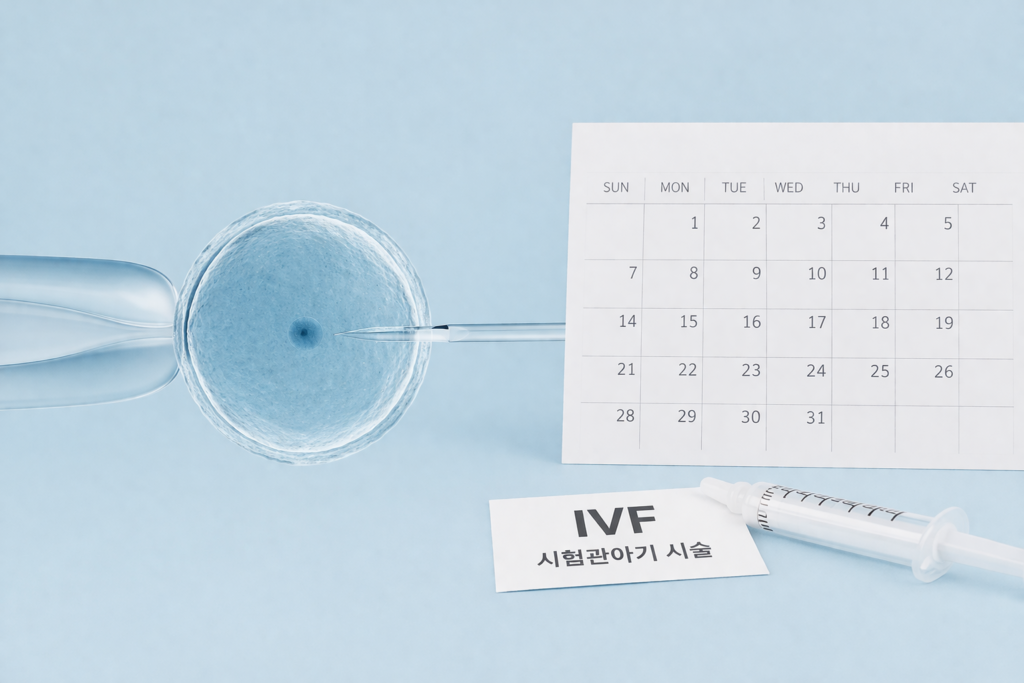
In In Vitro Fertilization (IVF), the number of eggs retrieved during controlled ovarian stimulation decreases with maternal age. However, the more critical challenge—and the one less understood by many patients—is the precipitous decline in the quality of those eggs. Even if a 40-year-old and a 35-year-old retrieve the same number of eggs, the clinical outcomes differ vastly because the biological potential of those eggs is fundamentally different.
Reproductive medicine defines this not as a problem of “quantity,” but as a problem of “the probability of chromosomal normalcy.”
The Decline of “Normal” Eggs Clinical data illustrates a stark trajectory. For a woman with normal ovarian reserve at age 35, the average retrieval is 12–15 eggs. By age 40, this drops to 8–10; by 43, 4–6; and by 45, 2–4. By age 47, retrieval itself becomes a significant clinical hurdle.
While the reduction in egg count is obvious, a more silent, devastating change occurs: the percentage of chromosomally normal (euploid) eggs. At age 35, approximately 50% of eggs are typically euploid. By age 40, that rate falls to 20–30%, and after age 43, it plummets to under 10%. In practical terms, while 10 eggs at age 35 might yield 5 healthy candidates, 10 eggs at age 43 might not yield even one. IVF appears to be a “numbers game,” but it is, in reality, a “game of probability.”
Shifting Clinical Strategies This reality dictates the evolution of treatment strategies. In the mid-30s, the focus is on achieving a moderate number of eggs to ensure high-quality embryos. Post-40, the strategy often shifts toward maximizing egg numbers to compensate for the dramatically lower probability of euploidy. Some studies suggest that to achieve a live birth in the early 40s, a retrieval of 15 or more eggs may be necessary.
However, this “more is better” approach is not a universal panacea. Research indicates that after age 43, simply increasing the number of eggs retrieved does not necessarily result in a statistically significant increase in live birth rates. As one fertility specialist noted, “For patients of advanced maternal age, the existence of a single normal embryo is far more critical than the total number of eggs retrieved. Beyond a certain point, repeated stimulation cycles may become a heavy burden rather than a strategic advantage.”
The Complexity of Individual Responses It is equally true that some patients succeed with very few eggs. Individual variables—such as Anti-Müllerian Hormone (AMH) levels, Antral Follicle Count (AFC), and cellular developmental competence—create highly personalized outcomes. Consequently, there is no “magic number” that guarantees success for every patient.
The debate over ovarian stimulation intensity also persists: does aggressive stimulation truly increase success, or does it potentially compromise egg quality? As strategies like “embryo banking” (the accumulation of embryos over multiple cycles) become more common, the balance between clinical efficiency and patient burden has become a central point of contention.
Ultimately, IVF is not a challenge of raw numbers, but of biological structure. As maternal age advances, we face a dual-structural decline: a decrease in egg count, and an even faster decrease in the probability of normalcy. Treatment strategies are becoming increasingly complex to navigate these hurdles.
The global reproductive medicine community is now looking toward AI-driven embryo selection and research into oocyte quality restoration as potential keys to overcoming these biological limits. Until then, the path forward requires a refined, patient-specific strategy that prioritizes the probability of finding that single, healthy embryo over the endless pursuit of high egg counts.
Sources: ASRM & ESHRE Guidelines; NIH/PubMed Clinical Studies; Human Reproduction; Fertility and Sterility; ScienceDirect.
Disclaimer: This content is provided for informational purposes, based on reporting on infertility and various public data. Medical judgments and treatment decisions must always be made in consultation with professional medical personnel. Image: AI-generated (ChatGPT, OpenAI) / Visual reference for illustrative purposes only.