
For decades, the standard clinical approach to uterine fibroids (leiomyomas) was straightforward: if a fibroid was large, it was surgically removed; if it recurred or caused discomfort, a hysterectomy was often the definitive solution. However, contemporary obstetrics and reproductive medicine have undergone a profound shift. Today, the focus is not on the mere existence of a fibroid, but on the functional disruption it causes.
The Location Factor: The 10cm vs. 2cm Dilemma The modern clinical question is no longer “How large is the fibroid?” but rather “Where is it located, and what is it affecting?”
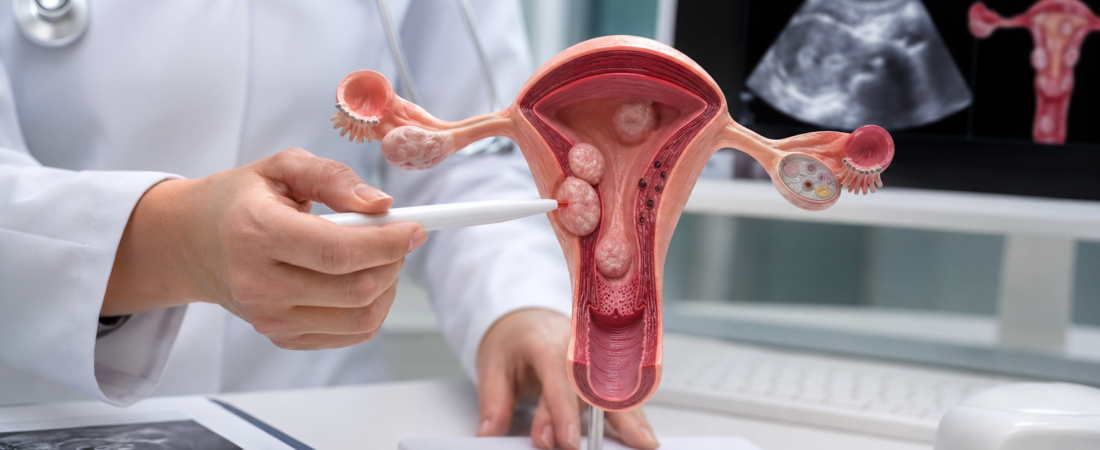
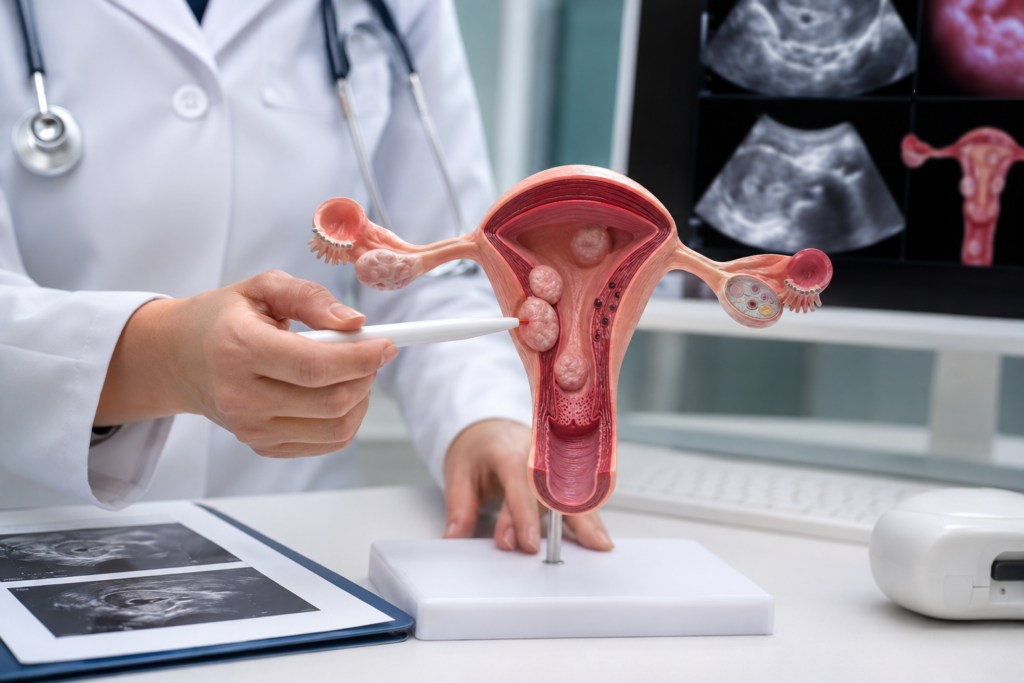
While a 10cm subserosal fibroid—growing outward from the uterus—might be asymptomatic and warrant nothing more than routine observation, a small 2cm submucosal fibroid—pressing into the uterine cavity—can be a significant clinical concern. The latter can distort the endometrial lining, interfering with embryo implantation and contributing to recurrent miscarriage. In the context of fertility, a small, strategically located fibroid is often far more consequential than a large, benign one sitting on the exterior of the organ.
Fertility and Fibroids: Precision Management The historical practice of “prophylactic removal”—surgically removing all fibroids discovered before IVF—is being replaced by a precision-based strategy. Modern clinical guidelines emphasize that only fibroids disrupting the uterine cavity require active intervention.
This approach serves two critical purposes:
- Preservation of Uterine Integrity: Aggressive surgery can lead to scarring and structural weakening of the uterine wall, which can complicate future pregnancies.
- Patient-Centric Outcomes: The goal of modern treatment is to preserve the uterus and its function, prioritizing the patient’s long-term reproductive health and quality of life over the immediate removal of benign tissue.
Evolution of Therapeutic Options The treatment landscape has moved beyond the binary choice of observation or hysterectomy:
- Minimally Invasive Surgery: Laparoscopic and hysteroscopic procedures have become the standard, offering precise removal with rapid recovery times.
- Targeted Interventions: Techniques like Radiofrequency Ablation (RFA), High-Intensity Focused Ultrasound (HIFU), and Uterine Artery Embolization (UAE) allow clinicians to shrink fibroids while leaving healthy uterine tissue untouched.
- Advanced Pharmacology: Newer classes of medications, such as GnRH antagonists, are transforming long-term symptom management, allowing patients to delay or even avoid surgery while effectively controlling bleeding and pain.
A Philosophy of Care, Not Cancer Fibroids are benign tumors, not cancer. Therefore, treatment philosophy must distance itself from the “remove-everything-you-find” mindset. The current consensus in reproductive medicine is that we are treating the patient, not the image. The primary metrics for intervention have shifted to:
- Anemia caused by excessive menstrual bleeding.
- Persistent, debilitating chronic pain.
- Documented interference with embryo implantation or pregnancy maintenance.
Conclusion: The Future of Fibroid Care The age of “immediate surgery upon discovery” is coming to a close. We are entering an era of refined, patient-centered care. For women diagnosed with fibroids, the current standard of care dictates a nuanced conversation: Is this fibroid harming your quality of life? Is it obstructing your chance at motherhood?
Treatment should be an act of preservation, not just excision. By focusing on the structural impact rather than just the physical dimensions, modern medicine ensures that the uterus remains a healthy, functional environment for the lives it may eventually carry.
Sources: Recent international clinical guidelines (2025–2026); meta-analyses on fibroid management in reproductive medicine; literature on minimally invasive uterine-sparing treatments.
Disclaimer: This report is for informational purposes. Clinical decisions regarding uterine fibroids must be made through a comprehensive consultation with a gynecologist or reproductive endocrinologist, based on the patient’s individual anatomical findings and reproductive goals.