
Insulin resistance and fertility can intersect, particularly in PCOS and ovulatory dysfunction. Blood glucose management also matters for pregnancy health. But infertility is not a verdict on someone’s diet, and improving metabolic health does not guarantee that an embryo will implant.
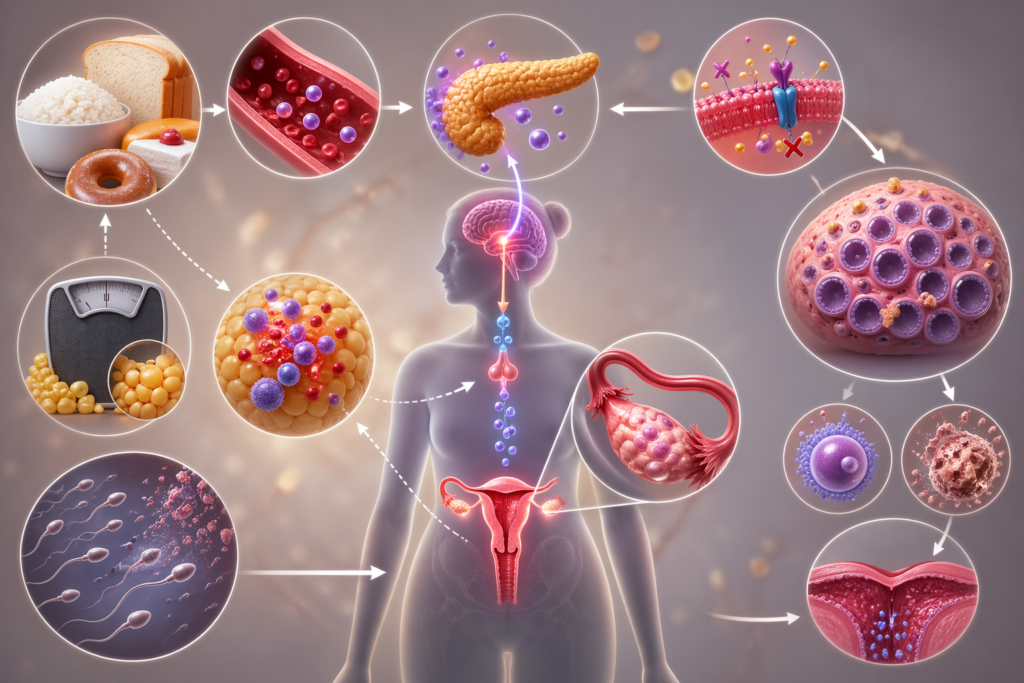
Metabolic health can be relevant to reproductive care, especially when diabetes, PCOS or ovulatory dysfunction is present. It is one component of a broader fertility assessment.
Insulin resistance and ovulation
Insulin helps regulate glucose. Insulin resistance has multiple biological and environmental contributors; eating a particular carbohydrate does not by itself explain why it develops.
Higher insulin levels can contribute to androgen excess and ovulatory dysfunction in PCOS. Not every person with PCOS has the same metabolic pattern, and not every case of infertility is related to insulin.
Beyond ovulation
Associations between metabolic health and reproductive outcomes are being studied. Proposed mechanisms should not be treated as proof of why an individual transfer failed:
- Endometrial biology: Inflammatory pathways are studied, but a metabolic diagnosis does not prove a hostile uterine lining.
- Pregnancy health: Diabetes and related conditions merit management before conception when possible.
- Uncertainty: A failed transfer has multiple possible explanations; metabolic optimization is not a guaranteed implantation treatment.
Male reproductive health
Diabetes and metabolic disease can affect sexual function and may be associated with semen changes. A metabolic diagnosis does not reveal the DNA integrity of a particular sperm sample.
Age adds a separate consideration
Egg-related fertility declines with age, but there is no single age at which the body loses all tolerance for dietary variation. Metabolic care and timely fertility decisions should be considered together.
An individualized plan
For some people with higher weight and anovulation, weight management can improve ovulation. It is not appropriate for everyone and does not guarantee live birth; delaying fertility care also has trade-offs.
A sustainable eating pattern, suitable physical activity and treatment of diagnosed conditions can support health. There is no single diet proven best for reproductive outcomes in PCOS.
Good metabolic care is valuable whether or not pregnancy follows. Infertility should never be framed as evidence that someone failed to prepare their body.
Disclaimer: This report is for informational purposes. Nutritional changes should be integrated into your overall fertility plan under the guidance of a reproductive specialist, as individual metabolic needs vary significantly.
Sustainable, individualized care
The international PCOS guideline supports healthy eating and physical activity without identifying one diet as best for reproductive outcomes. Weight stigma can itself harm care. International PCOS guideline (2023).
Related reading
Irregular Periods and Ovulation: The Silent Signal Worth Checking