

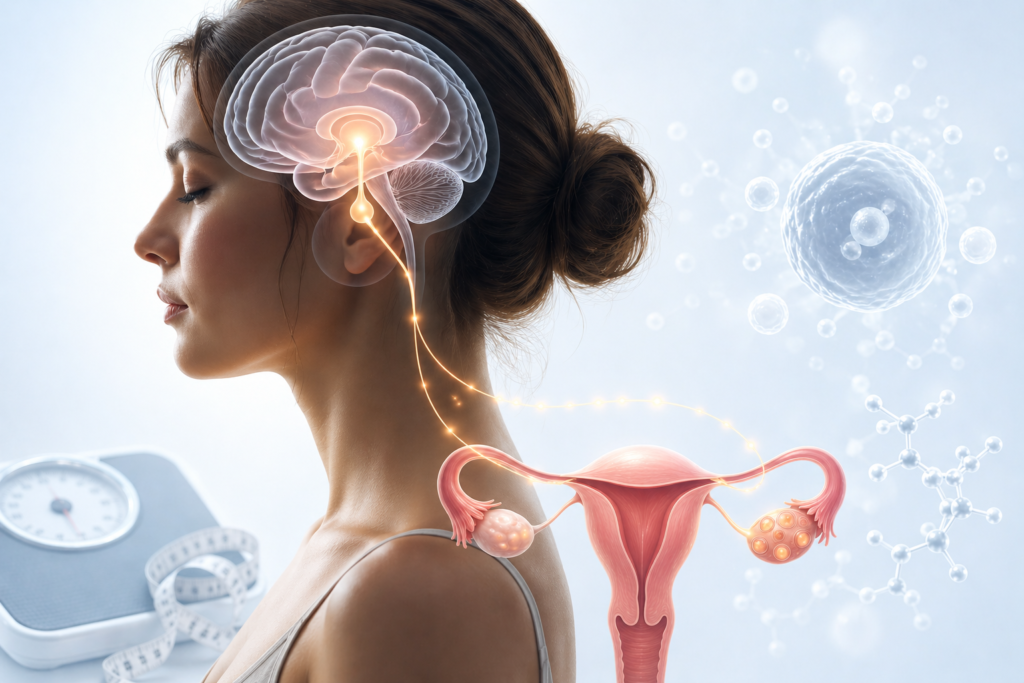
Ovulation is often perceived as a local event occurring within the ovaries. In reality, it is the grand finale of a complex, top-down communication network. The process begins in the hypothalamus of the brain, signals the pituitary gland to release FSH and LH, and only then does the ovary respond. When ovulation ceases or becomes irregular, it means this delicate “HPA-Ovarian Axis” has been disrupted.
The Multi-Factorial Drivers of Anovulation Anovulation is not a single diagnosis; it is a clinical manifestation of a system struggling to maintain balance.
- PCOS and Metabolic Instability: Polycystic Ovary Syndrome (PCOS) is the most common culprit. Driven largely by insulin resistance, the body’s metabolic dysfunction spills over into the endocrine system, increasing androgen levels and trapping follicles in an immature, non-ovulatory state.
- The Weight Extremes: Body composition acts as a powerful feedback loop. Excessive adipose tissue disrupts estrogen metabolism, while extreme caloric restriction or over-exercise signals the hypothalamus that “survival is at risk,” leading the brain to shut down non-essential functions—reproduction being the first to go.
- The Stress Response: Chronic stress elevates cortisol. In the eyes of your hypothalamus, cortisol is a signal of danger. When the body believes it is in “survival mode,” the reproductive axis is systematically down-regulated. This is why “functional anovulation” is so common in high-stress, high-achievement environments.
- Endocrine Disruptors: Thyroid dysfunction and elevated prolactin levels are prime examples of how systemic endocrine signals can unilaterally cancel the command for ovulation.
The Myth of the ‘Temporary Glitch’ Many women—even those not actively trying to conceive—dismiss irregular periods as a minor inconvenience. This is a clinical oversight. When a cycle is absent or significantly delayed, your body is telling you that its internal architecture is struggling. Whether it is an issue of metabolism, neurological signals, or environmental factors, the body is essentially “re-prioritizing” its energy away from reproductive health.
A Call to Clinical Action If your cycles are becoming infrequent (oligomenorrhea) or have ceased entirely (amenorrhea), it is a diagnostic red flag, not a lifestyle footnote.
- Don’t ignore the silence: The absence of a period is a visible symptom of an invisible imbalance.
- Seek an integrated assessment: A diagnosis requires more than a standard ultrasound. It requires an evaluation of your metabolic profile, hormonal rhythms, and systemic stressors.
- Treat the cause, not just the symptom: Simply inducing a bleed with medication may mask the underlying problem. The goal should be to identify why your body has opted to pause ovulation.
Conclusion: Ovulation as a Marker of Health Ovulation is more than just a prerequisite for pregnancy—it is a vital sign of health. It requires the brain, the metabolism, and the ovaries to be in perfect communication. When that communication breaks down, it is an invitation to look deeper at your lifestyle, your metabolic health, and your system’s overall capacity to thrive.
Treat your cycle as a barometer of your systemic well-being. By addressing the root causes of cycle irregularities now, you are doing more than just planning for future fertility; you are reclaiming the stability and balance of your body’s entire hormonal environment.
Sources: Williams Gynecology; Speroff’s Clinical Gynecologic Endocrinology and Infertility; ASRM and ACOG guidelines on ovulatory dysfunction.
Disclaimer: This report is for informational purposes. If you are experiencing cycle irregularities or amenorrhea, please consult with a board-certified gynecologist or reproductive endocrinologist to rule out underlying hormonal or metabolic conditions.