
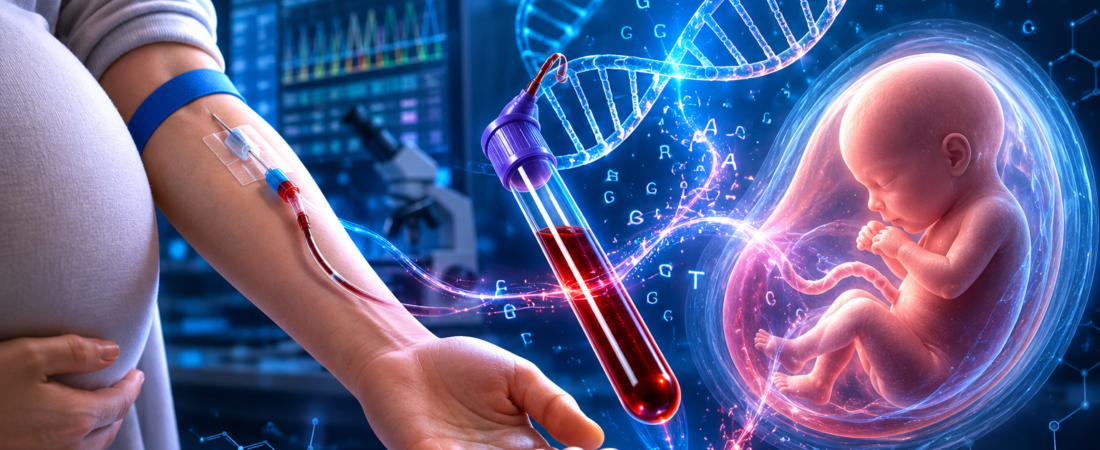
We are entering an era where a baby’s genetic blueprint can be read long before they take their first breath. A groundbreaking development in prenatal medicine now allows clinicians to identify over 2,500 genetic disorders using nothing more than a simple blood draw from the mother. This technological leap is poised to dismantle the traditional, often invasive, framework of prenatal diagnostics.
From Invasive Procedures to Precision Sequencing For decades, when a fetal anomaly was suspected, expectant parents faced the daunting prospect of invasive procedures such as amniocentesis or chorionic villus sampling—tests that carry inherent risks to the pregnancy. The research recently presented at the European Society of Human Genetics (ESHG) signals a paradigm shift. By analyzing cell-free fetal DNA circulating in the maternal bloodstream, scientists can now screen approximately 23,000 genes with high accuracy.
Clinical trials have shown that this Non-Invasive Fetal Sequencing (NIFS) can detect 95% to 99% of pathogenic variants previously identified through invasive testing, with a clinical sensitivity exceeding 97% for significant genetic conditions.
Beyond Chromosomal Screening While Non-Invasive Prenatal Testing (NIPT) has been used for years to screen for chromosomal trisomies like Down syndrome, this new technology represents a quantum leap. We are no longer just counting chromosomes; we are sequencing individual genes to detect specific mutations. As experts note, we have officially stepped into the “Fetal Genome Era.”
This advancement holds particular significance for nations like South Korea, where the median age of expectant mothers continues to rise and the reliance on fertility treatments is increasing. With nearly 20% of births now linked to fertility support, the demand for precise, safe, and proactive fetal health management has never been greater.
The Ethical Crossroad However, this progress introduces profound ethical questions that transcend medical capability. When we analyze thousands of genes, we inevitably encounter “variants of uncertain significance”—genetic markers that may have no current clinical implication but carry the potential for lifelong parental anxiety.
Medical experts argue that the true bottleneck for the future will not be the technology itself, but genetic counseling. Reading the fetal genome is now a matter of technical routine, but interpreting that information—and guiding parents through the resulting uncertainty—is a delicate human process. A single test result now holds the weight of a lifetime of potential, presenting both the opportunity for early intervention and the burden of premature knowledge.
Conclusion: A New Milestone in Medicine This research marks the culmination of nearly 30 years of study, beginning with the first discovery of cell-free fetal DNA in maternal blood in 1997. We have moved from sticking needles into the womb to analyzing a vial of blood, finally reaching the threshold of comprehensive fetal genomic analysis.
The future of prenatal care is no longer just about avoiding invasive risks; it is about the unprecedented ability to read the code of human life before birth. This is not merely a technical upgrade; it is a fundamental shift in how we understand, anticipate, and care for human life from its earliest beginning.
Sources: Research presented at the European Society of Human Genetics (ESHG) conference; studies on Non-Invasive Fetal Sequencing (NIFS); recent literature on the Fetal Genome Era.
Disclaimer: This report is for informational purposes. Prenatal diagnostic strategies should be discussed with a qualified obstetrician or genetic counselor based on the individual patient’s clinical situation.