
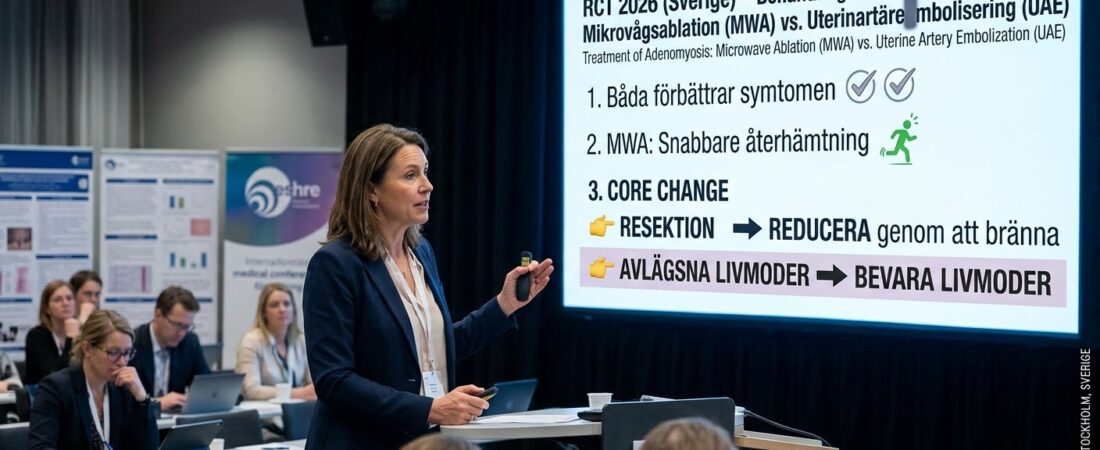
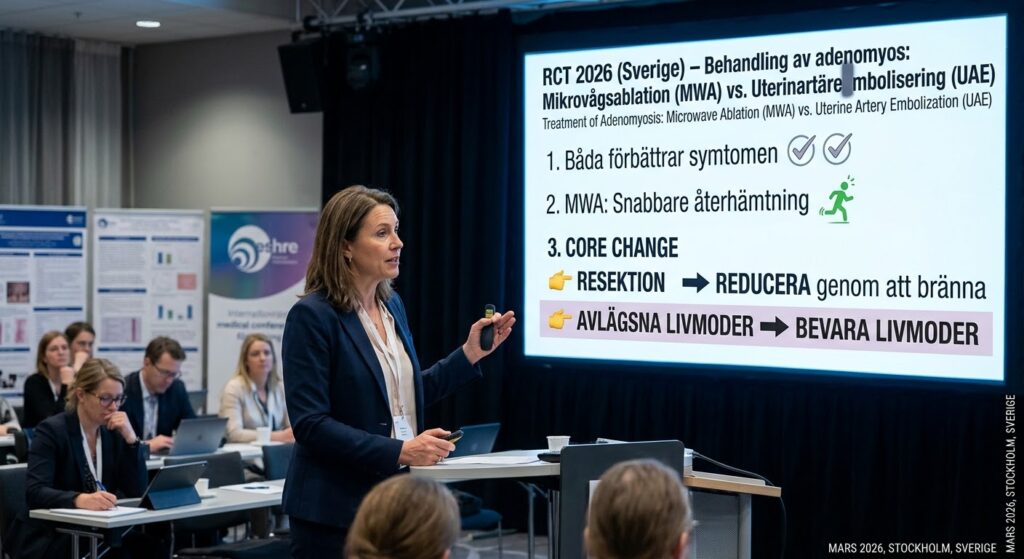
The era of opening the abdomen to excise tissue is slowly coming to an end. The trajectory of adenomyosis treatment is shifting—not toward the scalpel, but toward the precision of energy. A 2026 randomized controlled trial (RCT) conducted in Sweden provides a clear window into this change.
The study compared Microwave Ablation (MWA) with Uterine Artery Embolization (UAE). While both proved effective in alleviating symptoms, the divergence lay in the speed of recovery. MWA functions by directly heating and necrotizing the lesion, allowing it to shrink over time, whereas UAE starves the lesion by blocking its blood supply. Even within the framework of “non-surgical” interventions, the patient experience—specifically the recovery timeline and the return to daily life—favors MWA, which demonstrated superior outcomes in terms of pain management and recovery duration.
This evolution signifies more than just the superiority of a single technique; it signals a fundamental change in our therapeutic mindset.
Historically, the goal of adenomyosis treatment was the removal of the problematic tissue. The options were limited: either resection or, in severe cases, hysterectomy. Today, the questions are changing: Must we excise the tissue? Can we manage the condition while preserving the uterus?
Energy-based treatment offers a compelling answer to these questions. Instead of aiming for total eradication of the lesion, it focuses on reducing its size and mitigating symptoms to maintain the integrity of the uterine structure. In short, the paradigm is shifting from “cure” to “management.”
Adenomyosis treatment is evolving into something greater than the management of a single disease. We have begun to view the uterus not merely as an organ to be repaired, but as an “environment” to be nurtured. The concern is no longer the mere existence of a lesion, but how that lesion impacts the uterine environment. Consequently, the objective of treatment has moved from excision to the “optimization of the reproductive environment.” For women considering pregnancy, this shift is decisive; it elevates treatment from a surgical decision to a vital reproductive strategy.
From the perspective of a fertility-specialist journalist, this trend is a permanent shift in direction. Adenomyosis treatment is likely to reorganize around three pillars: resection-based care, blood-flow occlusion (UAE), and energy-based ablation. The future belongs to methods that are less invasive and more conservative.
However, a critical prerequisite remains: there is no “universal treatment” applicable to every patient. Strategies must be tailored based on the location and extent of the lesion, the state of the uterus, and the patient’s pregnancy plans.
Ultimately, the benchmark for success is changing. It is no longer defined by how much was removed, but by how well the uterine function was preserved. Adenomyosis treatment is moving firmly in that direction
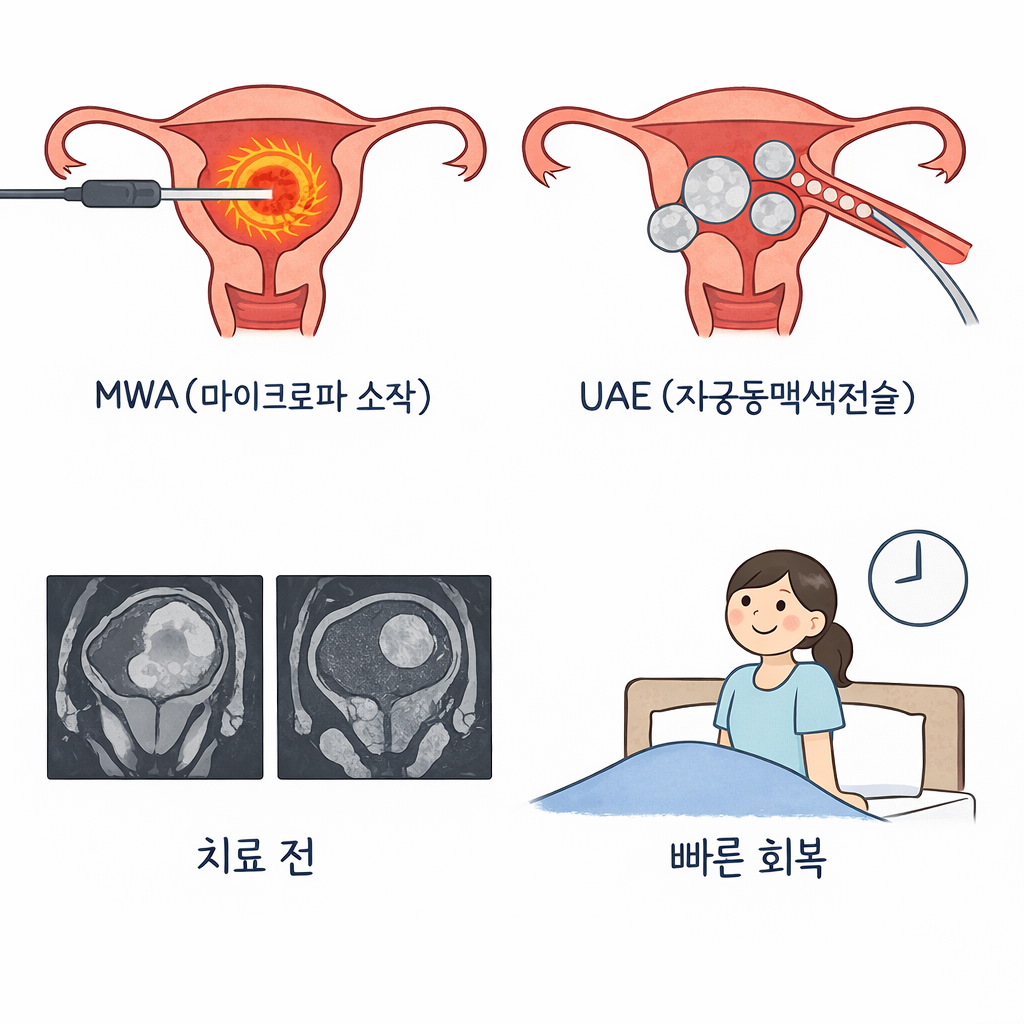
Disclaimer: This content is provided for informational purposes, based on reporting on infertility and various public data. Medical judgments and treatment decisions must always be made in consultation with professional medical personnel. Image: AI-generated (ChatGPT, OpenAI) / Visual reference for illustrative purposes only.