
- Challenging the Dogma of 1PN Discard: Multicenter Australian study of 13,203 1PN embryos across 10,730 cycles reveals that the majority of surviving conventional IVF 1PN blastocysts are chromosomally competent and biparental
- Conventional IVF vs. ICSI Divergence: 96.9% of tested conventional IVF 1PN blastocysts possessed genetic material from both parents (only 3.1% uniparental), whereas ICSI 1PN blastocysts had a 34.1% uniparental rate
- Equivalent Clinical and Perinatal Outcomes: Once confirmed euploid and biparental, 1PN blastocysts achieved live birth rates and neonatal safety profiles comparable to standard 2PN blastocysts
- A Vital Option for Low Responders: Approximately 1 in 6 cycles (15.6% to 16.7%) with 1PN embryos had zero usable 2PN embryos available, offering a critical salvage pathway when oocyte yields are low
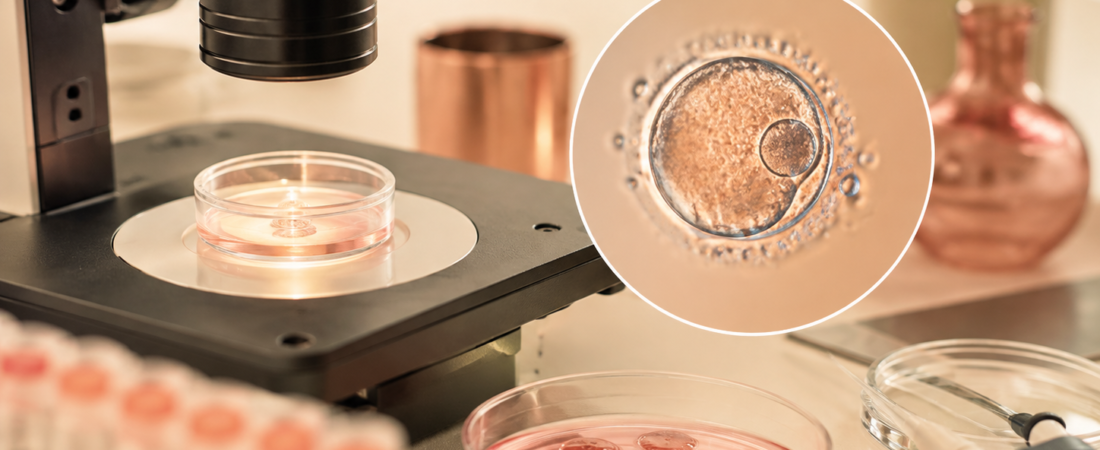
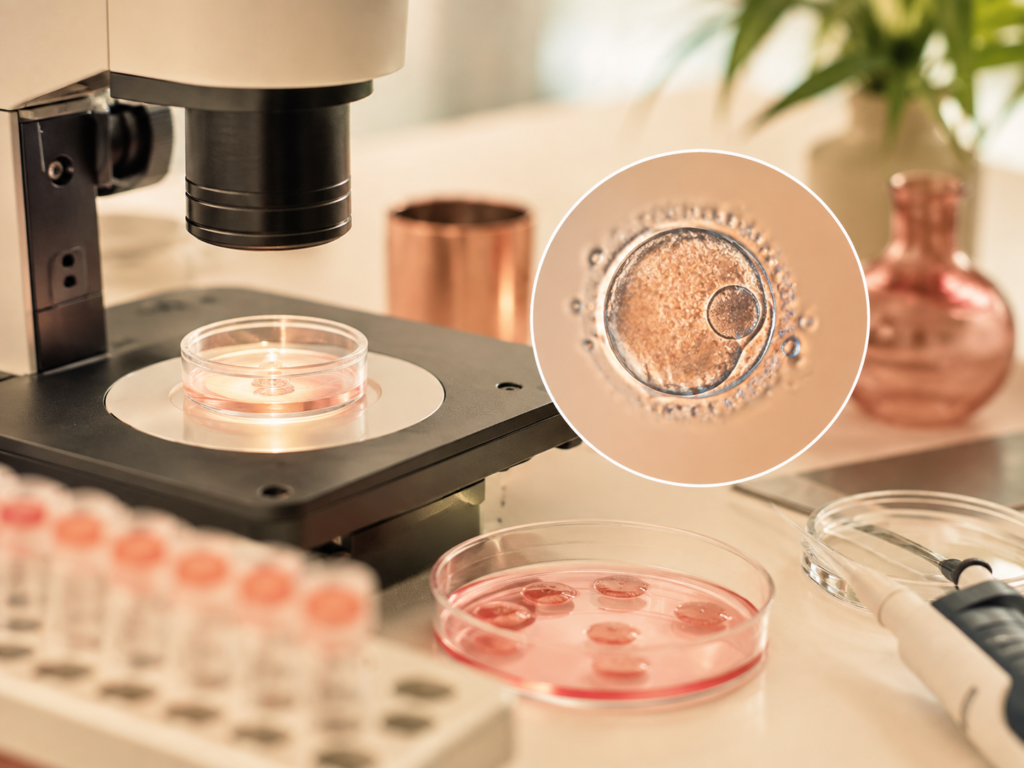
In standard In Vitro Fertilization (IVF) laboratory protocol, checking for fertilization 16 to 18 hours post-insemination represents a critical milestone. The visualization of two pronuclei (2PN)—one containing maternal chromosomes and the other paternal chromosomes—has long served as the universal benchmark of normal diploid fertilization.
Conversely, zygotes displaying only one pronucleus (1PN) have historically been viewed with clinical suspicion. Because a single pronucleus can theoretically indicate abnormal parthenogenesis (spontaneous activation of the egg without sperm genome integration) or gynogenetic/androgenetic haploidy, many embryology laboratories have routinely discarded 1PN embryos or excluded them from clinical transfer.
A landmark multicenter study published in the August 2026 issue of Human Reproduction challenges this routine discard policy. Analyzing 13,203 1PN embryos across 10,730 clinical cycles from Australian fertility networks (Genea and the University of Adelaide), researchers demonstrated that when 1PN embryos successfully develop into blastocysts and undergo genetic validation, the vast majority are genetically normal, biparental, and capable of resulting in healthy live births.
The Biology: Why Does a Normal Zygote Appear as “1PN”?
A 1PN observation under the microscope at a fixed time point does not automatically mean the embryo is biologically abnormal. Several physiological mechanisms can create the visual appearance of a single pronucleus:
- Asynchronous Pronuclear Formation: Maternal and paternal pronuclei form at slightly different times; an early or late check may catch only one visible pronucleus.
- Early Pronuclear Apposition or Fusion: The two pronuclei may migrate together and fuse earlier than standard observation windows, appearing as a single larger nuclear structure.
- Premature Pronuclear Envelope Breakdown: One pronuclear membrane may break down prematurely prior to syngamy.
A single static visual check at hour 17 captures a momentary snapshot that may misclassify a normally fertilized zygote.
Key Genetic Findings: Conventional IVF vs. ICSI
To determine the true genetic origin of 1PN embryos, the researchers performed Preimplantation Genetic Testing for Aneuploidy (PGT-A) combined with Short Tandem Repeat (STR) genotyping to trace parental origin:
| Parameter | Conventional IVF 1PN Blastocysts | ICSI 1PN Blastocysts | Standard 2PN Blastocysts (Reference) |
| Biparental Genomic Origin | 96.9% (440 / 454) | 65.9% (108 / 164) | ~100% |
| Uniparental Inheritance | 3.1% (14 / 454) | 34.1% (56 / 164) | Rare (< 1%) |
| Aneuploidy Rate | 37.3% | 45.5% | 31.5% to 33.9% |
| Ploidy Difference vs. 2PN | Not statistically significant (after age adjustment) | Significantly higher aneuploidy | Baseline reference |
- Conventional IVF (Insemination): Among 1PN embryos that reached the blastocyst stage and underwent genetic tracing, 96.9% were confirmed to carry both maternal and paternal DNA. The aneuploidy rate (37.3%) did not differ significantly from standard 2PN sibling embryos (33.9%) after controlling for maternal age.
- Intracytoplasmic Sperm Injection (ICSI): 1PN embryos derived from ICSI carried a substantially higher risk of uniparental inheritance (34.1%) and elevated aneuploidy (45.5%). Mechanical microinjection carries a higher risk of parthenogenetic oocyte activation or incomplete sperm decondensation, requiring stricter genetic caution.
Natural Attrition vs. Blastocyst Competence
The study emphasized that 1PN embryos undergo substantial natural self-selection during in vitro culture:
- Blastocyst Development Rate (Day 5/6):
- Conventional IVF: 19.3% for 1PN vs. 63.3% for 2PN
- ICSI: 9.7% for 1PN vs. 60.6% for 2PN
The vast majority of truly abnormal 1PN zygotes arrest spontaneously during early cleavage (Day 2 to 3). Therefore, allowing 1PN embryos to culture to the blastocyst stage acts as an effective biological filter.
Clinical, Obstetric, and Perinatal Outcomes
For the subset of 1PN blastocysts that were confirmed to be euploid and biparental, clinical reproductive outcomes closely tracked standard 2PN transfers:
- Live Birth Rate per Transfer:
- Conventional IVF 1PN: 40.9% vs. 50.4% for 2PN (difference disappeared after adjusting for maternal age, freeze day, and embryo morphological grade).
- ICSI 1PN: 40.7% (based on 54 validated transfers).
- Perinatal and Neonatal Health: Across 257 documented 1PN blastocyst transfers, gestational age at delivery, term delivery rates, birth weight percentiles, and small/large-for-gestational-age ratios showed no statistical divergence from 2PN controls.
- Complication Rates: Maternal/neonatal complication rates were virtually identical (9.9% in IVF 1PN vs. 9.6% in 2PN). Crucially, zero cases of hydatidiform mole (molar pregnancy) were observed.
The Diagnostic Prerequisite: Why Standard PGT-A Alone Is Insufficient
A critical clinical takeaway from this study is that standard next-generation sequencing (NGS) PGT-A is not enough on its own to clear a 1PN embryo for transfer:
- The Copy Number Blind Spot: Standard PGT-A measures chromosome copy numbers (verifying 46 chromosomes). However, it cannot distinguish whether a diploid set of 46 chromosomes originated biparentally (23 maternal + 23 paternal) or uniparentally (e.g., 46 maternal chromosomes via endoreduplication, or 46 paternal chromosomes).
- Molar Pregnancy and Imprinting Risks: Androgenetic diploid embryos (paternal only) can lead to complete hydatidiform moles, while uniparental embryos cause severe genomic imprinting disorders.
- Required Testing: Clinical utilization of 1PN blastocysts requires STR genotyping, single-nucleotide polymorphism (SNP) microarray, or dedicated parental origin tracking alongside PGT-A to verify true biparental inheritance before transfer.
Clinical Significance: A Lifeline for Low Responders
The most urgent clinical finding for patients is cycle utilization:
- In 15.6% of conventional IVF cycles and 16.7% of ICSI cycles where a 1PN embryo was observed, no usable 2PN embryos were available.
For poor ovarian responders (e.g., POSEIDON Group 3/4 or advanced maternal age) who retrieve only 1 or 2 oocytes, automatically discarding a 1PN zygote often means immediate cycle cancellation.
Rather than discarding 1PN zygotes on Day 1, this study supports:
- Extended Blastocyst Culture: Allowing 1PN zygotes to grow to Day 5/6 to let biological attrition filter out non-viable embryos.
- Trophectoderm Biopsy with Parental Phasing: Performing PGT-A combined with STR/parental origin testing for surviving blastocysts.
- Sequential Transfer Priority: Using verified biparental euploid 1PN blastocysts when 2PN options are exhausted.
Guideline Updates (ESHRE 2026)
Reflecting these findings, the European Society of Human Reproduction and Embryology (ESHRE) updated its laboratory guidelines in the August 2026 issue of Human Reproduction.
Moving away from historical recommendations against 1PN utilization, ESHRE now supports the cautious, evidence-based clinical application of 1PN-derived embryos, provided they reach the blastocyst stage and undergo comprehensive genetic and parental-origin verification under strict clinic protocols.
Medical Source & Study Information
- Journal: Human Reproduction (Official Journal of the European Society of Human Reproduction and Embryology, ESHRE), Vol. 41, Issue 8, pp. 1293–1309 (August 2026).
- Study Title: A large retrospective study on 1PN embryo transfer supports the need for updated harmonized best practice guidelines
- Lead Institutions: Genea Fertility and The University of Adelaide, Australia
- DOI: 10.1093/humrep/deag098
※ This article was synthesized based on the multicenter cohort study published in Human Reproduction (August 2026) and updated laboratory consensus guidelines from ESHRE. It does not replace individualized clinical diagnosis or medical care, and specific embryological decisions should always be made in consultation with a qualified reproductive endocrinologist and clinical embryologist.
※ The images associated with this article were generated using generative AI (ChatGPT, OpenAI) as illustrative visual references and do not depict real individuals.