

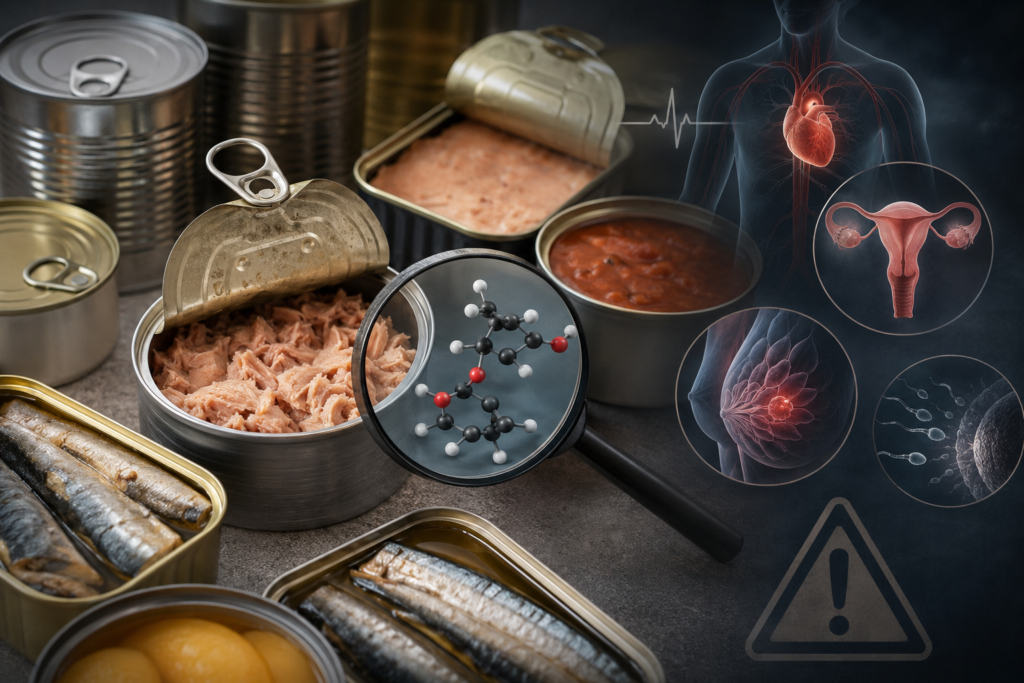
From BPA, Sodium, Infertility, to Breast Cancer… The Two Faces of Canned Goods Beloved as ‘Emergency Rations’
A single can of tuna, a block of canned ham, a can of saury. They serve as side dishes on busy mornings, simple meals late at night, and the first emergency rations sought when disaster strikes.
As such, canned goods have survived as the most enduring convenience foods in the modern diet. With long expiration dates, simple preparation, and budget-friendly prices, they have established themselves as staples for single-person households, dual-income families, and camping enthusiasts alike.
However, experts recently warn, “What we consume is not just the contents.” The coatings applied inside cans to protect the food and manufacturing methods designed for long-term storage can lead to unexpected health burdens, they explain.
Bisphenol A (BPA) and Cardiovascular Health
The most prominent controversy surrounding canned goods is Bisphenol A (BPA), used in internal can coatings. BPA is an industrial chemical that has been used for decades to prevent metals from directly contacting and corroding food while extending shelf life.
However, as it has become known as a representative endocrine-disrupting chemical that acts similarly to human hormones, regulations are tightening worldwide. Some countries have banned its use in infant and toddler products, and the food industry is expanding ‘BPA Free’ product lines.
Experts are particularly concerned about cardiovascular health. Dr. Sanjay Rajagopalan, a professor of cardiovascular medicine at Case Western Reserve University School of Medicine in the U.S., explains that BPA can impair blood vessel function.
BPA is known to reduce the production of nitric oxide—which relaxes blood vessels—and increase oxidative stress, causing blood vessels to constrict more easily.
As a result, blood pressure can rise temporarily, and repeated exposure of this kind has the potential to place a burden on the heart and blood vessels, according to experts.
In fact, a study published in the international journal Hypertension showed that participants who drank beverages from BPA-coated cans experienced a significant increase in urinary BPA concentrations compared to those who drank from glass bottles, alongside a short-term rise in systolic blood pressure. The researchers stated that long-term follow-up studies are needed to determine how repeated BPA exposure impacts cardiovascular health.
Beyond BPA: Sodium, Sugar, and Product Selection
The health burdens of canned goods do not stop at BPA. Many products rely heavily on salt for long-term storage. Canned ham and certain fish products often satisfy more than half of the recommended daily sodium intake in just a single can, while canned fruits frequently come soaked in sugar-rich syrups. Ultimately, a dietary habit of frequently consuming canned foods can elevate the risks of hypertension, obesity, and diabetes, experts explain.
Product conditions must also be inspected meticulously. Canned goods that are dented, rusted, or bulging outward at the bottom or lid should be avoided due to the potential for internal corrosion or bacterial proliferation. Once opened, storing contents in glass or stainless steel containers rather than leaving them in the original can is recommended.
Some experts advise that briefly transferring food removed from a can into another container can help reduce contact time between the food and the internal can coating.
Reproductive Health and the Broader Picture
Recently, research on the effects of BPA has expanded beyond blood pressure to potential links with reproductive health and cancer development. Multiple international studies have raised the possibility that repeated BPA exposure affects female ovarian function, the ovulation process, and embryo implantation. Among women undergoing In Vitro Fertilization (IVF), research findings have reported that higher bodily BPA concentrations may correlate with lower pregnancy success rates.
Associations with reduced sperm count and motility continue to be studied in men as well. In the field of breast cancer, as research suggests that BPA mimics the female hormone estrogen to promote abnormal cell proliferation in breast tissue, studies tracking its long-term health impacts are ongoing.
However, current research remains at a stage of accumulating observational links; a direct causal relationship confirming that BPA directly causes infertility or breast cancer has not been established.
Fortunately, canned goods do not need to be viewed as foods to be avoided unconditionally. The food industry is rapidly expanding internal coatings that do not use BPA, and governments worldwide are strengthening packaging safety standards.
Experts agree, “If you only consume canned goods occasionally, there is no need for excessive worry,” while adding, “The real problem is lifestyle habits that lead to repeated exposure to BPA across various living environments, including canned foods, plastic containers, disposable items, and receipt paper.”
Conclusion
Ultimately, what matters is ‘how often you eat them’ and ‘how you choose them.’ Canned goods remain useful foods in modern diets, but the habit of relying on convenience to place them on the dining table every day warrants a re-evaluation.
Checking product packaging conditions, selecting BPA-Free options where possible, and maintaining a balanced diet featuring fresh ingredients are the most realistic ways to safeguard health. Convenience enriches life, but health is ultimately built upon cumulative small choices. This is precisely why we must take a fresh look at the single can of food on our dining table today.
※ This article was synthesized based on BPA-related research from the international journal Hypertension and researchers at Case Western Reserve University, alongside international research findings in reproductive medicine and environmental health. It does not replace a specific individual’s diagnosis or treatment, and actual medical judgment must be made through consultation with a specialist.
※ Images: Created using generative AI (ChatGPT, OpenAI); depicts fictional individuals, not real people.