
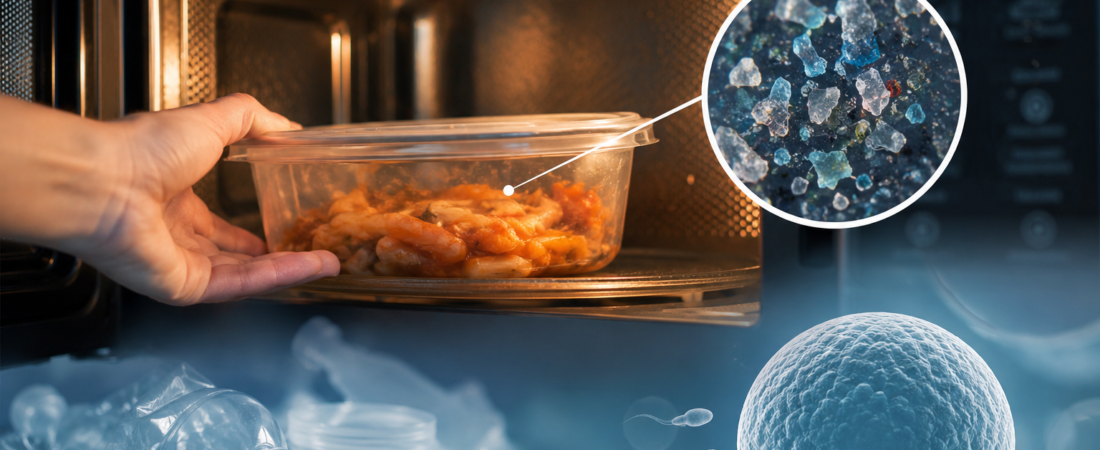
Heating food in plastic raises questions about chemical migration and exposure. Materials and intended uses differ, so “plastic” is not a single risk category. Following food-contact and microwave-use instructions is sensible, but changing one container has not been shown to reverse infertility or guarantee better IVF outcomes.
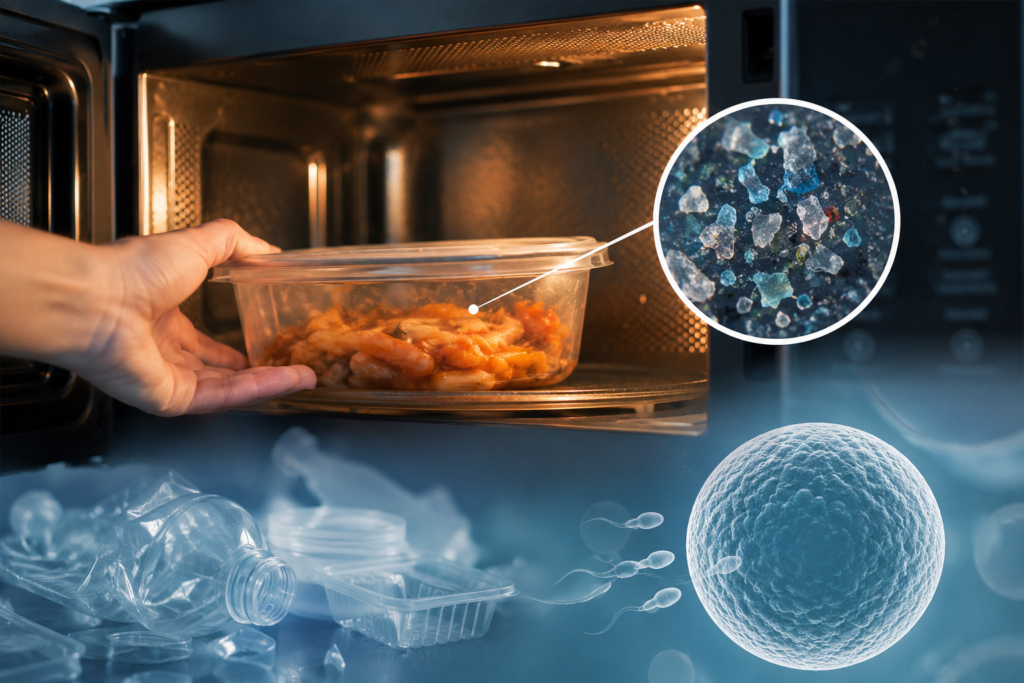
A microwaveable meal is a familiar convenience. Questions about food-contact materials deserve evidence that distinguishes the container, substance, temperature and intended use.
The Invisible Disruptors
The culprits are endocrine-disrupting chemicals (EDCs)—compounds that mimic or interfere with the body’s delicate hormonal systems. Familiar names include Bisphenol A (BPA) and phthalates, but the list is expanding to include newer substitutes like Bisphenol S (BPS). These substances are ubiquitous, found in food packaging, delivery containers, coated receipts, and even household goods.
Heat and intended use
Migration depends on the material and conditions. Follow the manufacturer’s food-contact and heating instructions; not every plastic container is suitable for a microwave.
What a label can tell you
BPA-free identifies the absence of one chemical, not proof that a product has been tested for every possible effect. It also does not establish that every replacement is equally harmful.
Exposure, dose and timing matter. A proposed biological mechanism cannot quantify the fertility effect of a particular household container.
- Male reproduction: Research explores associations with semen outcomes; exposure measures and confounding matter.
- Female reproduction: Proposed endocrine effects need to be distinguished from proven causes in individual patients.
A Shift in Clinical Philosophy
The paradigm of fertility treatment is evolving. It is no longer just about optimizing hormone levels or selecting the “perfect” embryo; it is about “whole-body environmental medicine.”
Using a suitable glass or ceramic container is one practical option. It should not be sold as a way to restore hormonal balance or treat infertility.
Keep the concern proportionate
Environmental exposures are a research issue, but no single convenience choice explains an individual’s reproductive outcome.
Follow intended-use guidance and seek an appropriate fertility assessment when needed. Switching containers is not a substitute for diagnosis or treatment.
Disclaimer: This content is provided for informational purposes, based on reporting on public health and reproductive medicine trends. Medical judgments and treatment decisions must always be made in consultation with professional medical personnel. Image: AI-generated (ChatGPT, OpenAI) / Visual reference for illustrative purposes only.
Understand the exposure
BPA is one chemical question, not a synonym for every plastic. Follow intended-use instructions without treating container changes as infertility treatment. NIEHS: bisphenol A.
Related reading
Microplastics in Semen and Testes: A Discovery Is Not Yet a Diagnosis