

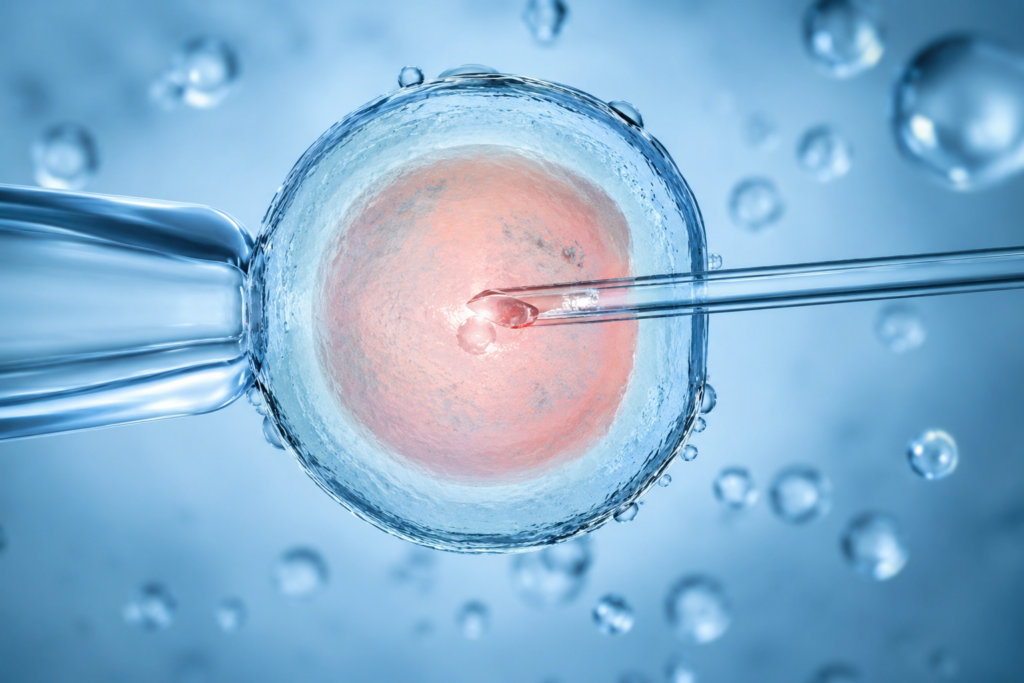
In South Korea, assisted reproductive technology (ART) is rapidly transitioning from a “medical option for the few” to an “essential infrastructure for the many.” Data from the Health Insurance Review & Assessment Service (HIRA) reveals that the number of fertility treatments reached 203,101 in 2023—a 39% increase from 146,354 in 2019. Most notably, In Vitro Fertilization (IVF) cycles have surged by over 55%, signaling a decisive shift in fertility strategies: patients are bypassing intrauterine insemination (IUI) and moving directly to the higher success potential of IVF.
The Clash of Timelines These statistics are not merely medical data; they are a sociological marker. They reflect a collision between the modern trajectory of education, career development, and marriage, and the rigid, unyielding biology of the human ovary. While society has accelerated the timeline for professional milestones, the reproductive window has remained stagnant.
The Reality of Ovarian Decline The demographic of IVF patients is shifting. With over 60% of patients falling between the ages of 35 and 44, the average age of IVF treatment in Korea stands at 37.3 years.
The biological reality is stark: a woman’s ovarian reserve is a finite resource. From an initial pool of roughly 6 to 7 million oocytes during fetal development, the reserve dwindles to roughly 1 to 2 million at birth and about 300,000–500,000 by puberty. By the age of 40, over 90% of a woman’s ovarian reserve is typically depleted.
Crucially, the decline is not just quantitative; it is qualitative. As maternal age advances, the probability of chromosomal abnormalities (aneuploidy) in eggs rises sharply, directly impacting fertilization rates, embryo implantation, and the success of term pregnancies.
The “Care Paradox” Modern women are often healthier, more active, and look younger than their predecessors. This leads to a dangerous “Care Paradox”: patients assume that physical vitality reflects reproductive vitality. However, unlike skin or muscle mass, the ovary does not “rejuvenate” with exercise or skin care. Its decline is relentless.
Strategic Shifts in Fertility Care In response, the paradigm of fertility care is evolving toward preemptive preservation:
- Early Assessment: Ovarian reserve testing, such as Anti-Müllerian Hormone (AMH) testing and Antral Follicle Counts (AFC), are no longer reserved for those struggling with infertility; they are becoming standard “future-proofing” measures for women in their 20s and 30s.
- Decisive Action: For women over 40, reproductive endocrinologists now advise a truncated timeline. “If you are over 40, try natural conception for no more than a year,” advises Dr. Yang Gwang-moon of the Suji Maria Fertility Center. “After that, move immediately to IVF. Early intervention is the most effective strategy to secure a successful birth.”
Conclusion The rise in IVF cycles is a sign that South Korean society is acknowledging a fundamental truth: human reproduction is a biological event that cannot be indefinitely deferred. While technology—such as egg freezing and advanced IVF—provides a bridge across the gap between professional success and biological limits, it is not a substitute for time.
The strategy for the future is clear: proactive monitoring, early consultation, and a shift from “reactive treatment” to “strategic planning.” In the era of the 37.3-year-old fertility average, the most valuable tool a woman has is not just the technology available to her, but the timing with which she chooses to use it.
Sources: Health Insurance Review & Assessment Service (HIRA) data; Clinical insights from Maria Fertility Hospital; Reproductive medicine trends.
Disclaimer: This content is provided for informational purposes, based on public health statistics and clinical reproductive trends. Medical judgments and treatment decisions must always be made in consultation with professional medical personnel. Image: AI-generated (ChatGPT, OpenAI) / Visual reference for illustrative purposes only.