
“Eggs That Vanish Without Even Attempting Fertilization”… Global Medicine Unravels the Secret of ‘Degenerated Oocytes’
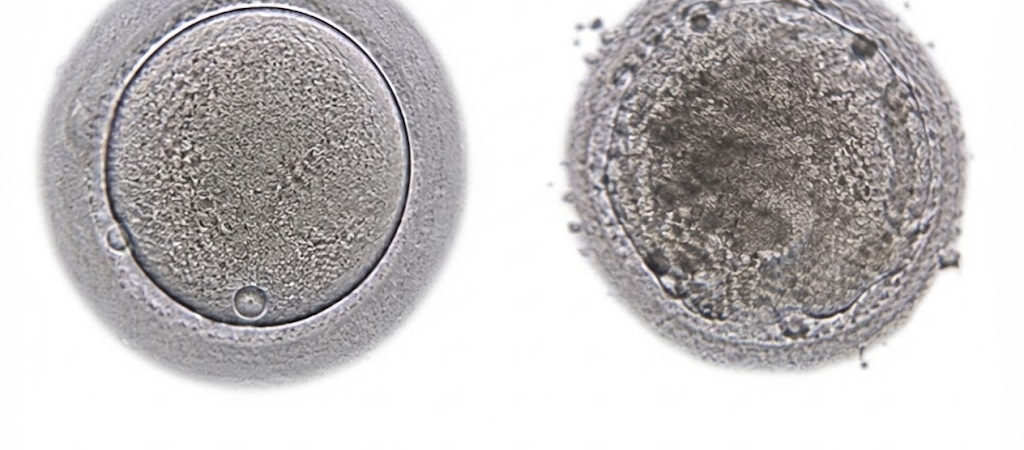
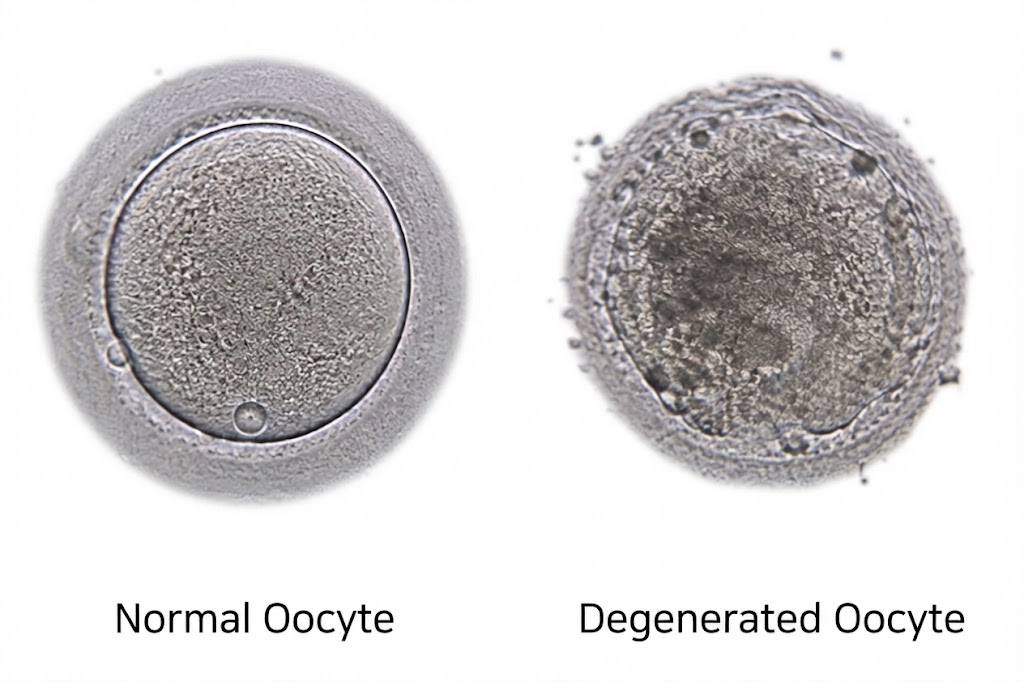
There are cases where, despite the difficult process of egg retrieval for In Vitro Fertilization (IVF), the eggs cannot even be attempted for fertilization and must be discarded. Medical teams call these ‘Degenerated Oocytes.’
These are eggs that have already lost their vitality and the capacity for fertilization. For women undergoing fertility treatment, this is one of the most disheartening outcomes, but it has historically been dismissed with short explanations like, “It’s because of your age,” or “The quality of the eggs wasn’t good.”
Reproductive medicine has not been able to provide a clear answer as to why some eggs lose their vitality even before they are retrieved. However, the global medical community has recently begun finding new answers to infertility treatment in these previously discarded eggs. The focus of research is rapidly shifting from “how to make a better embryo” to “why do eggs die?”
The Mitochondria: The Energy Power Plant
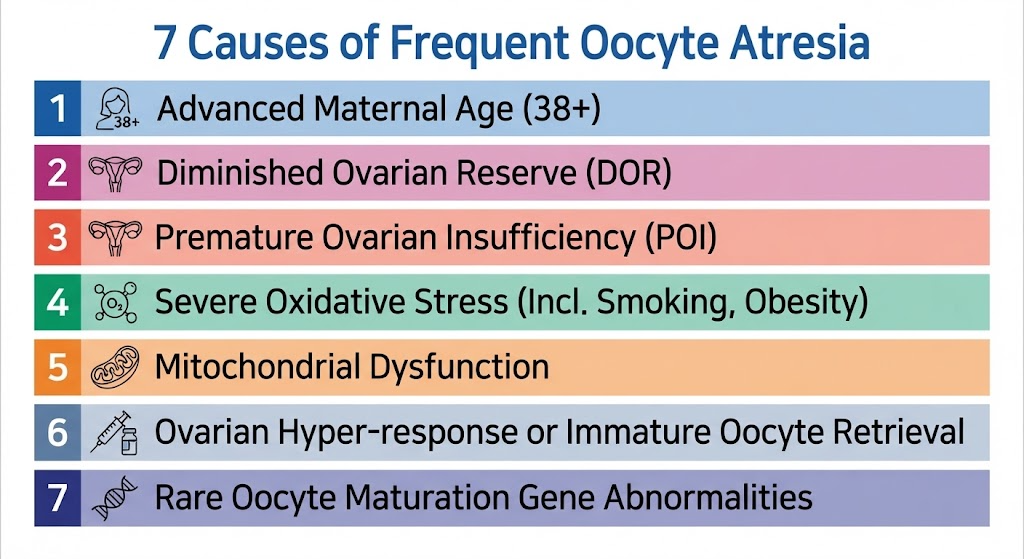
In the past, reproductive medicine explained the primary cause of degenerated oocytes as maternal age. It is a well-established fact that as age increases, chromosomal abnormalities in eggs rise, and fertilization and pregnancy rates decrease.
However, recent studies consistently show that aging alone does not tell the whole story. What is currently receiving the most attention is the mitochondrion, often called the ‘power plant’ of the cell. Eggs are the cells in our body with the highest number of mitochondria, and because embryos cannot produce energy themselves immediately after fertilization, they begin their first cell division using only the ATP (energy) stored by the egg.
When mitochondrial function declines, ATP production decreases and active oxygen (free radicals) increases, leading to the accumulation of DNA damage. Eventually, the egg undergoes apoptosis (cell death) even before fertilization can occur. In other words, there is increasing evidence that degenerated oocytes are not simply ‘aged eggs,’ but the result of a collapsed cellular energy system.
A Paradigm Shift in Research
Because of this, the direction of global reproductive medicine research is changing significantly.
Previously, observing the egg’s shape under a microscope was the extent of evaluation. Now, there is active research into analyzing the egg’s metabolic state, mitochondrial function, cytoskeleton, RNA expression, and metabolites to predict survival potential.
Recently, technology using Artificial Intelligence (AI) to analyze the morphology of eggs and embryos to predict implantation potential is also developing rapidly. The ultimate goal of researchers is to determine, before fertilization occurs, whether an egg can grow into a healthy embryo or if it has already begun to degenerate. The paradigm of reproductive medicine is shifting from an embryo-centered approach to precisely evaluating the ‘healthiness’ of the egg itself.
Domestic fertility experts are feeling the same change. Senior fertility doctors with over 30 years of experience in IVF procedures note, “In the future, how many living eggs you secured will be much more important than how many eggs were retrieved.” They point out that in patients with diminished ovarian reserve, they often experience cases where follicles appear to grow well on ultrasound, but the retrieved eggs have already undergone degeneration. “Patients place their hope in the number retrieved, but what determines the possibility of pregnancy is not the number, but survival and cellular function,” they emphasize.
Who Is at Risk?
Patient groups where degenerated oocytes are frequently found are slowly being identified. Reports continue to emerge that these eggs appear relatively more often not only in older women, but also in cases of Diminished Ovarian Reserve (DOR), premature ovarian insufficiency, severe oxidative stress, obesity, metabolic diseases, and cases where there is a poor response to controlled ovarian stimulation.
In women with diminished ovarian function, it is known that even within follicles that grew with difficulty, the egg often fails to secure enough energy and is already in a state of lost vitality by the time of retrieval. This is also the reason why the number of follicles does not necessarily correlate with the actual possibility of pregnancy.
Toward a New Future
To date, there is no treatment to ‘revive’ a degenerated oocyte. However, research into improving mitochondrial function to increase egg survival is active worldwide. Research using antioxidants such as Coenzyme Q10 (CoQ10), melatonin, and DHEA is ongoing, and strategies to improve the metabolic environment of the egg through customized ovarian stimulation are being developed. While these treatments are showing potential in some patients, they have not yet been recognized as standard treatments applicable to everyone.
International research teams predict that the competitiveness of infertility treatment in the future will not be determined by the technology to retrieve more eggs, but by the technology to pre-select living eggs and protect them from dying. Research institutions around the world, including the Max Planck Institute for Multidisciplinary Sciences in Germany, are publishing studies on human egg cell division, mitochondrial function, and aging mechanisms, concluding that egg vitality will be a core variable in future infertility treatment.
At one time, degenerated oocytes were nothing more than failed eggs silently discarded in the laboratory. Now, however, the global medical community is reading the future of infertility treatment within those dead eggs. As we understand why some eggs lose their vitality before they are even fertilized, expectations are rising that new treatment paths—ones that reduce repeated IVF failures and protect healthier eggs—will be opened.
※ This article was written based on the latest research and overseas academic papers from the American Society for Reproductive Medicine (ASRM), the European Society of Human Reproduction and Embryology (ESHRE), and consultations with domestic fertility specialists. It does not replace a specific individual’s diagnosis or treatment, and actual medical judgment must be made through consultation with a specialist.
※ Images: Created using generative AI (ChatGPT, OpenAI); depicts fictional individuals, not real people.