

The Secret of Autoimmune Diseases That Lead to Infertility
Our immune cells spend their entire lives searching for and fighting enemies. They attack invading bacteria, eliminate viruses, and monitor and destroy cancer cells.
However, pregnancy is the only moment when this principle is uniquely reversed.
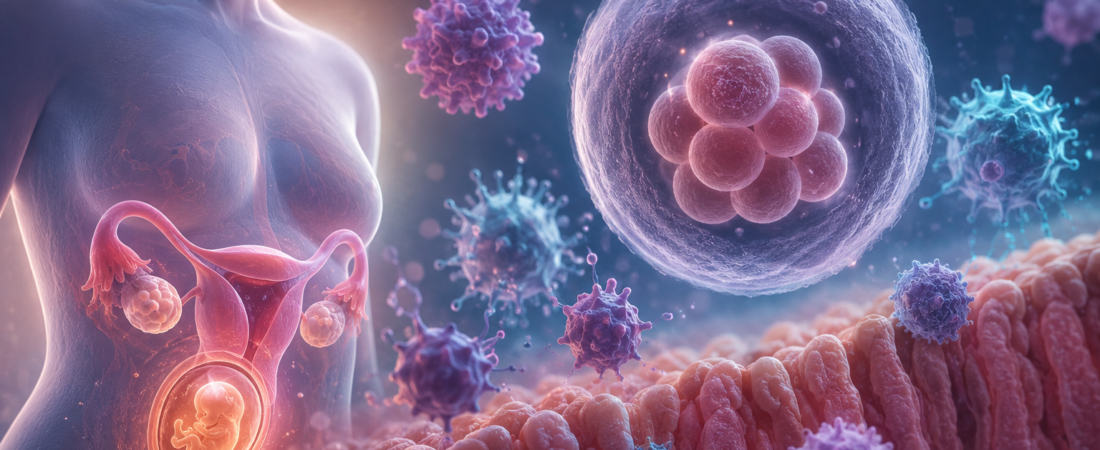
An embryo that enters the mother’s body is “external” in nature, carrying the father’s genes for half of its composition. By standard rules, immune cells should recognize it as a threat and eliminate it.
In a healthy pregnancy, that does not happen. Instead, the immune system ceases its attack and embraces the embryo. It helps the placenta grow, builds blood vessels, and paves the way for a new life to take root in the uterus. In medicine, this is called ‘immune tolerance.’ This is why reproductive scientists often say, “Sperm and eggs accomplish fertilization, but pregnancy is only completed when the immune system permits it.”
When this immune tolerance collapses, infertility can begin. A primary cause of this collapse is autoimmune disease.
Autoimmune diseases occur when the immune system, which should protect our body, incorrectly recognizes its own cells as enemies instead of bacteria or viruses and attacks them. Common examples include Hashimoto’s thyroiditis, systemic lupus erythematosus (SLE), rheumatoid arthritis, Sjögren’s syndrome, and antiphospholipid syndrome. While these are often known as diseases that cause joint pain or thyroid dysfunction, they hold another significance for fertility specialists: they can be the underlying cause of unexplained recurrent implantation failure and recurrent miscarriage.
Many people think of infertility only in terms of hormones or egg issues. However, modern reproductive medicine views the immune environment of the endometrium as being just as important as the eggs or embryos themselves. No matter how healthy an embryo is, if the uterus is not prepared to accept it, implantation cannot occur. Just as even the best seeds cannot sprout in dry, barren soil, implantation is a process that succeeds only when the embryo’s capability and the immunological balance of the endometrium are perfectly aligned.
In a normal pregnancy, immune cells within the uterus reduce their aggressive tendencies and change their function to protect the embryo. In particular, Regulatory T cells (Tregs) play a key role in safely accepting the embryo by appropriately suppressing the immune response. Conversely, if inflammation-inducing immune responses are overly activated, the endometrium secretes various inflammatory cytokines, disrupting the delicate balance required for implantation. It is not that the immune system directly attacks the embryo, but rather that it creates an environment where the embryo cannot survive. Recently, this immune imbalance has been highlighted as a critical factor for some patients with recurrent implantation failure and recurrent miscarriage.
Pregnancy Is an Art of Immunity
The immune system does not just function to attack or defend. In early pregnancy, it actively participates in the process of building the placenta. It helps trophoblast cells penetrate the uterus properly, regulates the formation of new blood vessels, and creates an environment where the fetus receives sufficient oxygen and nutrients. In other words, the immune system is not an entity that rejects a new life, but rather a helper that nurtures life during a normal pregnancy. However, in autoimmune diseases, this helper role is undermined, and the processes of implantation and placental formation may not proceed smoothly.
Among autoimmune diseases, antiphospholipid syndrome is the condition with the most clearly proven link to pregnancy. In this disease, blood clots more easily than normal, leading to the formation of small thrombi. In early pregnancy, the placenta receives oxygen and nutrients through very thin blood vessels; if these are blocked by micro-thrombi, the placenta fails to grow properly, eventually leading to recurrent miscarriage or fetal growth restriction. Fortunately, if diagnosed accurately, treatment with low-dose aspirin and low-molecular-weight heparin can significantly increase the chances of a healthy pregnancy and birth, making it a condition that must be checked in patients with recurrent miscarriage.
The most common—yet easily overlooked—condition is thyroid autoimmune disease. Studies have reported that even if thyroid function is within the normal range, women who possess thyroid autoantibodies may have a slightly higher risk of miscarriage. If hypothyroidism occurs concurrently, the risk of ovulation disorders, implantation failure, and pregnancy complications may also increase. Therefore, it is helpful for women preparing for pregnancy to have not only their thyroid hormone levels evaluated but, if necessary, their autoantibody status as well.
Systemic lupus erythematosus (SLE) is also a representative autoimmune disease. In the past, pregnancy for lupus patients was considered inherently dangerous, but recently, as more patients plan pregnancies while the disease is sufficiently stable and receive collaborative management from both rheumatology and obstetrics/gynecology departments, the number of healthy births is steadily increasing. Ultimately, what matters more than the fact that one has an autoimmune disease is how well it is being controlled.
On the internet, many advertisements suggest that you can find all causes of infertility simply by getting an NK cell test or various other immune tests. However, current international reproductive medicine guidelines are more cautious. While immunological evaluation is necessary if there is a history of recurrent miscarriage, suspected antiphospholipid syndrome, or a clear history of autoimmune disease, there is insufficient evidence to recommend broad immune testing or uniform immunotherapy for every infertility patient. The common view of the current medical community is that because the immune system is a highly complex network, we must guard against over-diagnosis and over-treatment.
Fortunately, this is not an era where you must give up on pregnancy just because you have an autoimmune disease. If you diagnose the cause accurately and manage the disease stably, many patients succeed in healthy pregnancies and births. Antiphospholipid syndrome can be managed with anticoagulant therapy, thyroid autoimmune disease with appropriate hormone adjustment, and lupus by planning pregnancy during a stable phase of the disease. The goal of infertility treatment is not to suppress the immune system unconditionally, but to restore the balance that allows the body to accept a new life.
Infertility is no longer a condition explained solely by egg count or sperm motility. Fertilization is merely the starting point of a new life, and it is the mother’s immune system that opens the next door. The moment the immune system accepts the embryo as family, implantation begins, the placenta is formed, and the ten-month journey of pregnancy follows. Conversely, if that balance collapses, even the best embryo cannot find its place.
Ultimately, pregnancy is not a miracle completed only by the meeting of sperm and egg. It is the most sophisticated science of life, beginning only when your body’s immune system decides to willingly embrace a new life.
- For those with autoimmune disease: You do not need to give up on In Vitro Fertilization (IVF). The key is not unconditional immune suppression but accurate diagnosis and stable management of the underlying disease.
- Treatment strategies: Low-dose aspirin and low-molecular-weight heparin are the standard treatments for antiphospholipid syndrome; thyroid autoimmune diseases are managed by adjusting thyroid hormones appropriately.
- Stability is key: For other autoimmune diseases like lupus, the principle is to proceed with IVF when the disease is in a stable state.
- Caution: NK cell testing, intravenous immunoglobulin (IVIG), intralipid, and steroid treatments are considered selectively only for some patients and are not standard treatments recommended for all infertility patients.
※ This article was written based on the latest research in reproductive medicine and reproductive immunology, international clinical guidelines, and domestic/international medical literature. It does not replace a specific individual’s diagnosis or treatment, and actual medical judgment must be made through consultation with a specialist.
※ Images: Created using generative AI (ChatGPT, OpenAI); depicts fictional individuals, not real people.
Medical References (Sources):
- American Society for Reproductive Medicine (ASRM)
- European Society of Human Reproduction and Embryology (ESHRE)
- Korean Society for Reproductive Medicine (KSRM)
- Korean Society of Obstetrics and Gynecology
- Korean College of Rheumatology
- Korean Thyroid Association
- American College of Rheumatology (ACR)
- Comprehensive analysis of international medical papers related to reproductive immunology.