
“Taking iron supplements is useless”… The Truth About ‘Uterine Anemia’ Caused by Monthly Blood Loss
“How can I be anemic when I eat so well?”
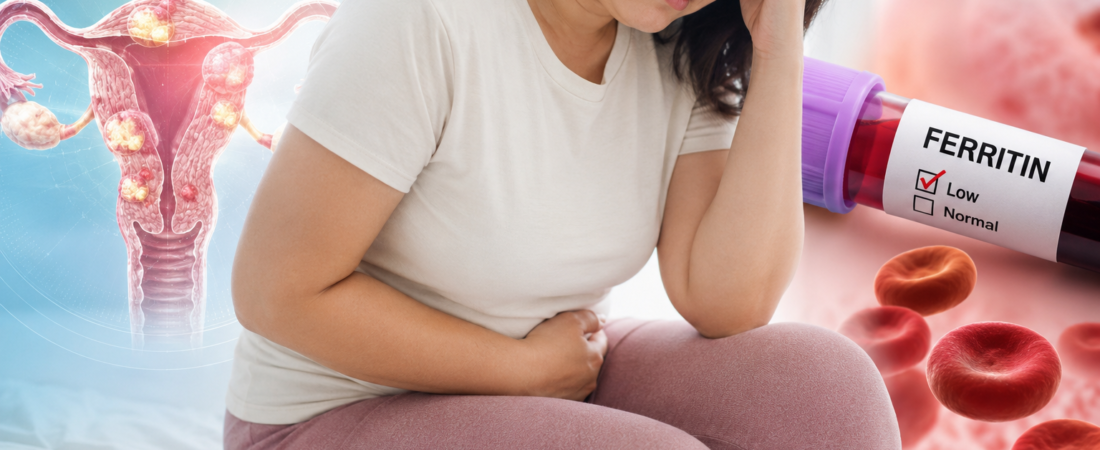
This is a common remark heard in obstetrics and gynecology clinics. Most people think of anemia as a disease that affects people who are underweight or malnourished. However, patients frequently encountered by fertility specialists are often women with larger builds who eat well. Blood tests often reveal significantly low hemoglobin and stored iron (ferritin) levels, and tracing the cause frequently leads to the discovery of uterine diseases such as adenomyosis or uterine fibroids.
The most common cause of iron-deficiency anemia in women of reproductive age is ‘persistent bleeding’ rather than nutritional deficiency. In particular, menorrhagia (heavy menstrual bleeding) is a primary culprit that gradually depletes the body’s iron stores. No matter how much iron-rich food you eat or how many supplements you take, if you lose more iron every month than you intake, anemia is inevitable.
In this process, the first disease to suspect is adenomyosis.
This is a condition where endometrial tissue, which should reside inside the uterus, invades the muscular layer, causing the uterus to gradually enlarge and harden. Representative symptoms include increased menstrual flow, severe menstrual cramps, lower back pain, and pelvic pain. Uterine fibroids can also cause chronic iron loss by inducing menorrhagia, depending on their location.
If you frequently pass large blood clots during your period, need to change your pad in less than an hour, or if your period lasts longer than 7 days, it is likely that your menstrual flow is outside the normal range. However, many women dismiss this as a matter of constitution or changes after childbirth, leaving it unmanaged for years.
Being obese does not mean you have sufficient iron.
Recent research suggests that chronic inflammation caused by obesity can increase ‘Hepcidin,’ a hormone that regulates iron metabolism, thereby reducing iron absorption and utilization. When menorrhagia is added to this, the risk of iron-deficiency anemia can significantly increase.
Iron-deficiency anemia is not simply a disease of fatigue. You may feel breathless after just a little walking, find climbing stairs difficult, experience dizziness, or suffer from poor concentration. Palpitations, significant hair loss, and brittle nails can also occur. Many women blame these symptoms on their age, weight, or stress, but the actual cause may be recurrent monthly heavy bleeding.
Fertility specialists explain that iron deficiency can also affect pregnancy preparation. It is suggested that insufficient iron stores may impact the endometrial environment and ovulatory function. Studies have also indicated that it can increase the risk of preterm birth and low-birth-weight infants during pregnancy. Therefore, for women planning pregnancy, checking ferritin (stored iron) levels in addition to hemoglobin is highly beneficial.
Saving the Uterus While Preparing for Pregnancy? Treatment Paradigms Shifting with HIFU and New Oral Medications
Treatment for adenomyosis is evolving rapidly. In the past, hysterectomy was considered the most definitive treatment for severe symptoms. Recently, however, treatment centers on preserving the uterus as much as possible, reducing symptoms, and considering the possibility of pregnancy.
A representative treatment is HIFU (High-Intensity Focused Ultrasound). This procedure focuses ultrasonic energy on the lesion to necrose (kill) the adenomyosis tissue without an incision. Recently, combination therapy using the levonorgestrel-releasing intrauterine system (Mirena) has gained attention.
Recent studies report that patients who received Mirena after HIFU showed superior effects in reducing menstrual volume, alleviating pain, and decreasing uterine size compared to those treated with HIFU alone. It is being evaluated as a new treatment strategy for women who wish to control symptoms while preserving their uterus.
Treatment for women preparing for IVF is also changing.
Fertility specialists explain that controlling adenomyosis first is important to improve the implantation environment. Previously, treatment primarily involved injecting GnRH agonists for several months, but limitations such as initial flare-up phenomena, menopause-like symptoms, and the inconvenience of long-term treatment were pointed out.
Nowadays, oral GnRH antagonists such as relugolix and linzagolix are gaining attention as new treatment options. These drugs suppress the activity of lesions more quickly, reducing uterine size and menstrual volume, and potentially helping to improve menstrual pain and anemia. Recently, a strategy of combining short-term treatment with maintenance therapy is being discussed as a new treatment direction.
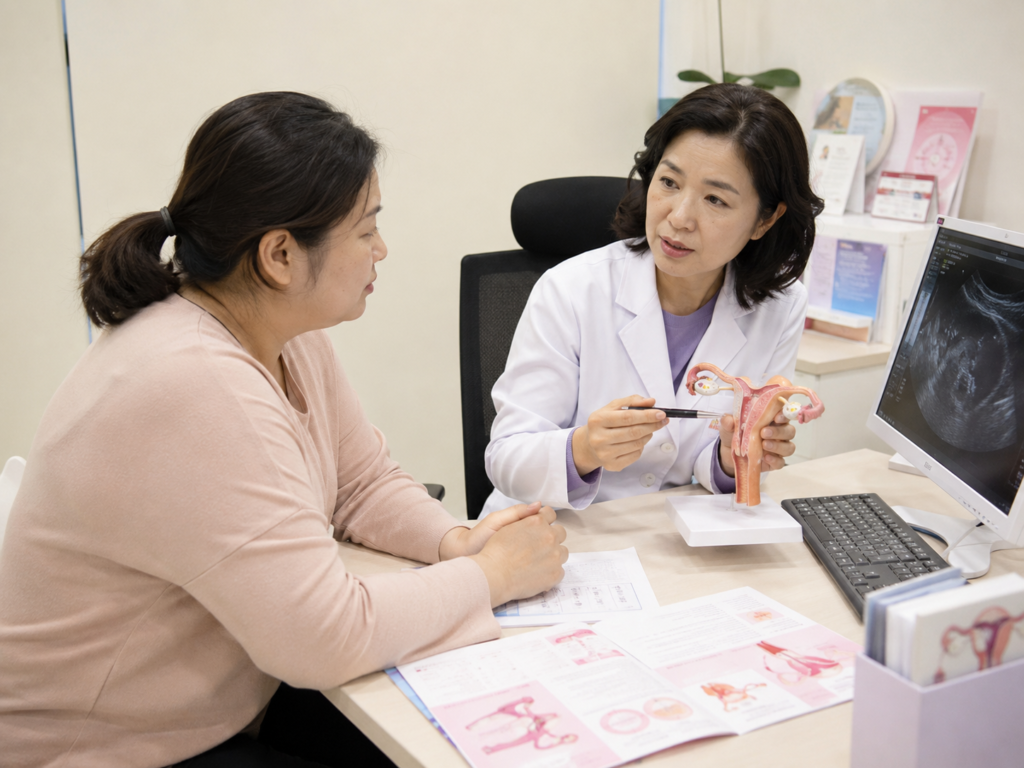
Fertility specialists emphasize that personalized treatment for adenomyosis—tailored to the extent of the disease, age, pregnancy plans, and IVF schedule—is crucial.
If you ignore symptoms like heavy periods, menstrual cramps, and back pain, thinking “it’s just because I gained weight,” you may be missing the warning signals your uterus is sending.
‘Overweight but anemic’ is not a contradiction. It is the reason why you should search for the source of your fatigue in your uterus before you look at the scale.
※ This article is based on recent research regarding adenomyosis and iron-deficiency anemia, international clinical guidelines, and trends in fertility treatment. Key content refers to the latest treatment strategies for adenomyosis (HIFU/LNG-IUS combination therapy, GnRH antagonists), the relationship between iron-deficiency anemia and menorrhagia, and treatment directions for women preparing for pregnancy. It does not replace specific individual diagnosis or treatment, and actual medical judgment must be made through consultation with a specialist.
※ The image used in this article is a visual aid created using generative AI (ChatGPT, OpenAI) and does not depict a real person.