
The 30-year cumulative risk of endometriosis-related reoperation was 17.3%; the median time to a first repeat operation was 3.4 years.
Younger age, family history and ovarian-conserving surgery were associated with reoperation, while preservation of ovarian function remains important for women with infertility.

How often do women who undergo surgery for ovarian endometriosis need another operation?
Even after lesions are removed, symptoms can return or new lesions can be found, sometimes prompting further surgery. For women planning pregnancy, another operation requires careful consideration because it can affect ovarian function and fertility.
Researchers at the University of Helsinki and Helsinki University Hospital examined long-term records from 13,912 women who underwent ovarian endometriosis surgery. They estimated a 17.3% cumulative risk of endometriosis-related reoperation over 30 years.
Published October 13, 2026 in the American Journal of Obstetrics and Gynecology, the study examined reoperation rates and associated factors after first surgery, including patient characteristics and the type of operation.
A 17.3% cumulative risk over 30 years
The investigators analyzed Finnish national health-register data for 13,912 women who had their first ovarian endometriosis operation between 1987 and 2012. Follow-up continued through 2019, with a median duration of 20.7 years.
The 30-year cumulative risk of any endometriosis-related reoperation was 17.3%. The corresponding cumulative risk of repeat ovarian surgery was 16.5%.
The median time to the first repeat operation was 3.4 years. Intervals to second and subsequent reoperations shortened to a median of less than two years, indicating that some women who underwent reoperation had further procedures relatively soon afterward.
Reoperation risk is not the same as endometriosis recurrence. Not everyone with recurrent disease undergoes surgery. Pain, infertility, lesion size and location, and response to medication can all influence treatment.
Younger age and other associated factors
Reoperation risk was not uniform. Younger age at first surgery was associated with a higher long-term risk.
A family history of endometriosis was also associated with higher risk, as was endometriosis being the primary diagnosis at the first operation.
Women with infertility before their first surgery had higher overall reoperation risk. The finding underscores the relevance of reproductive function and future pregnancy plans alongside pain and lesion removal.
These were statistical associations in an observational study. They do not establish that youth, family history or infertility directly causes another operation.
Ovarian conservation must be considered alongside fertility
One notable finding concerned the type of initial surgery.
Ovarian-conserving surgery was associated with relatively higher reoperation risk. This must not be interpreted as evidence that removing an ovary is preferable for every patient.
Ovarian endometriosis involves endometrium-like tissue forming cysts within the ovary. Surgery can remove lesions, but may also damage healthy ovarian tissue.
Repeated cyst removal can reduce ovarian reserve through loss of normal tissue or disruption of blood supply. Ovarian reserve is relevant to the number of eggs that may be retrieved and is particularly important when IVF is being considered.
A decision about repeat surgery therefore needs to consider more than recurrence alone: pain severity, cyst size and changes, suspicion of malignancy, previous operations, ovarian reserve and pregnancy plans all matter.
A long-term strategy for women with infertility
Ovarian endometriosis can follow a chronic course. One operation does not necessarily complete treatment. Symptoms and lesions need follow-up, with management adjusted to life stage and reproductive plans.
For women with infertility, ovarian reserve and reproductive function are particularly relevant before reoperation. An endometrioma does not automatically require surgery before IVF. The expected benefits and necessity of an operation need to be weighed against possible ovarian damage.
For women not planning pregnancy immediately, postoperative hormonal treatment and other long-term recurrence-management approaches may be considered. Those planning pregnancy soon also need to consider how medication affects ovulation and attempts to conceive.
The study indicates that reoperation risk can persist for many years, with age at first surgery, family history, infertility history and surgical approach associated with the long-term course.
Its historical Finnish registry design limits direct application to every patient today, because surgical techniques and treatment guidance have changed.
The message is not simply to avoid repeat surgery. Care for ovarian endometriosis requires a long-term strategy that considers symptom relief and lesion removal together with future operations, ovarian function and pregnancy plans.
Source: This article is based on research by the University of Helsinki and Helsinki University Hospital on reoperation incidence and risk factors after ovarian endometriosis surgery, published October 13, 2026 in the American Journal of Obstetrics and Gynecology. Finnish national registers were used to follow 13,912 women first operated on during 1987–2012 through 2019. DOI: 10.1016/j.ajog.2026.10.009.
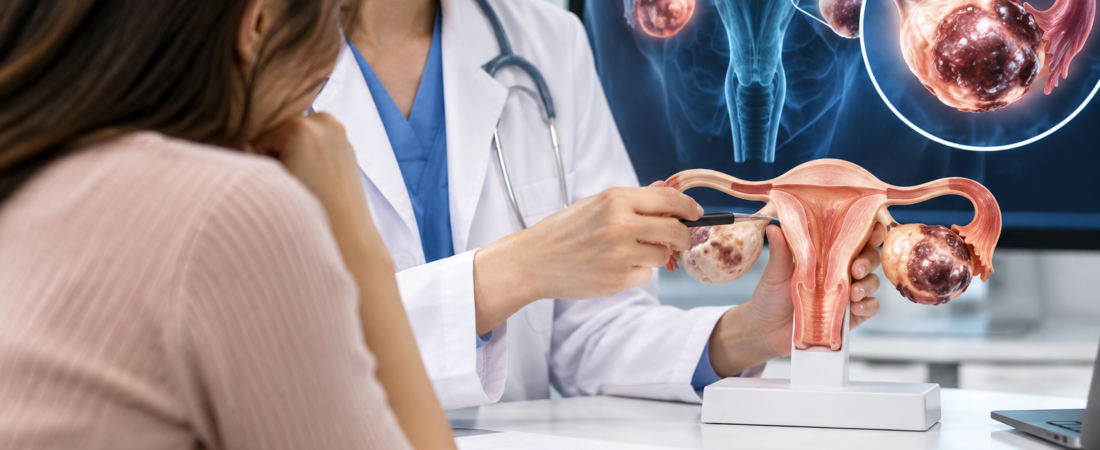
Image disclosure: The image was created using generative AI (ChatGPT, OpenAI); any people depicted are fictional, not real individuals.
For background on ovarian reserve, semen analysis and when additional investigations may be considered, see our guide to the first fertility clinic visit.
Copyright © 2026 Fertility Information TokTok Fertility News | THE FERTILITY NOTES. All rights reserved. Unauthorized reproduction, copying, redistribution, scraping, AI training, and other data use of any articles, photographs, images, or other content are strictly prohibited. Violations may result in legal liability.