
Ovarian Cysts Should Not Always Be Removed… The Reason AMH Plummets After Surgery
- Normal ovarian tissue and functional follicles can be inadvertently damaged during endometrioma excision
- 2026 research highlights ethanol sclerotherapy’s ability to preserve AMH and retrieved oocyte counts… Emerging as a viable pre-IVF alternative
“There is a cyst on your ovary. Should it be surgically removed?”
For a woman preparing for pregnancy, the answer to this question is far from simple. While completely eliminating the cyst might seem like the hallmark of successful treatment, in the ovary, “how much healthy tissue is preserved” matters just as much as “how thoroughly the cyst was removed.”
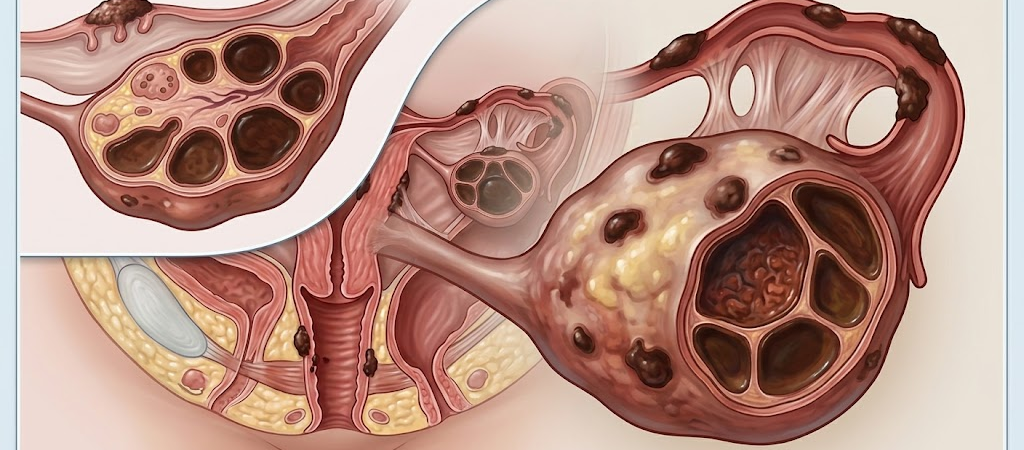
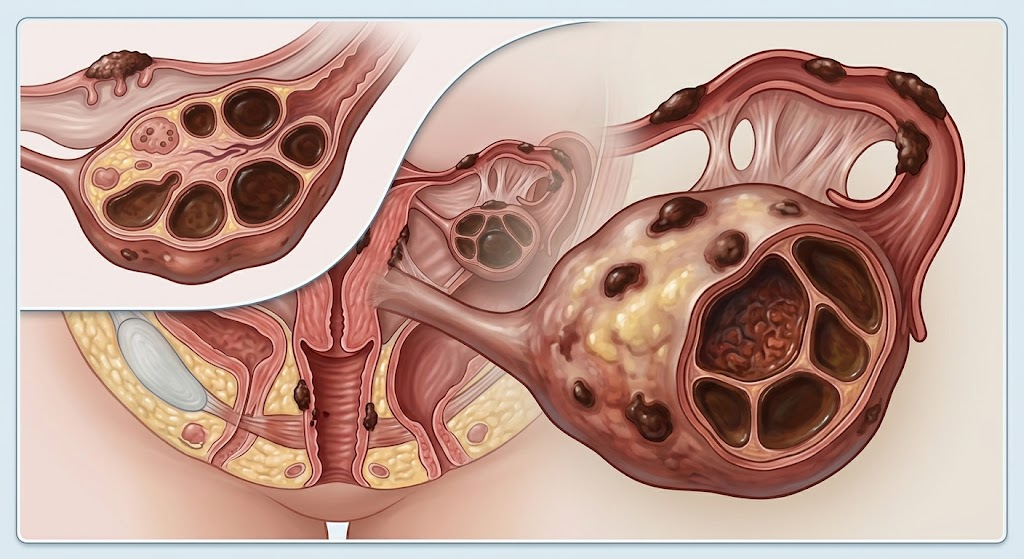
The central dilemma is the ovarian endometrioma. Frequently called a “chocolate cyst,” an endometrioma develops when ectopic endometrial tissue implants on the ovary, causing degraded, oxidized blood to pool within a cystic capsule.
A clear distinction must be made from the outset: this caveat does not apply indiscriminately to all ovarian cysts. Neoplastic lesions with suspected malignancy, masses carrying an acute risk of torsion or rupture, or cysts causing intractable pain may require definitive surgical removal. The core of this ongoing debate specifically concerns how to manage endometriomas in women who want to have children.
Why Does AMH Drop After Cystectomy?
The traditional standard of care is laparoscopic cystectomy, which involves surgically stripping the cyst wall from the ovary. Its main strengths lie in reducing recurrence rates and relieving pain.
The problem is that the boundary between the wall of an endometrioma and the surrounding normal ovarian tissue is notoriously indistinct. As the surgeon strips away the cyst capsule, adjacent healthy ovarian cortex and its precious store of primordial follicles can be torn away with it. Furthermore, electrosurgical coagulation routinely used to stop bleeding can cause collateral thermal damage to surrounding tissue and compromise local ovarian blood supply.
As a result, many women experience a sharp drop in Anti-Mullerian Hormone (AMH)—the key biomarker reflecting ovarian reserve—after surgery.
A network meta-analysis published in Human Reproduction Open (2026) compared eight distinct endometrioma treatment approaches across 21 randomized controlled trials involving 1,519 patients. Rather than merely asking whether the cyst was successfully eradicated, the investigators evaluated which technique best preserved functional ovarian reserve. The analysis confirmed that both the surgical method and the chosen hemostatic technique significantly influenced the degree of AMH decline 3 to 6 months post-operatively.
Laser vaporization offers another alternative. By ablating the inner lining of the cyst with a CO2 laser instead of stripping away the entire capsule, it causes less disruption to healthy ovarian tissue. Some trials have demonstrated better preservation of the follicle pool compared to traditional cystectomy.
Yet, we are not at a stage where any single technique can be crowned universally superior. In the latest meta-analyses of randomized trials, while laser treatment showed advantages in preserving post-operative Antral Follicle Count (AFC), it demonstrated no clear, statistically significant difference in serum AMH compared to cystectomy. Long-term recurrence rates also varied widely across individual studies.
“Alcohol Sclerotherapy”: Treating the Ovary Without an Incision
In the field of assisted reproduction, ethanol—or alcohol sclerotherapy—has recently re-emerged as a major focus of clinical attention.
The procedure is conceptually straightforward: under transvaginal ultrasound guidance, a long needle is inserted into the endometrioma to thoroughly aspirate the dark chocolate-colored fluid. Depending on the hospital’s specific protocol, the cavity is irrigated and subsequently filled with high-concentration ethanol.
The alcohol does not simply wash out the cyst. It causes rapid cellular dehydration and protein denaturation within the inner epithelial lining, disabling the secretory cells and inducing subsequent fibrosis. This chemical ablation is specifically intended to prevent fluid from building up again, overcoming the high recurrence rates associated with simple needle drainage alone.
Most importantly, it avoids any surgical incision into the ovary or mechanical peeling of the cyst wall.
A systematic review and meta-analysis published in BMC Women’s Health (July 2026) analyzed 16 studies directly comparing alcohol sclerotherapy against laparoscopic cystectomy.
While baseline AMH levels were similar between the two groups prior to treatment, post-procedure AMH was significantly higher in the alcohol sclerotherapy cohort by an average of 0.75 ng/mL. Furthermore, during subsequent IVF cycles, an average of 3.23 more oocytes were retrieved from women who underwent sclerotherapy. Severe complications were rare in both groups: 0.24% with sclerotherapy and 0.76% with cystectomy.
However, an important caveat remains: this study found no statistically significant difference in final live birth rates between the two approaches. Given the high risk of bias across the included literature, the authors emphasized the need for larger, well-designed randomized trials.
Claiming that “alcohol sclerotherapy guarantees zero loss of ovarian function” is an overstatement. Still, because it spares the ovarian stroma from direct surgical trauma, it is becoming an increasingly important option for women who urgently need to protect their ovarian reserve.
Sclerotherapy Immediately Preceding IVF: Spotlight on 2026 Evidence
The strategy of performing sclerotherapy immediately prior to an IVF cycle has generated particular interest.
A meta-analysis presented at the 2026 Annual Meeting of the European Society of Human Reproduction and Embryology (ESHRE) compared women undergoing IVF with an untreated endometrioma left in place against those who received sclerotherapy prior to stimulation.
Analyzing 5 studies across 303 women and 394 IVF/ICSI cycles, the sclerotherapy cohort achieved approximately 2.38-fold higher odds of clinical pregnancy and 2.10-fold higher odds of live birth. The number of retrieved oocytes was also higher by an average of 1.37. Notably, this clinical benefit was most pronounced in women who had already undergone prior endometrioma surgery.
The interval from sclerotherapy to the start of IVF ranged between 2 and 12 weeks for most patients. This provides real-world evidence supporting a streamlined clinical pathway: shrinking the cyst volume and quickly transitioning into ovarian stimulation and egg retrieval.
Even so, these findings do not mean standard clinical guidelines have officially shifted. The analysis included only 5 studies, consisting mostly of observational cohorts rather than prospective randomized trials. The researchers acknowledged that the true clinical benefit may be somewhat overestimated and highlighted the need for adequately powered randomized trials.
Preventing Recurrence vs. Preserving the Ovary
Ultimately, managing an endometrioma involves a delicate clinical tug-of-war.
Completely stripping out the cyst helps lower the risk of recurrence, but carries the danger of damaging healthy ovarian tissue. Conversely, tissue-sparing approaches like laser ablation and alcohol sclerotherapy protect ovarian function, but demand careful evaluation regarding recurrence and long-term efficacy.
Current clinical guidelines from the European Society of Human Reproduction and Embryology (ESHRE) do not recommend routine surgery for endometriomas solely to improve live birth rates in IVF, recognizing the negative impact surgery can have on ovarian reserve. Surgery is generally reserved for cases involving severe pain or situations where the cyst physically blocks needle access to ovarian follicles during egg retrieval.
For women planning a pregnancy, the decision should never hinge merely on “how many centimeters the cyst measures.”
Clinicians and patients must weigh multiple factors together: the patient’s age, baseline AMH, whether the cyst affects one or both ovaries, history of previous ovarian surgery, pain severity, whether IVF is planned immediately, and whether the cyst obstructs egg collection.
For women who already carry a low AMH or whose functional tissue has been depleted by past cystectomies, a second surgery carries vastly higher biological stakes than the first.
The goal of treating an ovarian cyst is not just to make the mass disappear from an ultrasound screen.
For a woman who still needs to conceive, functional follicles must remain after the cyst is managed.
In short, the essential question should not be “How cleanly can we strip this cyst away?” but rather “How much of my ovary can we protect while treating it?”
※ This article was written based on the systematic review and network meta-analysis “Comparing the decline in anti-Müllerian hormone after surgical treatment of ovarian endometrioma: a systematic review and network meta-analysis” published in Human Reproduction Open (Issue 3, 2026, Article hoag019, DOI: 10.1093/hropen/hoag019). It also referenced “Comparison of ethanol sclerotherapy and cystectomy in the treatment of ovarian endometrioma: a systematic review and meta-analysis” published in BMC Women’s Health (July 2026, DOI: 10.1186/s12905-026-04645-2).
For IVF-specific outcomes, reference was made to “Reproductive outcomes after transvaginal sclerotherapy of ovarian endometriomas in women undergoing IVF: a systematic review and meta-analysis” presented at the 2026 ESHRE Annual Meeting (Presentation L26/O-239, Abstract deag083.237, DOI: 10.1093/humrep/deag083.237). Guidance regarding ovarian reserve and pre-IVF surgical decisions also incorporated the ESHRE Endometriosis Guideline. This content does not replace individualized clinical diagnosis or treatment, and specific medical decisions should always be made in consultation with a qualified specialist.
※ Image: AI generated (ChatGPT, OpenAI) / For illustrative reference only.