
The most ambiguous phrase in fertility medicine is deceptively simple: “Everything looks normal.”
Patients undergo exhaustive testing, and the clinical indicators seem stable, yet pregnancies continue to fail. This leads to the diagnosis of “unexplained infertility.” The problem is that this label does not provide an explanation; it serves only as a clinical dead-end.
However, recent trends in reproductive medicine are gradually breaking this impasse. The core change is simple: we are moving beyond confirming whether an abnormality exists, to pinpointing exactly where the problem lies. The development of studies identifying the precise “fusion points” in chromosomal structural variations is making this paradigm shift increasingly clear.
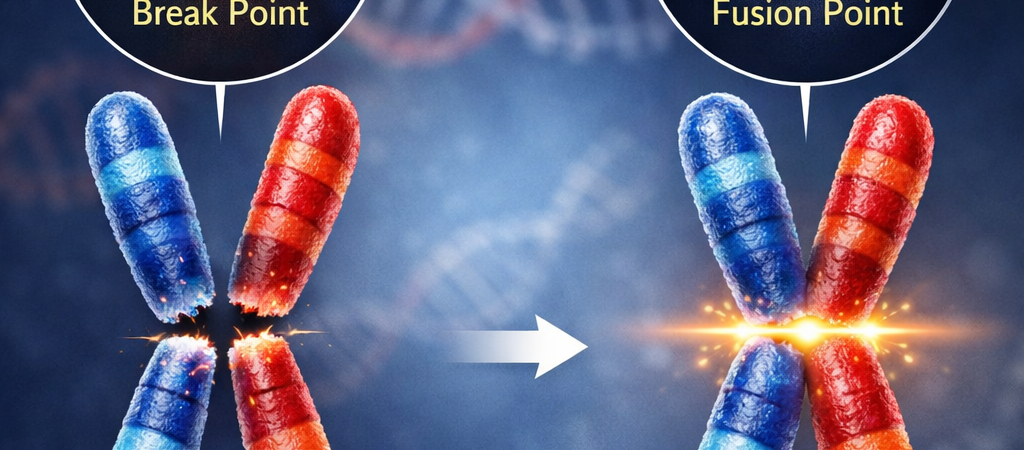
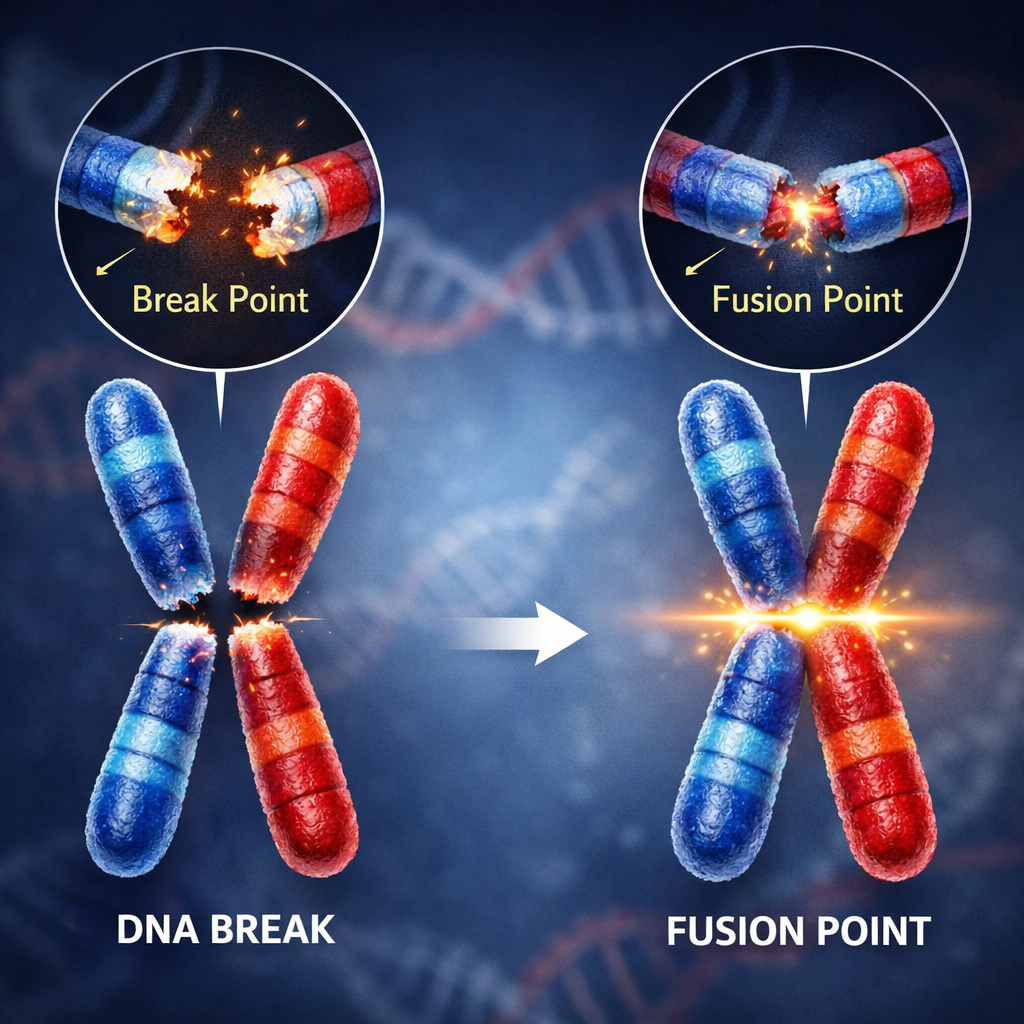
To understand this, consider that chromosomes are structured like long, continuous threads of data. Occasionally, these threads break and reattach in the wrong places—a phenomenon known as translocation. Historically, the clinical focus was solely on the fact that a break occurred. But the critical question is not if it broke, but where it broke. The same translocation can be benign if it occurs in a non-coding region, yet catastrophic if it disrupts a core genetic sequence.
Until recently, diagnostic capabilities stopped at identifying that a translocation existed. Because we could not pinpoint the impact, clinicians were often forced to offer vague reassurances: “There is an abnormality, but it might be fine.” This category often includes cases where fertilization occurs, but embryonic development arrests at a specific stage.
Now, a revolution is underway. We have entered an era where we can identify the exact “fusion point” of a chromosomal break. Knowing this location changes everything. It moves us beyond a binary outcome of “conception or failure” and allows us to explain exactly why an embryo ceases to develop at a specific stage. We are discovering that structures that appeared normal on the surface were, in fact, disrupting essential gene functions at the molecular level.
For patients suffering from recurrent pregnancy loss, the significance of this change cannot be overstated. For years, these individuals were told it was “bad luck” or an “embryonic error.” Now, we are uncovering structural causes. We can finally explain why an embryo fails to progress beyond a certain point: it is a matter of the “location” of the genetic disruption.
However, we must avoid overstating these findings. The vast majority of infertility is not caused by chromosomal structural variations. Factors such as ovarian microenvironment, uterine health, immune function, sperm DNA damage, and lifestyle factors still account for the bulk of infertility cases. Precise breakpoint analysis serves as a vital clue for specific subsets—particularly those with recurrent miscarriage or unexplained IVF failures—rather than a universal diagnostic panacea.
Furthermore, real-world application remains a challenge. This technology is not yet a standard, universally applied test. It requires high-resolution genomic mapping and is currently transitioning from research laboratories to the clinic. It is not an immediate fix, but rather a signal of where the field is heading.
Nevertheless, the essence of this change is undeniable. Infertility is no longer an abstract, opaque condition. It is being broken down into structures, and those structures into ever-smaller units. The narrative, which once encompassed an entire chromosome, has now narrowed to a single point.
The question has evolved: It is no longer “Why is this not working?” but “Where exactly does it stop?”
Sources: Nature Genetics, American Journal of Human Genetics (Structural Variation/Breakpoint Analysis), Human Reproduction, Fertility and Sterility, New England Journal of Medicine (Genomic Diagnosis Reviews).
Disclaimer: This content is provided for informational purposes, based on reporting on infertility and various public data. Medical judgments and treatment decisions must always be made in consultation with professional medical personnel. Image: AI-generated (ChatGPT, OpenAI) / Visual reference for illustrative purposes only.