
Large-scale ESHRE Analysis: Single Embryo Transfers Increase While Birth Rates Remain Stable or Improve, and Multiple Pregnancies Decrease Significantly “One High-Quality Embryo Is More Important”… Domestic Infertility Treatment Also Shifting in the Same Direction
The long-standing common knowledge regarding In Vitro Fertilization (IVF) is changing. The perception that “transferring multiple embryos increases pregnancy success” is being replaced by a new paradigm: “A single high-quality embryo leads to a healthy birth.”
A large-scale analysis of European IVF results presented at the recent annual meeting of the European Society of Human Reproduction and Embryology (ESHRE) confirmed this shift in figures. According to the study, while the rate of Single Embryo Transfer (SET) has steadily increased across Europe, the overall birth rate has been maintained or even improved. Conversely, multiple pregnancies (twins or more) have decreased significantly, thereby greatly enhancing the safety of both mothers and newborns.
Experts evaluate this as a symbolic result showing that the goal of IVF treatment is shifting from simple ‘pregnancy’ to ‘healthy birth.’
Just over a decade ago, it was standard practice in IVF to transfer 2 to 3 embryos. As implantation rates were lower than they are today, a strategy of transferring multiple embryos to boost the probability of pregnancy was widely utilized. Indeed, the perception that “the more you transfer, the higher the success rate” was long accepted as common knowledge among patients.
However, the landscape changed with the rapid development of embryo culture, cryopreservation, and embryo selection technologies. Evidence began to accumulate that accurately selecting and transferring the embryo with the highest implantation potential leads to better outcomes than simply increasing the number of embryos.
This study shows that such changes are confirmed in actual birth outcomes.
The Most Notable Change: Reduction in Multiple Pregnancies
While a twin pregnancy might be viewed as a blessing by many, it is medically categorized as a high-risk pregnancy. It significantly increases the risk of preterm birth and low-birth-weight deliveries, as well as the likelihood of preeclampsia, gestational diabetes, and cesarean sections. Newborns also have a higher chance of requiring admission to an intensive care unit (NICU).
In the sense that the success of IVF lies not in pregnancy itself but in the safe delivery of a healthy baby, single embryo transfer is evaluated as the most medically ideal direction.
In Europe, single embryo transfer is already established as the standard of care, and fertility clinics in South Korea are moving in the same direction.
Major fertility centers in Korea are steadily increasing cases where only one embryo is transferred from the start, provided that high-quality embryos are secured. Especially with advancements such as embryo selection technology, blastocyst culture, and Preimplantation Genetic Testing (PGT), it has become possible to expect higher success rates than in the past, leading to a decreasing trend in transferring multiple embryos simultaneously.
Of course, single embryo transfer is not applied to every patient. The transfer strategy is determined by comprehensively considering various factors such as the woman’s age, history of recurrent implantation failure, embryo quality, and previous treatment experience. However, the fundamental principle of treatment is clearly shifting from ‘increasing the number of embryos’ to ‘selecting the embryo with the highest potential.’
Experts explain, “As IVF technology advances, what determines the success rate is not the number of embryos, but embryo quality and patient-customized treatment. Now, the birth of a ‘Single Healthy Baby’ is becoming the most important goal of IVF treatment.”
This ESHRE study demonstrates that IVF has entered a new phase, moving beyond a competition for pregnancy success rates to considering the safety of both mother and baby.
The old common knowledge that “you must transfer many embryos to succeed” is gradually fading into history in the face of science. The future of IVF is nearing precision medicine—connecting a single, healthiest embryo to a safe birth, rather than relying on multiple embryos.
※ This article was written based on materials presented at the ESHRE 2026 Annual Meeting and the results of the European IVF Registry (EIM Consortium) analysis. It does not replace a specific individual’s diagnosis or treatment, and actual medical judgment must be made through consultation with a specialist.
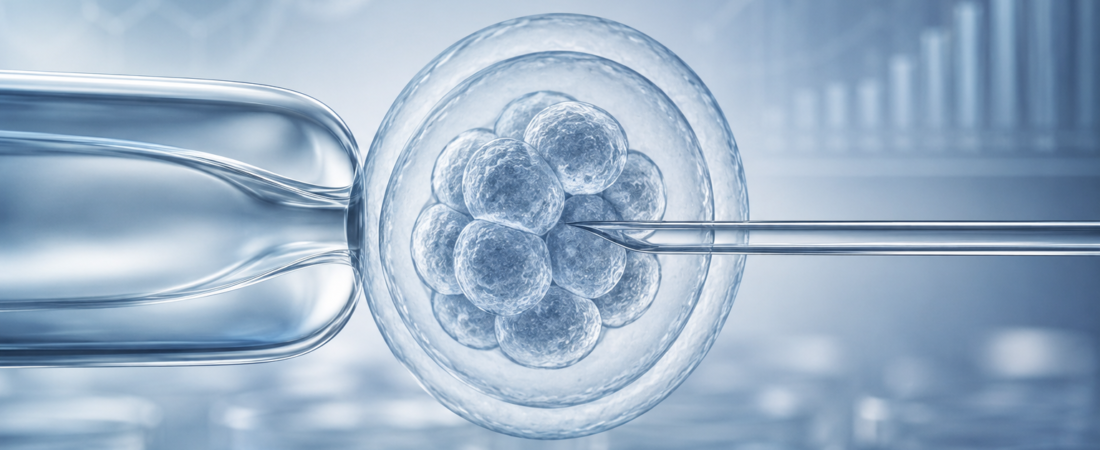
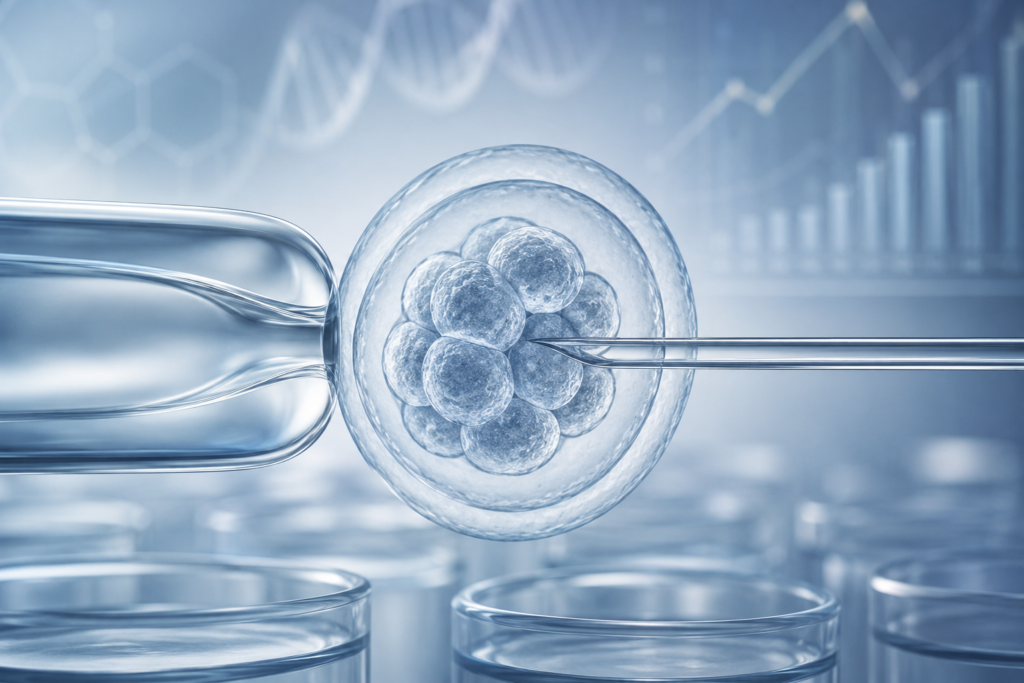
※ Images: Created using generative AI (ChatGPT, OpenAI); depicts fictional individuals, not real people.