
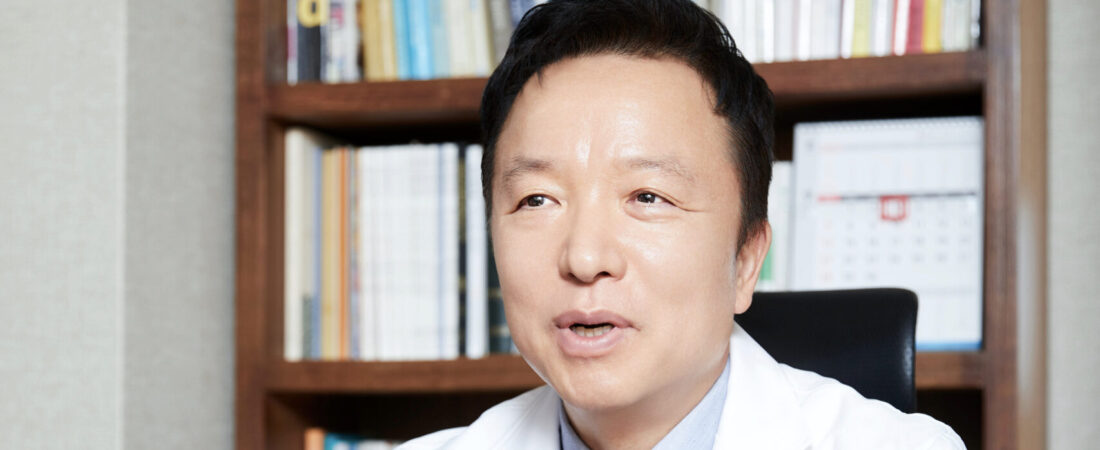
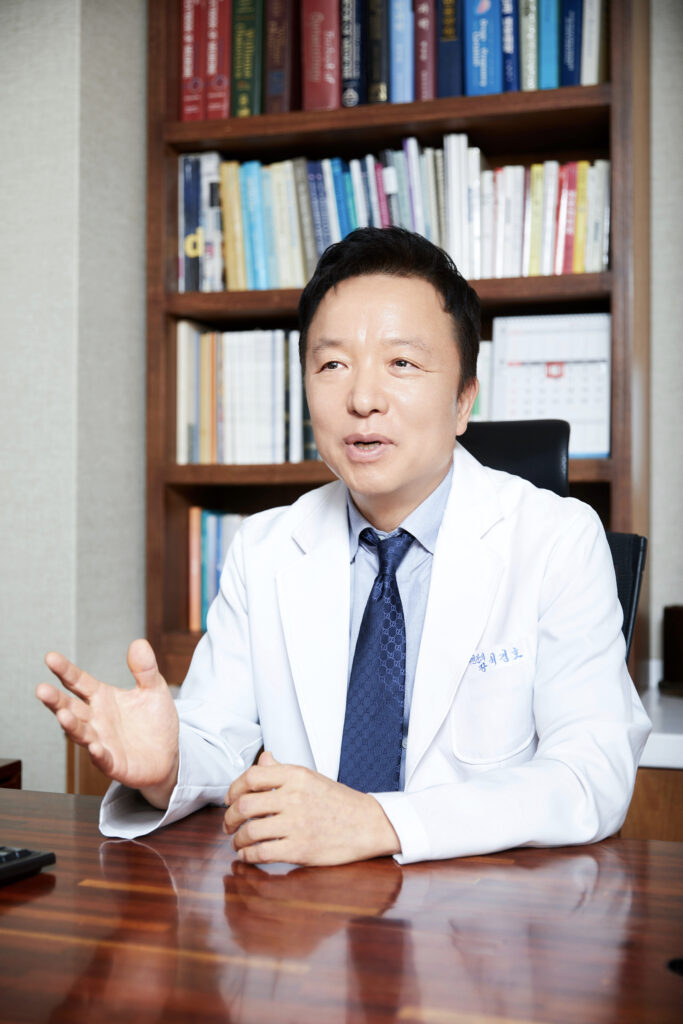
Dr. Lee Kyung-ho’s Principles of Fertility Treatment, Aspiring to Be the ‘Dr. Kato’ of Korea
- The story of visiting Dr. Kato in Japan, a pioneer of In Vitro Fertilization (IVF)
- Over 30,000 IVF procedures in 23 years, with virtually zero cases of Ovarian Hyperstimulation Syndrome (OHSS)
- Egg retrieval needles and procedures tailored to Korean physical traits
- Cultivating only the minimum necessary number of high-quality, fertilizable eggs
- Sticking to fundamentals in accordance with laws and principles
Operating a fertility clinic in Ulsan, Dr. Lee Kyung-ho—director of Mama Papa & Baby Obstetrics and Gynecology—sent an email a decade ago to a Japanese physician revered as a legend in the global reproductive medicine community. The recipient was Dr. Osamu Kato, renowned in Japan for harvesting over 2,000 eggs a month. As the founder and representative of Kato Ladies Clinic in Shinjuku, Tokyo, Dr. Kato is a pioneer in natural-cycle IVF and minimal-stimulation IVF. Dr. Lee’s decision to email him was sparked by a fertility conference he attended in Japan in 2015.
“Do you know how many eggs Dr. Kato retrieves in a month? It reaches up to 2,000 cases. There are days when he performs egg retrievals on over 100 people a day,” Dr. Lee recalls. “Even if he harvests just 5 eggs per person, that’s 500; if 10, that’s over 1,000. It’s such a massive feat that even the Yomiuri Shimbun in Japan reported that he sometimes handles over 100 cases of egg retrieval daily. Simply attending his lecture at the Japanese Fertility Society wasn’t enough to satisfy my curiosity, so that evening I went to his clinic. It was surprisingly small. I couldn’t help but wonder how on earth he managed over 100 egg retrievals a day in such a space. As soon as I returned to Korea, I emailed Dr. Kato directly.”
He formally asked to learn from the world’s most prolific practitioner of low-stimulation egg retrieval. This interview began with that very story.
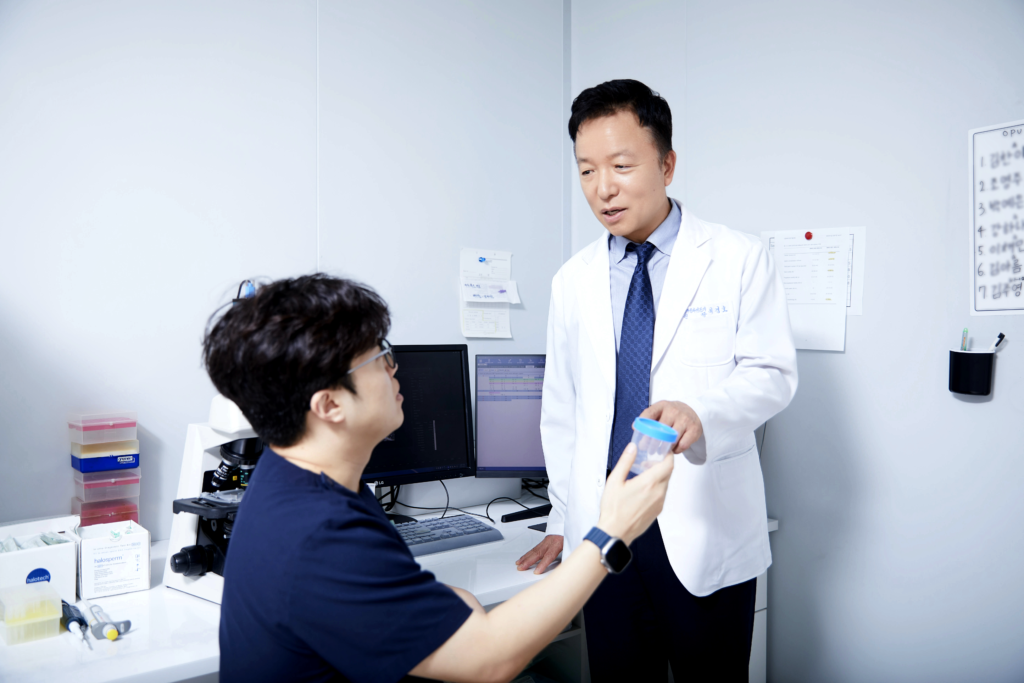
The Power of the 20-Gauge Ophthalmic/Egg Retrieval Needle
What did you write in the email to Dr. Kato?
“I begged him, saying, ‘Could you please let me visit Kato Ladies Clinic for just two days to observe? Please let me see it for just two days.’ I felt there was so much to learn that I practically pleaded with him. I couldn’t sleep because I was dying to know what kind of operational system such a tiny clinic used to extract over 1,000 eggs so quickly.”
What was it actually like when you visited?
“When I observed it firsthand, it was mind-blowing. It was a completely new world. They extracted eggs without even local anesthesia, and not only did it finish in a flash, but the patients didn’t say it hurt at all.”
What was the secret?
“The method—or more precisely, the secret—lay in the egg retrieval needle (OPU Needle).”
Aren’t egg retrieval needles standardized?
“The unit representing needle thickness is the gauge (G). The higher the gauge, the thinner the needle. Standard egg retrieval needles are usually stainless steel 17-gauge (1.47 mm in diameter), but Dr. Kato uses a 20-gauge (0.91 mm in diameter).”
If a needle is thin, doesn’t it bend, making retrieval difficult?
“I thought it would be, but the needle Dr. Kato uses wasn’t like that. When a needle is thin and fine, you’d expect it to whip around or snap, but I was surprised to find it had just the right rigidity—neither bending nor breaking. The commonly used 17-gauge needle is thick, so it doesn’t bend and is easy to extract with. Even though a 20-gauge needle is whippy and should make [eggs] difficult to pull, he harvested them at an astonishing speed using that needle. And he did it without general anesthesia, or even local anesthesia. A patient would walk in, lie down, have eggs retrieved, and walk out in just four minutes. That’s how he could manage 2,000 egg retrieval cases a month.”
The egg retrieval needle used by Dr. Kato is manufactured by Kitazato Corporation, headquartered in Fuji, Shizuoka, Japan. Specializing in the research, development, manufacturing, and marketing of biomedical devices for assisted reproduction, the company develops and sells egg retrieval needles and embryo transfer catheters. Dr. Kato is known to have participated in the development of the needles he uses for egg retrieval and embryo transfer.
It’s amazing that they don’t even use local anesthesia. Does using a 20-gauge needle reduce pain and bleeding?
“It certainly does. The pain was much less, and there was almost no blood. As soon as I returned home, I asked a junior doctor to order 20-gauge egg retrieval needles from Japan. I’ve been using 20-gauge needles ever since—the exact same product used at Kato Ladies Clinic.”
Why don’t other fertility clinics use 20-gauge needles?
“I once recommended them to a doctor at a major hospital. After trying them a few times, they stopped using them, complaining that they were tedious and tricky. Because they have a high volume of patients and eggs to harvest, using a tool they weren’t accustomed to probably slowed them down.”
What changes have you experienced by continuing to use the 20-gauge needle?
“Because the needle is thin, the puncture hole is smaller, so it doesn’t bleed heavily. However, because the hole is small, the extraction takes longer. If you insert a thick pipe, water gushes out, but a narrow pipe flows slower. When a needle hits blood vessels around the ovary or peritoneum, bleeding occurs, and in severe cases, blood pools in the abdominal cavity—a condition called hemoperitoneum. Whenever you puncture an ovary with a needle to retrieve eggs, some degree of hemoperitoneum is bound to happen, which can cause pain. But using a 20-gauge needle definitely minimizes it.”
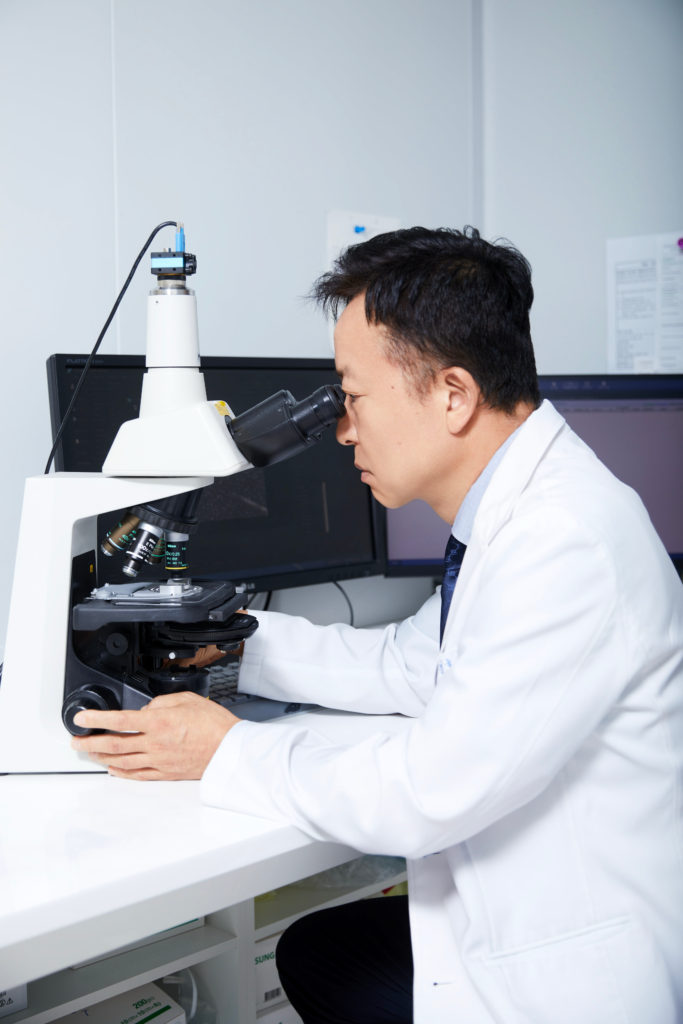
Careful Attention Required Due to Asian Women’s Physical Traits
How did the 17-gauge needle become the global standard?
“IVF started in the UK. As assisted reproductive technology developed in the West during the 1980s and 1990s, 17-gauge needles were likely created to match Western female body types—who tend to be taller, heavier, and have broader pelvises. In contrast, Dr. Kato likely adopted the thinner 20-gauge needle keeping the average Japanese female physique in mind. Japanese women are smaller than the Asian standard, have a shorter distance between the vagina and ovaries, and possess smaller ovaries.”
According to Dr. Lee’s explanation, Western women have a relatively wide pelvic inlet (approx. 11.5–12.5 cm) and shallow pelvic depth, resulting in a relatively straight path and angle from the vagina to the ovaries. Their uteruses often tilt forward, and their ovaries sit deep and low inside the pelvis, allowing ultrasound probes and needles to be inserted almost in a straight line. With an average vaginal length of 9–10 cm providing ample space, thick needles still offer clear visibility and proper angles. For these reasons, the 17-gauge (approx. 1.47 mm diameter) needle became the ‘standard specification.’
In contrast, compared to Western women, Asian women have a slightly narrower pelvic inlet (approx. 10.0–11.0 cm) and deeper pelvises, making the path to the ovaries more complex. Their uteruses are frequently retroverted (tipped backward), creating a curved pathway, and their ovaries sit higher and more laterally, often requiring meticulous adjustments of the needle angle. Their average vaginal length is also shorter at 7–8 cm, leaving less maneuvering room, while their ovaries are smaller than those of Western women. Because of this, using thick needles can increase the risk of bleeding or pain.
“That’s why Dr. Kato likely custom-ordered and used thinner 18- to 20-gauge needles specifically for Japanese women, who are smaller than the Asian average,” Dr. Lee emphasizes. “If an egg retrieval needle is thinner than 17G, pain and bleeding decrease, but extraction speed slows down, requiring skilled technique.”
“A Good Restaurant Doesn’t Need MSG”: Fundamentals Over Trends
You’ve performed over 30,000 IVF procedures since opening your clinic in 2003. You’re famously known for having virtually zero cases of Ovarian Hyperstimulation Syndrome (OHSS). Is there a special secret?
“If you grow too many eggs in a single cycle, both the patient and the doctor suffer. To cultivate only the minimum necessary number, I use fewer hyperstimulation injections. The dosage of hyperstimulation drugs needed to grow eggs varies depending on ovarian status (Anti-Müllerian Hormone [AMH], Antral Follicle Count [AFC]), age, body mass index, and past response history. There probably aren’t many doctors like me who grow only as many eggs as are strictly necessary for fertilization.”
Can you specifically compare how conservatively you use hyperstimulation injections?
“For a normal ovarian response group, doctors often start with a daily injection dose of 150 to 225 IU. Afterward, while monitoring follicle growth via ultrasound, it’s standard to increase the dose by 25 to 75 IU. In contrast, I start lower than 150 IU, at 112 IU. If they grow well even at 112 IU, I reduce it further to 75 IU. Conversely, if response is insufficient at 112 IU, I might co-administer an ovulation-inducing agent (clomiphene) or carefully adjust by raising the daily injection dose to 150 IU.” (IU stands for International Units, a measure of the potency of substances like vitamins, hormones, or drugs that produce physiological effects in the human body.)
On average, how many eggs do you aim to mature?
“I grow a minimal number, usually 10 or fewer. Growing dozens of eggs doesn’t mean they are all good. Looking at patients with Polycystic Ovary Syndrome (PCOS), 40 to 50 eggs grow at once, but when you actually try to use them, very few are viable. Forcing dormant eggs to grow inevitably compromises their quality, so I only cultivate just as many as are truly usable.”
You apply low-stimulation therapy (hyperstimulation injections + ovulation-inducing agents), which is usually recommended for women with diminished ovarian reserve, to general patients as well. How do you predict whether the eggs will grow well?
“I get a feel for it through ultrasound. It’s an intuition built on experience. Having done this for a long time, my know-how has accumulated, so when I look at [the ovaries], I get a sense of whether they will grow or not. If I sense the eggs won’t grow well, I check every 2 to 3 days and gradually increase the hyperstimulation dosage. If necessary, I use ovulation-inducing agents alongside it. If PCOS is severe, I might skip hyperstimulation injections entirely from the start and use ovulation-inducing agents instead.”
Are you of the mindset of sticking to the basics rather than making progressive, risky challenges?
“That doesn’t mean I reject new technologies. I study constantly, but I tend to be wary of over-the-top approaches. Even PGT (Preimplantation Genetic Testing—screening embryos for genetic abnormalities before uterine transfer during IVF), which I’ve looked into and performed since 10 years ago, is something I disagree with in its current state where everyone is obsessed with it. I might recommend it for women with recurrent miscarriages who have suffered three or more losses, but I don’t generally recommend it. While the intention of transferring healthy embryos is good, my conscience finds it difficult because too many embryos that could otherwise grow normally get discarded. Even if an embryo looks abnormal on day 3 or 5 of development, many grow up normally after implantation.”
“Just as a parent-child relationship is a matter of destiny, embryos are also a matter of fate,” Dr. Lee stresses. “New technologies that arbitrarily select embryos should be minimized and used only for those who truly need them.” Dr. Lee’s clinical philosophy of adhering to fundamentals aligns perfectly with Dr. Kato’s core fertility treatment principles: “minimum stimulation, a method close to nature, and an approach focused on safety and quality.”
Do you have any special rules or personal convictions you strictly keep as a fertility specialist?
“As a fertility specialist, I believe in focusing on the core. Even if patients don’t recognize it, I try to focus purely on the essence with the heart of a cleric. Because IVF decides whether or not life is born, I believe it is paramount to grow high-quality eggs in just the necessary quantities without OHSS and perform in vitro fertilization with all our might. It’s not easy to turn away money right in front of you for the sake of hospital profits, but this is far more important than making money. A doctor’s treatment and practice shouldn’t be a lazy shortcut; I strive to practice medicine in alignment with laws, principles, and the fundamentals. When you focus on the core, your fingertips become more sensitive, and pregnancy rates improve. A truly great restaurant doesn’t use artificial seasonings and holds its own secret recipe. Ordinary restaurants use lots of MSG, leaving a bad aftertaste; even if it tastes good while eating, you get sick of it quickly. I believe doctors and hospitals need to be like true culinary gems. In this era of declining birth rates, I want to be even a little bit helpful to our country.”