
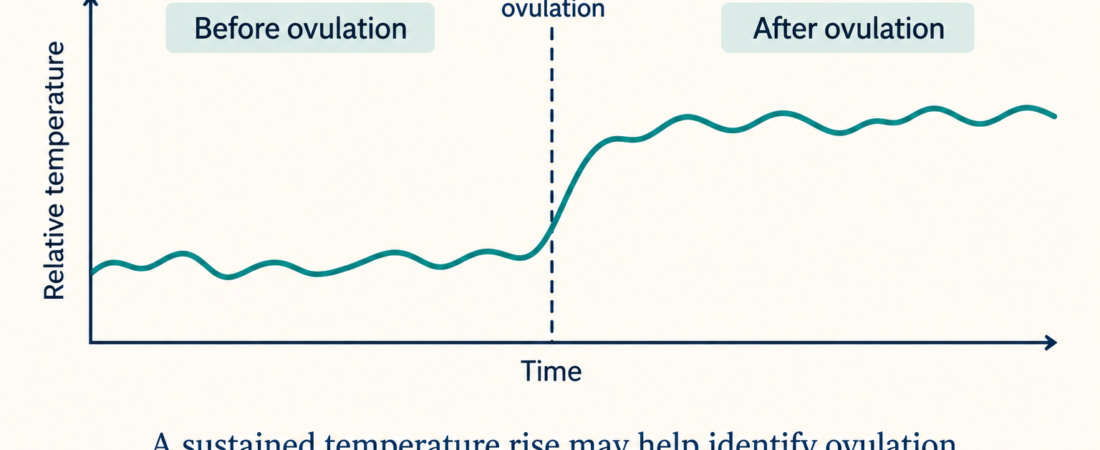

Ovulation tracking uses cervical mucus, LH tests and temperature patterns to estimate the fertile window. Each method has limits: a positive LH test does not prove ovulation, and a temperature rise usually appears afterward. Ultrasound monitoring may add information when clinical assessment is needed.
The fertile window covers the five days before ovulation and the day of ovulation. Sex every one to two days during this window can help couples trying to conceive, but an exact hour is not necessary. ASRM guidance.
A calendar estimate is a starting point, not a precise prediction for every cycle.
Ovulation does not always occur on day 14. The NHS describes it as commonly occurring about 10–16 days before the next period. NHS menstrual-cycle guidance.
Apps and temperature charts may help record patterns, but should not be treated as exact ovulation clocks.
What can basal body temperature tell you?
Basal body temperature often shows a sustained rise after ovulation. It is better suited to recognizing a pattern retrospectively than predicting the exact day in advance. ASRM evaluation guidance.
Waiting for a temperature rise before having intercourse may miss some of the fertile window.
What changes in cervical mucus are described?
Cervical mucus commonly becomes clearer and more slippery near ovulation. These changes can help identify potentially fertile days. ASRM guidance.
The familiar egg-white appearance is a useful observation, but it does not confirm that an egg has been released.
Mucus observation and ovulation predictor kits can be used together. Follow the kit instructions instead of relying on a single assumed cycle day.

How do LH ovulation tests work?
Urine LH tests detect the surge that usually precedes ovulation by one to two days. ASRM evaluation guidance.
A positive result is indirect evidence. False positives and false negatives can occur, and persistently raised LH in PCOS can complicate interpretation. ASRM evaluation guidance.
What can ultrasound monitoring assess?
Transvaginal ultrasound can assess developing follicles and provide evidence of ovulation. A single scan cannot promise an exact release time. ASRM evaluation guidance.
Whether monitoring is useful depends on your history and treatment plan; mucus changes alone do not mean that everyone needs a scan.
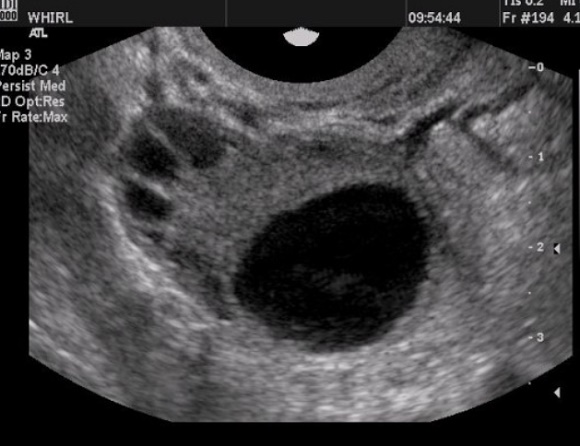
A clinician can help choose an appropriate assessment and arrange specialist care when needed.
Tracking should support attempts to conceive without creating pressure to follow an exact clock. It cannot address every possible cause of infertility.
How does the article discuss irregular cycles and PCOS?
If periods are irregular or absent, seek assessment rather than waiting for a particular mucus pattern. PCOS is one possible cause; clinical evaluation helps identify the reason and plan care. ASRM evaluation guidance.
Sources
ASRM: optimizing natural fertility; ASRM: fertility evaluation; NHS: periods and fertility.
Related reading
Copyright © 2026 난임정보톡톡 난임뉴스 | THE FERTILITY NOTES. All rights reserved. Unauthorized republication, reproduction, redistribution, scraping, AI training and data use of any content, including articles, photographs and images, are strictly prohibited. Violations may result in legal action.