
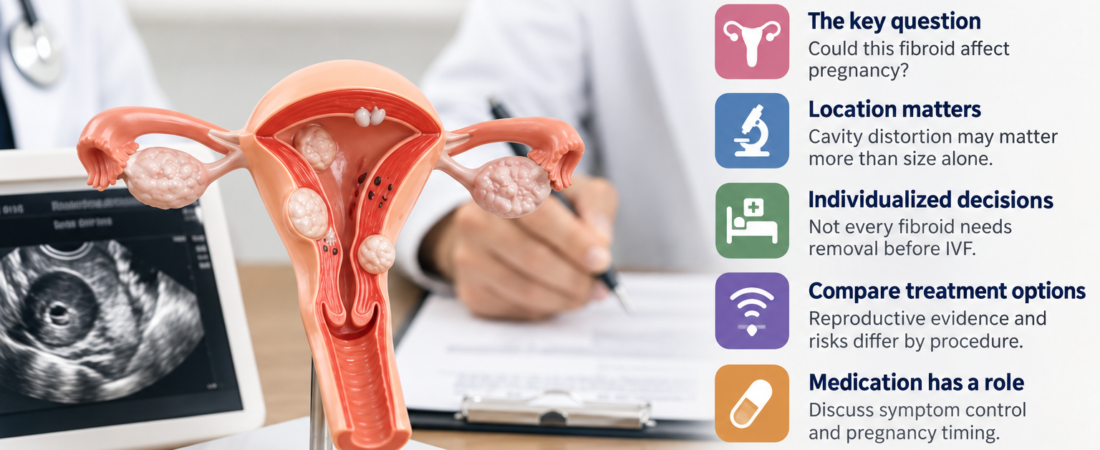
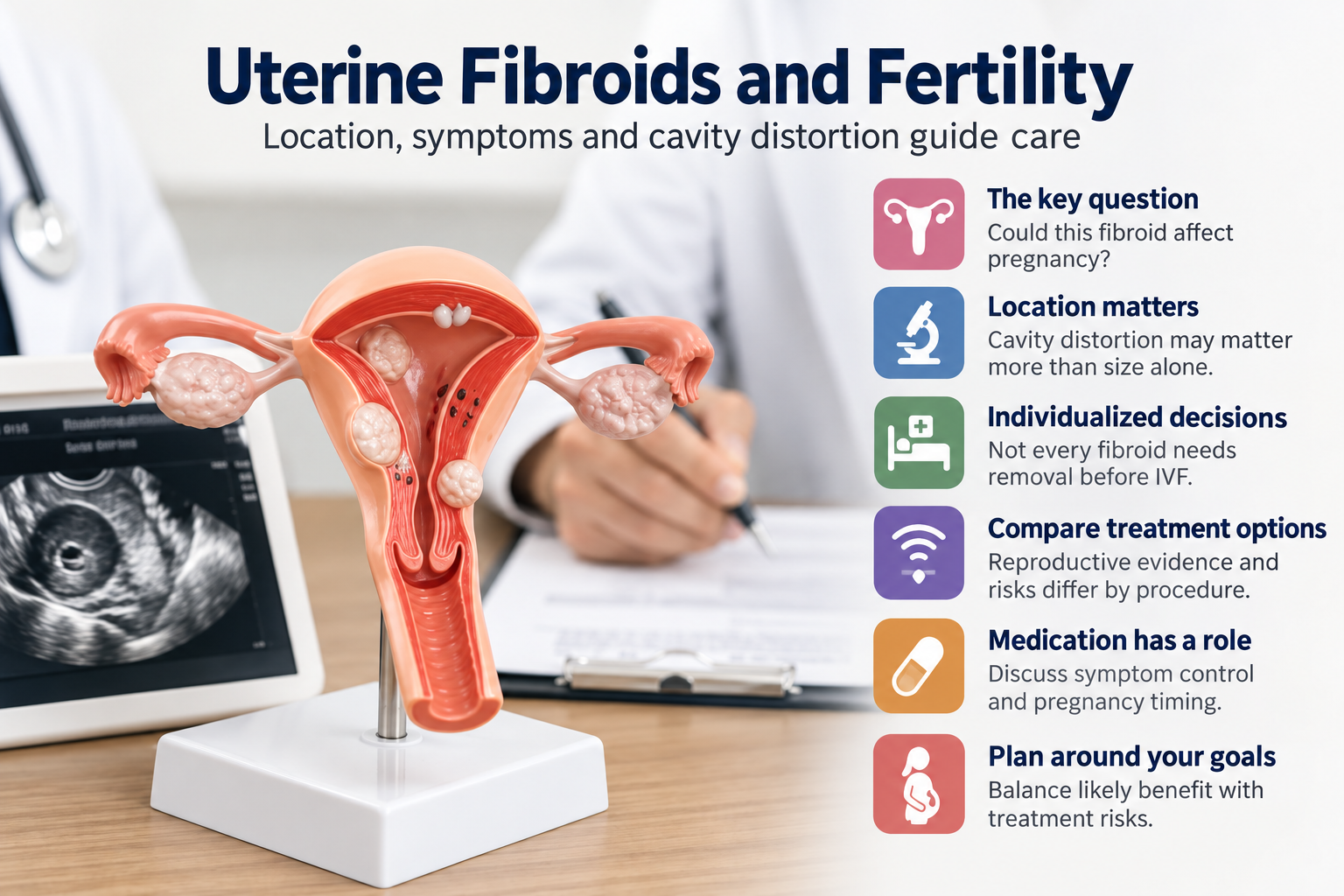
Uterine fibroids and IVF require more than a size-based rule. Location, distortion of the uterine cavity, symptoms and reproductive plans help determine whether treatment is useful. Surgery, medication and other procedures have different evidence and risks; an incidental fibroid is not automatically a barrier to pregnancy.
The clinical approach to uterine fibroids (leiomyomas) is undergoing a quiet but fundamental transformation. In the context of fertility care, the traditional question—”Is this fibroid large enough to be removed?”—has been replaced by a more precise, strategic query: “Does this fibroid impede implantation?” Infertility specialists are moving away from viewing fibroids as simple masses to be excised, and toward treating them as clinical variables that must be managed to secure an optimal environment for embryo implantation.
Location can change the decision
Distortion of the uterine cavity may be important when evaluating fertility. Removing every small fibroid is not a universal requirement; symptoms, anatomy and treatment plans matter.
Strategy: Sequencing the Intervention
This shift has revolutionized treatment sequencing. Historically, the removal of fibroids was often the preliminary step before starting IVF. Today, the clinical roadmap is highly customized:
- Fibroids that do not impede implantation: IVF may proceed immediately, avoiding the surgical stress on the uterus.
- Cavity distortion: Discuss whether intervention may help; neither a small size nor a cavity finding creates an automatic rule.
Decisions need individual evidence
Consider cavity distortion, symptoms, prior treatment and the risks of intervention together. There is no single diameter that predicts implantation.
Refining the Therapeutic Toolbox
The methods for managing fibroids have also become more nuanced to prioritize uterine preservation:
- Procedure choice: Weigh the specific anatomy, expected benefit and risks of each proposed method.
- Medication: Some drugs can control symptoms or temporarily reduce size; they are not universal pre-IVF fertility treatments.
Conclusion: The Threshold Question
It is critical to avoid the mistake of labeling all fibroids as absolute causes of infertility. Many women conceive naturally with fibroids present, and some fail to conceive even after fibroid removal. Uterine fibroids are not an inherent “disease to be erased” but a “variable whose impact depends on conditions.”
A practical question
Is the fibroid likely to affect this patient’s treatment, and would intervention offer enough benefit to justify its risks?
Good planning weighs observation, treatment and timing without promising that changing the uterine anatomy will guarantee implantation.
Disclaimer: This content is provided for informational purposes, based on current reproductive medicine trends. Medical judgments and treatment decisions must always be made in consultation with professional medical personnel. Image: AI-generated (ChatGPT, OpenAI) / Visual reference for illustrative purposes only.
Location and goals shape the decision
Cavity distortion matters, but removal is not automatically indicated for every fibroid. ASRM myoma guideline (2017).
Related reading
"The Paradigm Shift in Uterine Fibroid Care": Why Location Matters More Than Size