
By Seungjoo Lee
FMR1 premutation carriers undergoing IVF may retrieve fewer eggs without a lower euploid rate among embryos that reach biopsy. A retrospective study separates diminished ovarian reserve from the chromosomal status of individual blastocysts—an important distinction for women concerned about FMR1, low AMH and embryo quality.
Some women first encounter the unfamiliar gene name FMR1 while preparing for IVF, particularly when ovarian function has declined earlier than expected or there is a family history of early menopause. A result described as an FMR1 premutation can bring further anxiety: fewer eggs may remain in the ovaries, and fewer may be retrieved during treatment.
A natural question follows: if fewer eggs are available, are the remaining eggs also poorer in quality?
The recent findings suggest that this is not necessarily the case. Premutation carriers tended to produce fewer retrieved and mature oocytes. Yet among embryos that developed to the blastocyst stage and underwent testing, the chance of a normal chromosome count did not differ significantly from that in women without the premutation.
In other words, FMR1 may affect how many eggs can be obtained without necessarily making the chromosomes of each resulting embryo abnormal.
What is an FMR1 premutation?
FMR1 is a gene on the X chromosome involved in producing a protein needed for functions including brain and nervous-system development. Within it is a stretch of genetic information in which the sequence CGG repeats.
DNA can be thought of as information written using four letters—A, T, G and C. In this part of FMR1, C-G-G appears repeatedly: CGG-CGG-CGG. Some repetition is normal; the concern arises when the number becomes unusually large.
Approximately 55–200 CGG repeats are generally classified as a premutation: substantially more than the normal range, but not a full mutation. More than 200 repeats are classified as a full mutation and are associated with fragile X syndrome. In women, an FMR1 premutation is also relevant to ovarian function.
Why ovarian function can decline earlier in some carriers
Not every female premutation carrier develops ovarian dysfunction. In some, however, the ovarian follicle pool can decline earlier than usual. Fragile X-associated primary ovarian insufficiency (FXPOI) refers to impaired ovarian function associated with the premutation.
Periods may become irregular or ovarian function may decline substantially before age 40. Other women still have regular periods but discover unexpectedly low anti-Müllerian hormone (AMH) during fertility assessment.
AMH provides an indirect indication of the pool of follicles that may develop. A low value therefore generally suggests fewer remaining eggs. Crucially, fewer eggs and abnormal chromosomes in the eggs that remain are not the same thing. The study set out to examine that distinction.
What researchers found in 173 IVF cycles
Investigators from Melbourne IVF, the University of Melbourne, Boston IVF and other institutions reviewed treatment records from 2014–2023. The analysis included 173 fresh IVF/ICSI cycles in FMR1 premutation carriers. Preimplantation genetic testing was undertaken in 142 cycles; in 124, at least one embryo reached the blastocyst stage and could be biopsied.
A blastocyst is an embryo that usually develops around five to six days after fertilization and contains many cells. At this stage, a small cell sample can be taken for chromosomal testing.
The first finding concerned quantity. Premutation carriers generally had lower AMH, fewer retrieved oocytes, fewer mature oocytes capable of fertilization, fewer normally fertilized oocytes and fewer usable blastocysts. This supported earlier observations linking FMR1 to the number of eggs obtainable through ovarian stimulation.
Embryo chromosome testing told a different story
To examine chromosomal status, researchers matched 33 PGT-A cycles in premutation carriers with 33 cycles in non-carriers. PGT-A assesses whether embryos have the expected chromosome number. Humans normally have 46 chromosomes; errors during egg or sperm formation can leave an embryo with extra or missing chromosomes. An embryo with the expected complement is described as euploid.
The matched groups were similar in female age, body mass index and oocyte yield. Matching age was particularly important because it strongly influences the likelihood of embryo aneuploidy.
At least one euploid embryo was obtained in 84.8% of premutation-carrier cycles and 75.8% of control cycles. The overall distribution of embryo test results did not differ significantly. Analyses at the individual-embryo level likewise found no statistically significant difference in euploidy.
Thus, retrieving fewer eggs in women with the premutation was a separate issue from whether embryos made from those eggs were more likely to have abnormal chromosome numbers.
Egg quantity and egg quality should not be treated as interchangeable
Ovarian reserve broadly concerns how many eggs remain available. Low AMH or a low response to stimulation primarily relates to that quantity. Embryo ploidy concerns whether the embryo formed by egg and sperm has the expected chromosome complement.
The two can be related, but they are not identical. Premutation carriers began with fewer eggs and embryos. Nevertheless, among embryos that passed through the preceding developmental steps and reached blastocyst biopsy, the chance of euploidy was not lower.
It is therefore inappropriate to assume a simple chain in which low AMH necessarily means fewer eggs, poorer egg quality and abnormal embryo chromosomes.
Female age remained important
Age was an important factor in embryo chromosomal status in this study. As women age, chromosome-segregation errors become more common in oocytes, increasing the possibility of extra or missing chromosomes after fertilization.
Older age among premutation carriers was associated with a lower chance of obtaining at least one euploid embryo. Rather than using FMR1 carrier status alone to predict chromosomal results, clinicians need to consider age, ovarian reserve and actual oocyte yield together.
What the study does not establish
It would also be too strong to conclude that FMR1 has no effect on any aspect of egg quality. The study examined one specific stage: chromosomal status in embryos that reached blastocyst development and were tested.
Egg quality involves more than chromosomes, including maturation, fertilization and developmental competence. The study did not prove that every one of these functions is unaffected by the premutation.
The central matched comparison was small—33 cycles in each group—and included embryos that survived to the stage at which testing was possible. These selection and sample-size limitations matter.
For carriers, the practical message remains meaningful. An IVF cycle may yield fewer eggs, but a low yield alone is insufficient reason to conclude that the remaining eggs must be poor or that their embryos must have abnormal chromosomes. In this study, the effect was clearer in the number of eggs and embryos available at the outset than in the chromosomal status of each tested embryo.
Study source
FMR1-Associated Diminished Ovarian Reserve: Reduced Oocyte Yield Without Loss of Per-Embryo Ploidy, Fertility and Sterility, online September 22, 2026. Retrospective cohort involving Melbourne IVF, the University of Melbourne, the Royal Women’s Hospital, Boston IVF and Yale University School of Medicine. The study covered 173 fresh IVF/ICSI cycles, with a 33-versus-33 matched PGT-A comparison. DOI: 10.1016/j.fertnstert.2026.09.010; PMID 42772432.
This report does not predict individual treatment outcomes. Ovarian function and pregnancy prospects in premutation carriers vary with CGG repeat count, age, ovarian reserve and family history. Individual specialist and genetic counseling are important.
Related reading
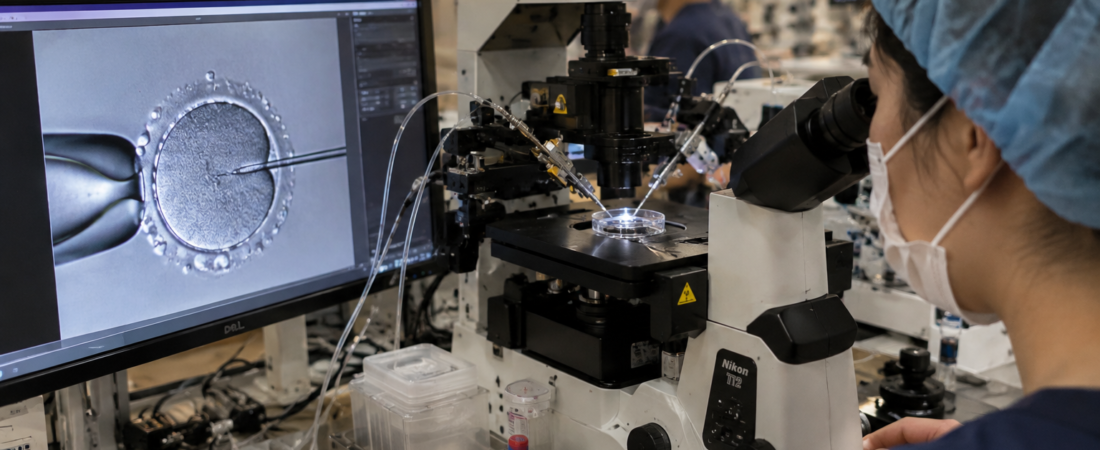
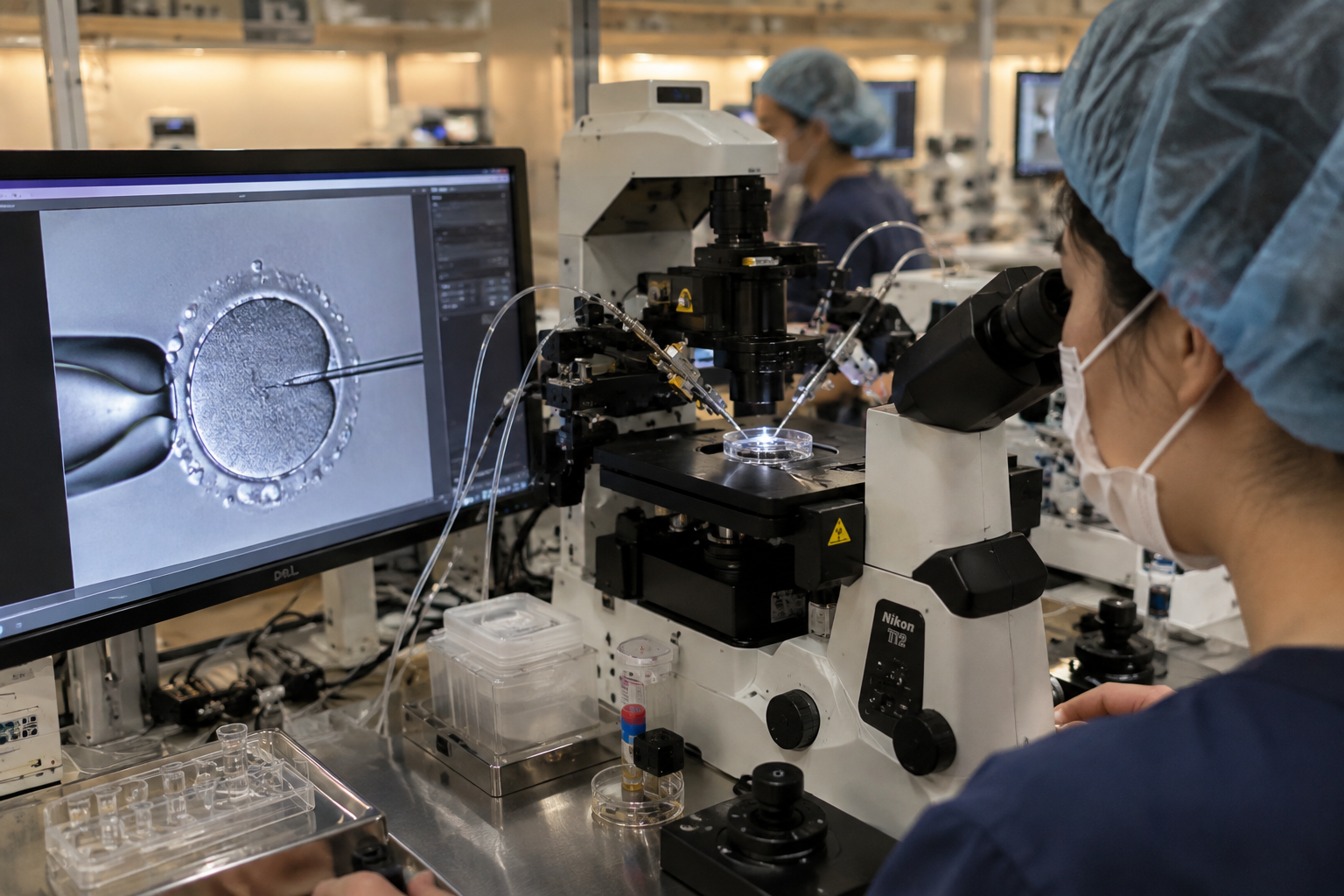
Images were created using generative AI (ChatGPT, OpenAI) for illustration and do not depict actual patients.
Copyright © 2026 Fertility Information TokTok | THE FERTILITY NOTES. All rights reserved. Unauthorized republication, reproduction, redistribution, scraping, AI training and data use of articles, photographs, images and all other content are strictly prohibited. Violations may result in legal liability.