
- Multicenter randomized trial in 424 women undergoing IVF/ICSI: Embryos cultured in media at pH 7.22 versus pH 7.38
- Live birth rates reached 28.1% vs. 27.8%: Virtually identical reproductive outcomes
- “Within normal physiological boundaries, minor pH variations do not dictate birth rates”
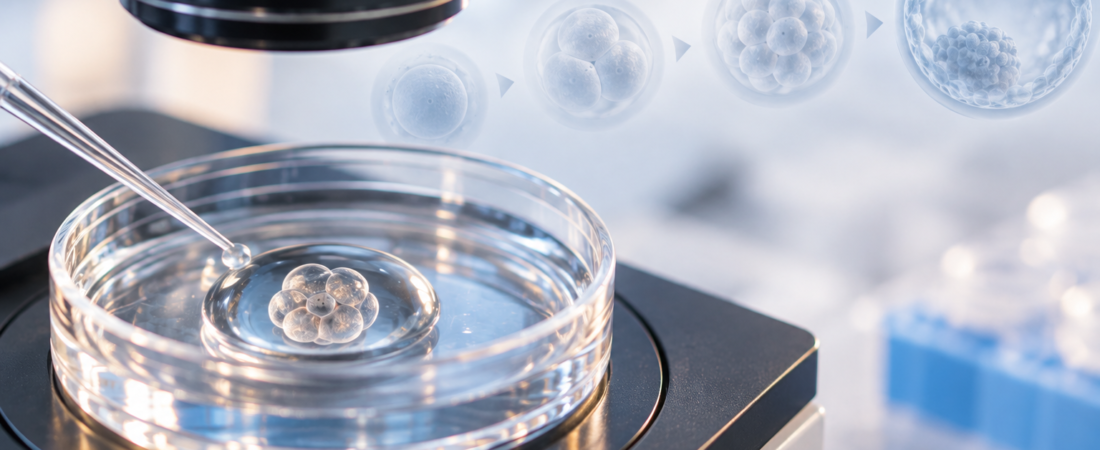
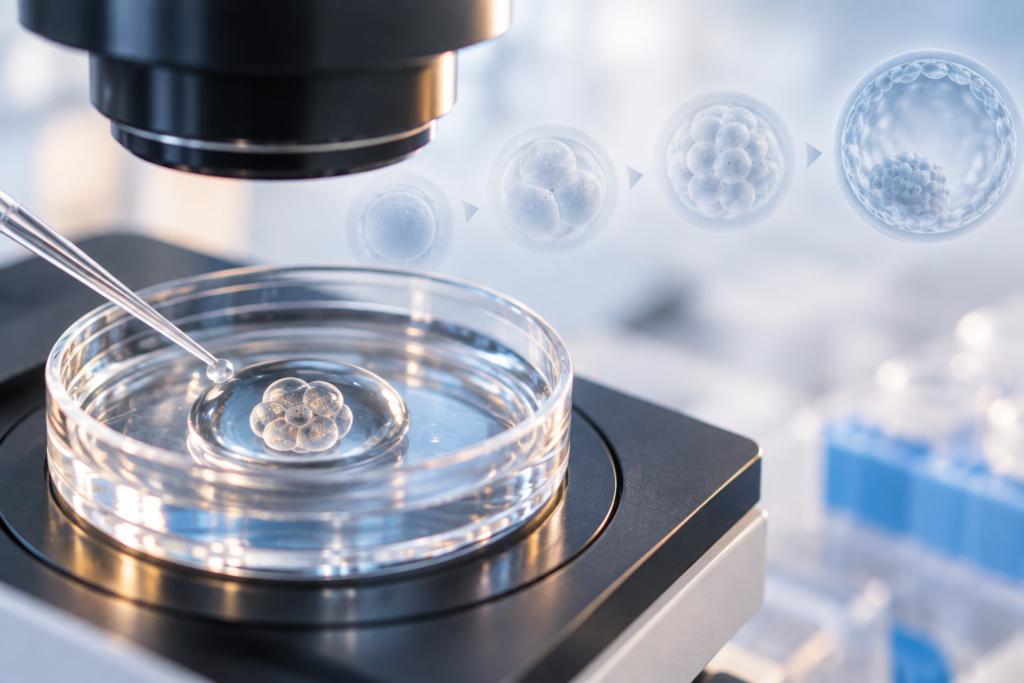
In In Vitro Fertilization (IVF), fertilized embryos spend their earliest days growing inside specialized culture media. Throughout this process, embryology laboratories meticulously regulate not only incubation temperature and oxygen concentrations, but also the pH—the precise acid-base balance of the culture droplet.
Could a minor fluctuation in the pH of this fluid tip the scales of pregnancy and live birth?
A multicenter, double-blind randomized controlled trial published in Reproductive BioMedicine Online (September 2026) addressed this question directly. Researchers enrolled 424 women aged 40 or younger undergoing IVF or Intracytoplasmic Sperm Injection (ICSI), dividing them into two cohorts whose embryos were cultured in media calibrated to either pH 7.22 or pH 7.38.
The clinical results were virtually identical.
The live birth rate was 28.1% in the pH 7.22 group and 27.8% in the pH 7.38 group. Furthermore, implantation rates, overall clinical pregnancy rates, and embryonic developmental milestones showed no discernible differences between the two arms.
In short, so long as culture media are managed within a recognized physiological range, minor differences in pH do not meaningfully alter IVF live birth rates.
There was, however, an interesting divergence in early pregnancy loss: the miscarriage rate was 28.6% in the pH 7.22 cohort compared to 17.3% in the pH 7.38 cohort. While this numerical gap favored the higher pH arm, the difference did not achieve statistical significance. The investigators noted that clarifying whether this represents a true biological signal or random variation will require larger follow-up studies.
For clinical embryology laboratories, this trial delivers a practical message: rather than obsessing over locking every incubator parameter onto an inflexible, hyper-precise set point, the real priority is maintaining a stable, consistent physiological environment.
An important caveat applies: this study specifically evaluated a relatively narrow pH window between 7.22 and 7.38. These findings should not be interpreted to mean that extreme deviations or poorly buffered shifts outside this baseline range are harmless.
While human embryos developing in a culture dish are undeniably delicate, these results show that within standard, quality-controlled laboratory conditions, they are far more adaptable to subtle environmental variations than previously thought.
※ This article was synthesized based on the multicenter, double-blind randomized controlled trial published in the international journal Reproductive BioMedicine Online (September 2026). It does not replace individualized clinical diagnosis or medical care, and specific treatment decisions should always be made in consultation with a qualified reproductive endocrinologist or clinical embryologist.
※ The images associated with this article were generated using generative AI (ChatGPT, OpenAI) as illustrative visual references and do not depict real individuals.