
- Abnormal cleavage observed significantly more often in ICSI embryos than in conventional IVF
- Analysis of 125,570 normally fertilized embryos: 40.82% in IVF vs. 52.14% in ICSI; difference held after multivariate adjustment (aOR = 1.674)
- Trend observed even when semen parameters were normal… “ICSI does not inherently guarantee superior embryo quality”
Couples preparing for In Vitro Fertilization (IVF) frequently ask whether conventional IVF (cIVF) or Intracytoplasmic Sperm Injection (ICSI) produces higher-quality embryos.
Because ICSI involves selecting a single spermatozoon under a microscope and microinjecting it directly into the cytoplasm of an oocyte, it is often perceived as a more advanced, high-precision technique. Consequently, even when male factor infertility is absent or mild, many patients assume that opting for ICSI will automatically help their embryos develop and divide more robustly.
However, a large-scale clinical study examining the early developmental trajectories of 125,570 normally fertilized embryos yielded findings that challenge this widespread assumption: embryos generated via ICSI exhibited early abnormal cleavage patterns significantly more often than those conceived through conventional IVF.
Looking Beyond Fertilization: Cleavage Dynamics
A research team from the Women and Children’s Hospital of Chongqing Medical University and the Chongqing Health Center for Women and Children analyzed 125,570 normally fertilized (two-pronuclei, 2PN) embryos derived from 20,456 IVF and ICSI cycles conducted between 2021 and 2023. Among these, 99,019 embryos were generated through conventional IVF, and 26,551 through ICSI.
The investigators focused on a critical biological question that extends beyond raw fertilization rates: once sperm and egg fuse, does the subsequent progression through early cleavage stages—from 2-cell to 4-cell and 8-cell stages—follow an orderly physiological rhythm?
Under physiological conditions, an embryo undergoes synchronized cell divisions adhering to specific spatial geometry and temporal timelines. However, some embryos exhibit atypical divisions, such as dividing directly from 1 to 3 or more blastomeres (direct cleavage), uneven cleavage intervals, or cellular fragmentation and reverse cleavage. The researchers classified these phenomena collectively as abnormal cleavage.
Rather than asking solely “did the egg fertilize?”, the study investigated how normally the embryo executed its earliest cell divisions after fertilization.
A Notable Gap: 40.82% in IVF vs. 52.14% in ICSI
The analysis revealed marked differences in early cleavage behavior:
- Conventional IVF Cohort: Abnormal cleavage was observed in 40.82% of embryos.
- ICSI Cohort: Abnormal cleavage was observed in 52.14% of embryos.
This represents an absolute difference exceeding 11 percentage points.
The disparity remained statistically robust after controlling for key confounding variables—including maternal chronological age, baseline ovarian reserve, etiology of infertility, semen quality parameters, and ovarian stimulation protocols. In the adjusted multivariate regression model, ICSI embryos had an approximately 1.67-fold higher likelihood of exhibiting abnormal cleavage compared to conventional IVF embryos (adjusted Odds Ratio [aOR] = 1.674; statistically significant).
This elevation was not isolated to specific age brackets or stimulation regimens; stratified analyses across various female age cohorts and distinct gonadotropin protocols demonstrated a consistently higher incidence of abnormal cleavage among ICSI embryos.
Persistent Disparity Even When Semen Parameters Were Normal
A reasonable question arises: because ICSI is clinically indicated for men with severe oligoasthenoteratozoospermia, could the higher rate of abnormal cleavage simply reflect compromised paternal sperm quality from the outset?
The investigators evaluated this hypothesis by stratifying the study population according to baseline semen analysis results: normal semen profiles, mild abnormalities, and combined/multiple semen defects.
Remarkably, the higher incidence of abnormal cleavage in ICSI embryos persisted even within the subgroup of couples with completely normal semen parameters. The identical upward trend was observed across cohorts presenting with mild and multiple semen defects.
While intrinsic sperm factors undeniably influence embryogenesis, the consistency of these findings across diverse sperm profiles suggests that physical or biochemical aspects of the ICSI procedure itself—such as mechanical disruption of the oolemma, injection volume, or artificial sperm selection—warrant careful consideration in relation to early mitotic spindle stability and cleavage dynamics.
High Technical Precision Does Not Equate to Superior Development
The fundamental divergence between conventional IVF and ICSI lies in how fertilization takes place:
- Conventional IVF: Oocytes are incubated in a microdroplet containing a dense concentration of motile spermatozoa. Fertilization relies on natural biological selection, requiring the sperm to independently bind to the cumulus matrix, penetrate the zona pellucida, and fuse with the oocyte membrane.
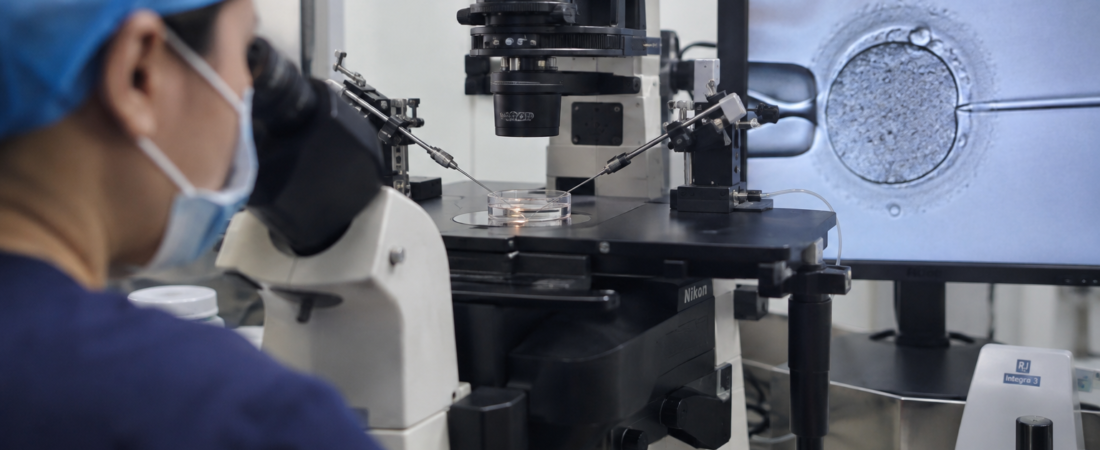
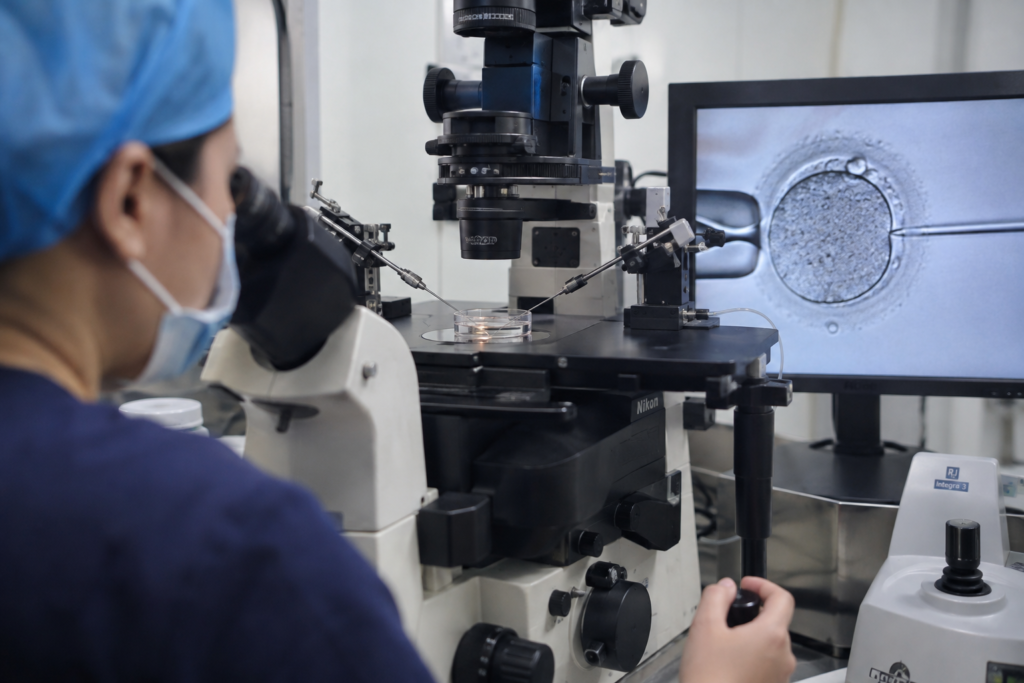
- ICSI: An embryologist manually immobilizes a single morphologically normal spermatozoon, aspirates it into a micropipette, and mechanically injects it across the oolemma directly into the ooplasm.
In cases of severe male factor infertility (such as severe oligospermia, asthenospermia, obstructive/non-obstructive azoospermia requiring surgical retrieval) or prior total fertilization failure, ICSI is an indispensable, practice-changing technology that makes biological fertilization possible.
The clinical concern arises when patients and clinicians assume that because ICSI is technically more invasive and operator-dependent, it will inherently produce “better” embryos in couples where male factor infertility is absent. This study highlights that achieving high fertilization rates through mechanical injection does not automatically translate into superior post-fertilization cleavage kinetics.
Crucial Caveats: Study Scope and Clinical Interpretation
These findings must not be misinterpreted to suggest that “ICSI creates defective embryos” or should be abandoned:
- Study Design: This was a large-scale retrospective observational study, not a prospective randomized controlled trial (RCT). While extensive statistical adjustments were performed, unmeasured clinical and biological differences between patients assigned to IVF versus ICSI cannot be fully eliminated.
- Surrogate Endpoint: The primary endpoint evaluated was early cleavage morphokinetics, not downstream implantation rates, clinical pregnancy rates, or cumulative live birth rates. While abnormal cleavage is known to correlate with lower blastocyst conversion and altered ploidy, it does not mean that every embryo exhibiting abnormal cleavage fails to produce a healthy baby.
- Clear Clinical Indications: For couples with verified severe male factor infertility or documented past fertilization failure, ICSI remains the established, frontline standard of care.
Moving Beyond Fertilization Rates to Early Embryo Kinetics
The message of this study is clear: when choosing an insemination method, clinical decision-making should not focus solely on “which method yields the highest immediate fertilization percentage.” Equal weight must be given to how normally and stably the resulting zygote navigates its subsequent developmental divisions.
In couples presenting with normal semen analyses and no documented history of fertilization failure, defaulting to ICSI under the belief that “it is more advanced, so the embryos will be better” is unsupported by current large-scale embryological data. Insemination strategies must be tailored by weighing semen profiles, oocyte yield, past reproductive history, and clinical indications.
Neither conventional IVF nor ICSI represents a universal solution for every patient. While ICSI remains a vital tool for those who genuinely need it, this analysis of 125,570 embryos serves as a clinical reminder that microinjection does not inherently guarantee superior embryonic development.
Medical Source & Study Reference
- Journal: Reproductive BioMedicine Online (RBMO), 2026.
- Study Title: Incidence of abnormal cleavage patterns in conventional IVF versus ICSI: a retrospective analysis of 125,570 normally fertilised embryos
- Lead Institutions: Women and Children’s Hospital of Chongqing Medical University; Chongqing Health Center for Women and Children, Chongqing, China.
- Study Cohort: 125,570 normally fertilized (2PN) embryos from 20,456 IVF/ICSI cycles (2021–2023).
- DOI: 10.1016/j.rbmo.2026.105767
※ This article provides general medical and scientific information and does not replace individualized clinical diagnosis or care. Decisions regarding the appropriate fertilization method (conventional IVF vs. ICSI) should always be made in consultation with a qualified reproductive endocrinologist and clinical embryologist, taking into account comprehensive semen analyses, oocyte numbers, past fertilization history, and underlying causes of infertility.
※ The images associated with this article were generated using generative AI (ChatGPT, OpenAI) as illustrative visual references and do not depict real individuals.
※ Copyright © 2026 THE FERTILITY NOTES. All rights reserved. Unauthorized reproduction, duplication, distribution, scraping, AI training, or data utilization of all content, including articles, photos, and images, is strictly prohibited and may result in legal liability.