
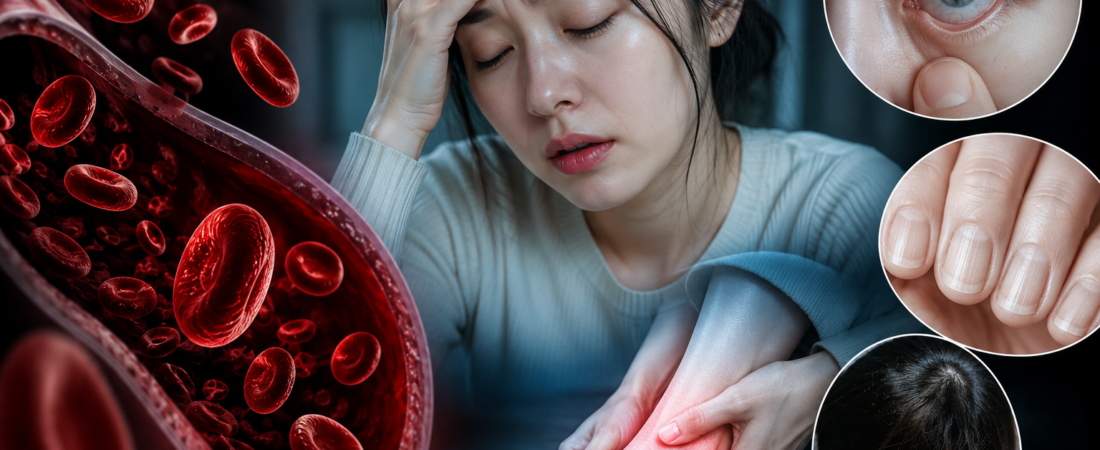
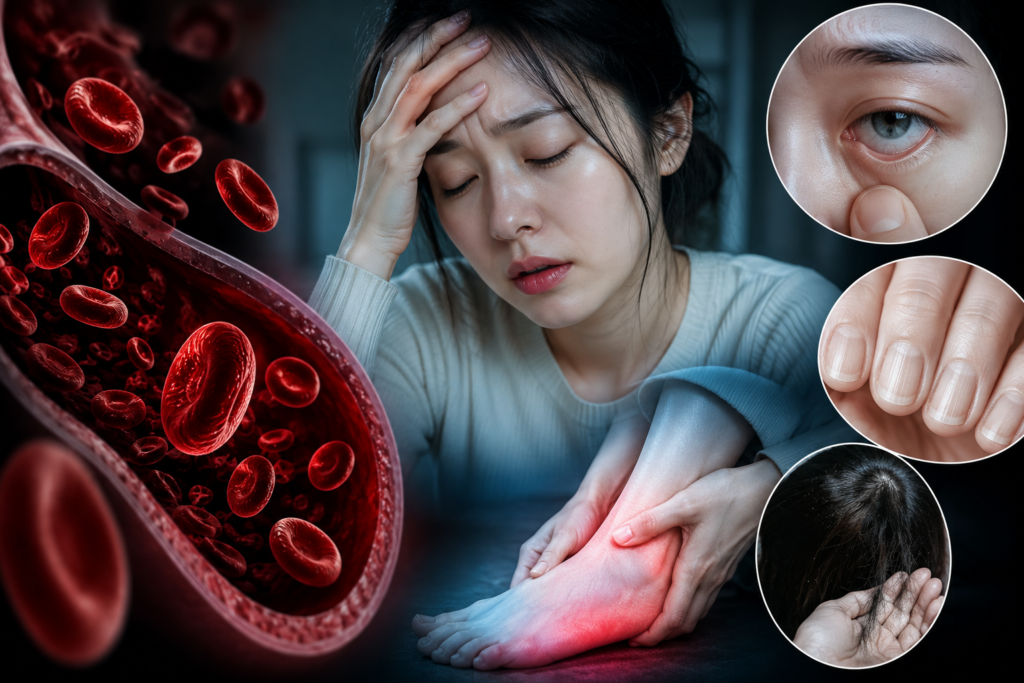
If your hands and feet are cold, it is a warning sign from your body. Iron deficiency lowers blood circulation, too. The first step in preparing for pregnancy is an iron check.
There are people who cannot take off their socks even when the mid-summer temperature exceeds 35°C. It is easy to blame the air conditioning, but the problem might be your blood rather than the season.
If your hands and feet are unusually cold, you get out of breath after climbing just a few flights of stairs, and you feel tired no matter how much you sleep, it might be a sign that your body is lacking iron, rather than just simple fatigue. Women, in particular, need to be extra cautious as iron levels can easily drop through menstruation, pregnancy, and childbirth.
Iron is the core material of red blood cells, which carry oxygen throughout our body. When iron is lacking, hemoglobin production decreases, eventually reducing the amount of oxygen delivered to the entire body. The problem is that this change doesn’t just end with a diagnosis of anemia. As various parts of the body fall into a state of oxygen deprivation, diverse symptoms appear simultaneously.
The first change is inexplicable fatigue. Even after a good night’s sleep, you don’t feel refreshed, and by the afternoon, you lose all energy. Concentration drops, and even daily tasks feel overwhelming. Many people dismiss this as stress or overwork, but there are not a few cases where iron deficiency is secretly hiding behind it.
Shortness of breath is also a representative signal. Because there aren’t enough red blood cells to transport oxygen, the heart has to beat harder and breathing quickens with even slight exertion. If you are someone whose stamina drops unusually fast when you start exercising, you should check your iron levels at least once.
If your hands and feet are as cold as ice even in summer, you should also pay attention to lower-body blood circulation. When iron is lacking, the amount of oxygen carried by the blood itself decreases.
Because our body prioritizes supplying blood to the heart and brain, which are vital for survival, blood supply to peripheral areas like hands and feet can be reduced. Legs and feet, in particular, are the farthest from the heart and are the first parts to feel cold if blood circulation is not smooth.
Many people think “poor blood circulation” is merely a vessel problem, but in reality, you must examine the oxygen-carrying capacity of the blood as well. Iron deficiency is a representative cause of degrading the ‘quality’ of blood, not just the quantity. Eventually, not enough oxygen is delivered to the lower body, causing feet to feel cold and easily numb or fatigued.
Complexion is also an important clue. If you look in the mirror and your lips look pale or the inside of your eyelids appear whiter than usual, you might suspect iron deficiency. It is also common for the skin to look yellowish and lifeless.
There are unexpected signals, too. If you have a recurring urge to chew ice or eat non-food items, it might be ‘pica,’ which is linked to iron deficiency. Changes in fingernails, such as them becoming brittle or turning concave like a spoon, are also relatively characteristic symptoms of iron deficiency.
Hair loss is not unrelated to iron either. This is because hair also requires a sufficient supply of oxygen during the growth process. When the body enters a state of iron deficiency, it supplies oxygen to vital organs first, and hair, which has a relatively lower priority, may experience slowed growth or enter a resting phase.
Women preparing for pregnancy should pay even closer attention to their iron status. Iron is not just a nutrient for preventing anemia. The uterus and ovaries are also organs that require rich blood flow and oxygen supply.
If lower-body blood circulation is not smooth and chronic iron deficiency persists, it could potentially affect the oxygen supply to the uterus and ovaries. While it cannot be concluded that iron deficiency directly causes infertility, it is evaluated as one of the health factors that must be corrected during the process of preparing for pregnancy.
Women with excessive menstrual bleeding, long-term vegetarians, those who repeat diets, or those who exercise heavily are at a relatively higher risk of iron deficiency. If inexplicable fatigue and cold hands/feet persist, it is better to first check your hemoglobin and ferritin (stored iron) levels through a blood test rather than just looking for supplements.
Experts emphasize that once iron deficiency is confirmed, it is important to find the cause first. It could be a simple dietary habit, but it could also be hiding other conditions such as gastrointestinal bleeding or gynecological diseases. Treatment varies depending on the state, from dietary adjustments rich in iron and taking iron supplements to intravenous iron injections if necessary.
If your feet are cold even in mid-summer, you get out of breath climbing just a few stairs, and you feel tired no matter how much you rest, do not dismiss the small warnings your body is sending. Especially for women preparing for pregnancy, checking iron levels and lower-body blood circulation instead of dismissing it as “just my constitution” can be the first step toward a healthy pregnancy.
※ This article was restructured based on expert explanations regarding iron deficiency from the US health media outlet WebMD and current medical evidence. It does not replace a specific individual’s diagnosis or treatment, and actual medical judgment must be made through consultation with a specialist.
※ The images used in this article were created using generative AI (ChatGPT, OpenAI) and depict fictional individuals, not real people.