
Could elamipretide improve aging egg quality by supporting mitochondria? A study reported better maturation, fertilization and early cleavage in human oocytes treated in the laboratory, alongside more offspring in aged mice. These findings open a research direction; they do not establish a treatment that reverses egg aging or improves human IVF live birth.
Age-related decline in egg quality remains a difficult challenge in fertility care. Even when enough eggs are retrieved, fertilization and embryo development may be impaired and chromosomal abnormalities become more likely. After 40, quality as well as quantity becomes an important constraint on IVF success.
A study in the October 2026 issue of Aging Cell examined elamipretide, a compound targeting the cell’s energy-producing mitochondria, using aged mice and human and pig oocytes.
Why mitochondria matter to an aging egg
Oocytes are rich in mitochondria because fertilization and early embryo development require substantial energy.
Mitochondria produce ATP, the energy molecule cells use. Eggs rely on this energy for processes including accurate chromosome segregation and cell division after fertilization.
With reproductive aging, mitochondrial function can deteriorate. Lower energy efficiency and increased oxidative stress may affect maturation, fertilization and early development.
Errors in chromosome segregation during maturation can produce abnormal chromosome numbers, one biological explanation for the increasing frequency of chromosomally abnormal embryos and miscarriage with maternal age.
The researchers focused on mitochondrial dysfunction as one component of oocyte aging.
Improved maturation and fertilization in laboratory-treated oocytes
Elamipretide has been studied for its ability to support mitochondrial inner-membrane function, particularly through interactions with cardiolipin, a lipid involved in the energy-producing system.
The study assessed whether treating aging oocytes could improve their biological function. In laboratory experiments using oocytes from older women, the researchers reported improvements in maturation, fertilization and early embryo cleavage after treatment.
This suggests a potential response in human oocytes, but better maturation or fertilization does not necessarily mean more chromosomally normal embryos, pregnancies or live births.
Aged mice produced more offspring
In experiments with aged mice, improvements in oocyte function were accompanied by increased offspring numbers. This extends the observations beyond cellular measures to a reproductive outcome in animals.
The researchers also proposed possible involvement of vitamin B6 and vascular endothelial growth factor (VEGF) signaling. VEGF participates in blood-vessel formation and cellular regulation, including reproductive physiology.
These animal findings require separate testing before any equivalent human benefit can be inferred.
Better laboratory egg measures are not proof of IVF success
The work does not establish elamipretide as a treatment that reverses human oocyte aging.
Egg quality depends on chromosome stability, cytoplasmic maturation, spindle formation, gene expression and other factors as well as mitochondria. Improving mitochondrial function cannot be assumed to reverse existing chromosomal abnormalities or every aging-related change.
The human component was an in-vitro experiment, not a trial administering the drug to older women and measuring IVF pregnancy or live-birth rates.
Clinical use would require evidence on safety, dose, timing, effects on embryo development and the long-term health of children born after treatment.
From retrieving more eggs to restoring function?
Fertility treatment at older ages often focuses on optimizing stimulation to retrieve eggs and making effective use of the resulting oocytes and embryos. There is no established standard treatment that reliably restores age-related egg-quality decline.
Directly targeting mitochondrial function offers another research direction. Combining experiments in human oocytes with birth outcomes in animals provides a basis for follow-up work.
The next question is whether these functional improvements can increase chromosomally normal embryo formation, implantation, pregnancy and live birth in humans.
This is not the arrival of a proven way to make old eggs young again. It is evidence that some functional aspects of reproductive aging may be research targets, potentially extending future treatment beyond egg numbers to the biology inside each egg.
Study source
Hao-Lin Zhang, Shao-Chen Sun and colleagues at Nanjing Agricultural University, China: “Elamipretide Rejuvenates Oocyte Quality and Restores Female Fertility During Reproductive Aging,” Aging Cell, volume 25, issue 10, October 2026. DOI: 10.1111/acel.70749. PMID: 42827331.
Related reading
Laboratory measures and chromosomal competence are not interchangeable. Related reading: why slow-developing IVF embryos can still have normal chromosomes.
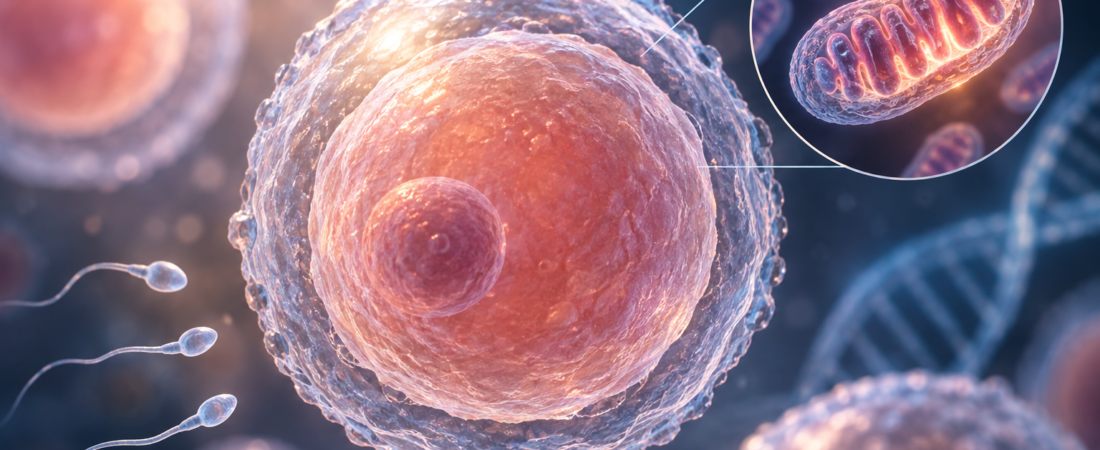
Illustration created with generative AI (ChatGPT, OpenAI); it does not depict an actual patient.
Copyright © 2026 The Fertility Notes. All rights reserved. Unauthorized reproduction, redistribution, scraping, AI training, or other data use of articles, photographs, images, and all other content is strictly prohibited and may result in legal liability.