
Does the Uterus Need ‘Good Bacteria’ Too?… Pregnancy Rate Reached 42% in the Probiotic Group
- Analysis of 796 infertile women across randomized trials: Clinical pregnancy rate reached 41.98% in the probiotic group, noticeably higher than the 28.25% seen in controls
- Stronger effects observed with courses exceeding 14 days: Emerging signals suggest a potential reduction in miscarriage risk
- Evidence for live births and long-term safety remains preliminary: Caution urged against concluding that “taking over-the-counter probiotics ensures pregnancy”
Just as beneficial and harmful bacteria coexist within the human gut, a diverse microbial community inhabits the female reproductive tract. In recent fertility research, how Lactobacillus affects embryo implantation and the maintenance of early pregnancy has emerged as one of the most compelling frontiers in assisted reproduction.
A meta-analysis published in 2026 revealed that infertile women who received probiotics formulated with Lactobacillus achieved higher clinical pregnancy rates than those who did not.
Conducted by researchers at the University of Tokyo, the systematic review pooled seven randomized controlled trials (RCTs) published between 2023 and 2025. The dataset encompassed 796 infertile women undergoing assisted reproductive technology (ART), divided into 399 patients in the probiotic cohort and 397 in the control group. Among the seven analyzed studies, six evaluated vaginal administration protocols, while one investigated an oral regimen.
The pooled findings were striking: the clinical pregnancy rate reached 41.98% in the probiotic group versus 28.25% in the control group.
The calculated Relative Risk (RR) was 1.49, indicating an approximate 49% higher likelihood of clinical pregnancy associated with probiotic use. In absolute terms, this translates to roughly 12 additional clinical pregnancies for every 100 women treated.
The duration of probiotic use also stood out.
In trials where probiotics were administered for more than 14 days, the Relative Risk for clinical pregnancy rose to 1.99. In contrast, studies utilizing courses of 14 days or fewer yielded an RR of 1.16, failing to demonstrate a distinct statistical benefit. The authors suggested that altering the local reproductive microenvironment may require a sustained minimum window of microbial colonisation.
Why Lactobacillus Takes Center Stage
Lactobacillus species produce lactic acid, which maintains an acidic vaginal environment and directly inhibits the overgrowth of opportunistic and pathogenic microorganisms. More recently, scientific attention has expanded beyond the vaginal canal to investigate how the microbial environment within the endometrial cavity itself influences embryo implantation.
A separate systematic review published in 2026 reported that reproductive profiles dominated by Lactobacillus—particularly Lactobacillus crispatus—frequently correlate with higher implantation rates, clinical pregnancy rates, and live birth outcomes. Conversely, environments dominated by non-Lactobacillus taxa or overt dysbiosis have repeatedly been linked to less favorable fertility results. However, because sampling techniques, anatomical sites, and sequencing methodologies differ between studies, findings across the broader literature are not yet fully uniform.
The Intriguing Signal in Miscarriage
Another compelling observation centers on pregnancy loss.
A separate meta-analysis published in the September 2026 issue of Obstetrics & Gynecology evaluated 16 studies encompassing 2,339 infertile women. In that analysis, oral probiotics were associated with higher clinical pregnancy rates (RR 1.71) and live birth rates (RR 1.24), while patients receiving vaginal probiotics experienced a lower risk of miscarriage compared to controls (RR 0.57).
However, the authors urged strong caution when interpreting these numbers. The overall quality of evidence was graded as “low to very low.” The specific bacterial strains, administered doses, treatment routes (oral versus vaginal), and baseline infertility diagnoses varied considerably across the included clinical trials.
Leaping to “Probiotics Guarantee Implantation” Is Still Premature
Despite these encouraging statistics, it is vital to keep the limitations of the evidence in perspective.
In the primary meta-analysis of 796 women, the only endpoint with a statistically robust finding was clinical pregnancy.
Miscarriage was reported in only three trials, yielding a pooled Relative Risk of 0.78 with wide confidence intervals that failed to confirm a definitive protective effect. Ongoing pregnancy was captured in just two studies, making firm conclusions impossible, and cumulative live birth data remained insufficient.
Consequently, current data should not be interpreted to mean that taking Lactobacillus guarantees a baby or completely prevents early pregnancy loss.
Furthermore, commercial over-the-counter probiotics sold for general gut health cannot be assumed to function the same way as the specialized formulations studied in fertility research. Six of the seven analyzed trials relied on direct vaginal administration, using specific strains, dosages, and targeted application schedules. There is currently no rigorous clinical evidence that taking a generic oral probiotic capsule from a pharmacy will produce these exact reproductive outcomes.
From Observation to Targeted Intervention
Nonetheless, the significance of these findings is real: the field of reproductive tract microbiome research is successfully transitioning from purely descriptive, observational studies to active clinical intervention trials.
The next step for reproductive medicine will be to evaluate targeted clinical protocols: screening patients for Lactobacillus deficiency prior to an embryo transfer, administering specific, validated strains over a defined therapeutic window, and determining whether this intervention reliably increases take-home baby rates. Future trials must also clarify whether this strategy provides equal benefit in transfers of confirmed euploid embryos, and whether it offers a concrete advantage for couples facing recurrent implantation failure.
For patients navigating fertility treatments, the question is no longer just whether they have secured a high-grade embryo, but what kind of “microbial soil” is waiting to receive it in the uterus.
The early evidence is emerging. However, before probiotics can become an established standard of care in IVF, we need large-scale randomized trials that follow patients all the way from a positive pregnancy test to a healthy live birth.
※ This article was written based on the meta-analysis on Lactobacillus probiotics and clinical pregnancy published in the European Journal of Obstetrics & Gynecology and Reproductive Biology (2026), encompassing 796 infertile women (DOI: 10.1016/j.ejogrb.2026.115228, PMID: 42251807). The study was also presented at the 2026 Annual Meeting of the European Society of Human Reproduction and Embryology (ESHRE).
Data regarding miscarriage and live birth rates referenced the 2,339-patient meta-analysis published in Obstetrics & Gynecology (September 2026, DOI: 10.1097/AOG.0000000000006356, PMID: 42314171). This content does not replace individualized clinical diagnosis or medical care, and specific treatment decisions should always be made in consultation with a qualified reproductive specialist.
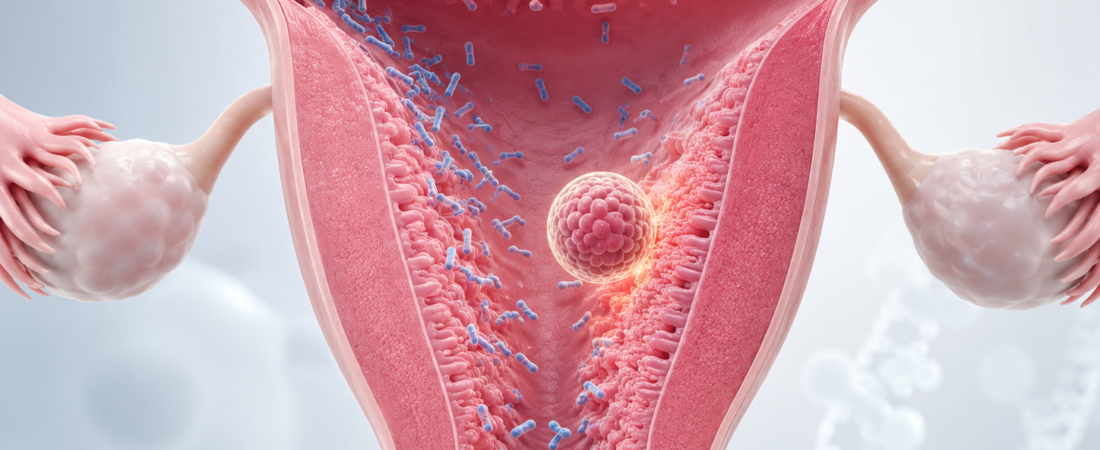
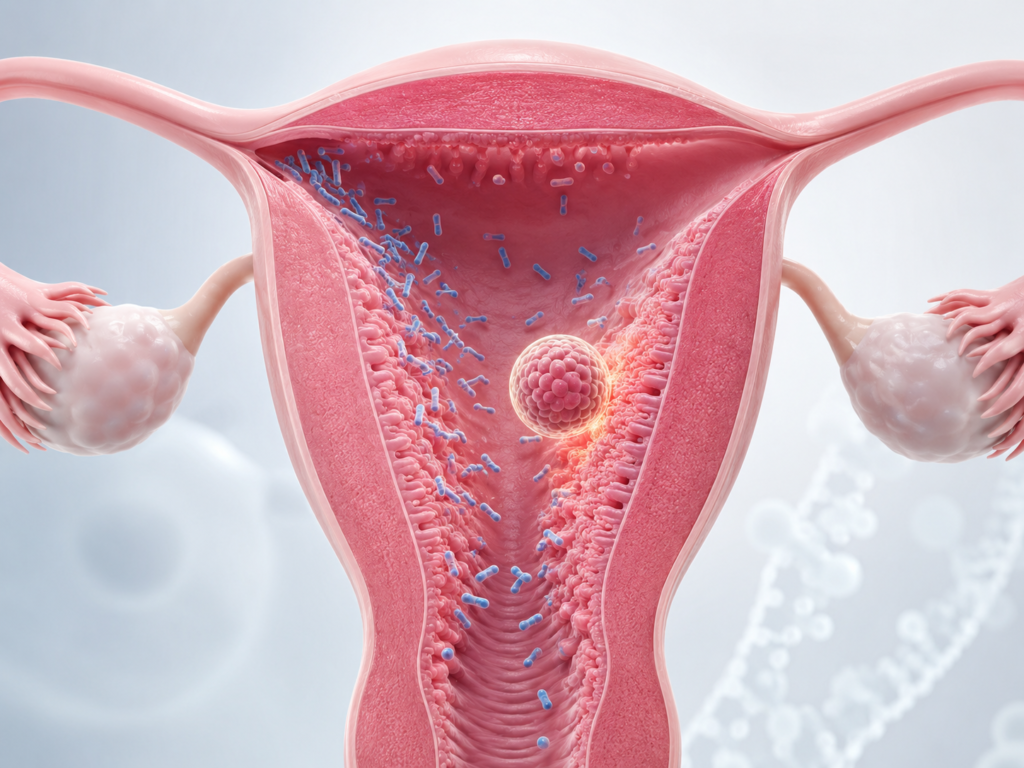
※ Image: AI generated (ChatGPT, OpenAI) / For illustrative reference only.