
Re-analyzing Raw Data from a 2,244-Patient Randomized Trial… Practically No Difference in Live Birth Rates In Completely Natural Cycle Frozen Transfers, Progesterone Supplementation Increases Live Birth Rates “Rather Than Adding More Treatments, Figuring Out Who Needs What is Key”
For patients preparing for In Vitro Fertilization (IVF), the thought crosses their mind at least once: “Is there any way to make implantation just a bit more successful?”
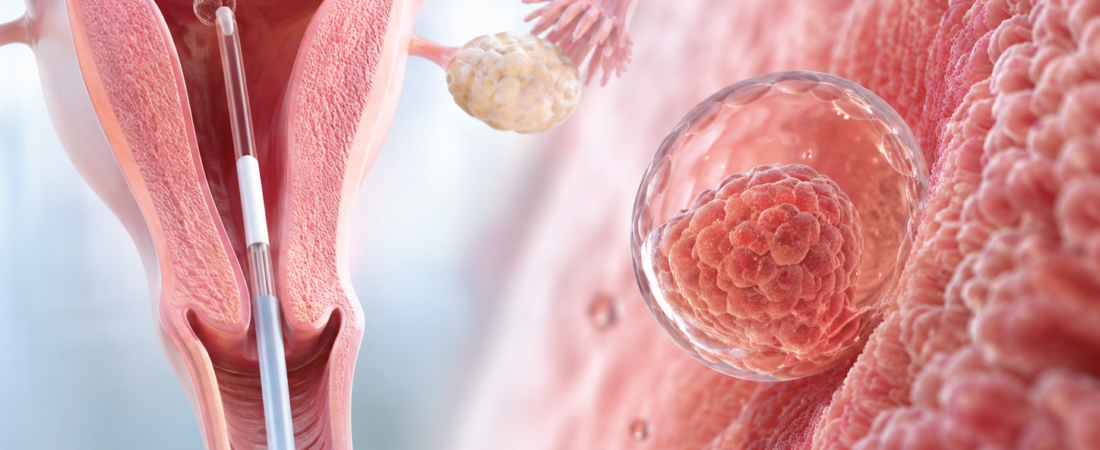
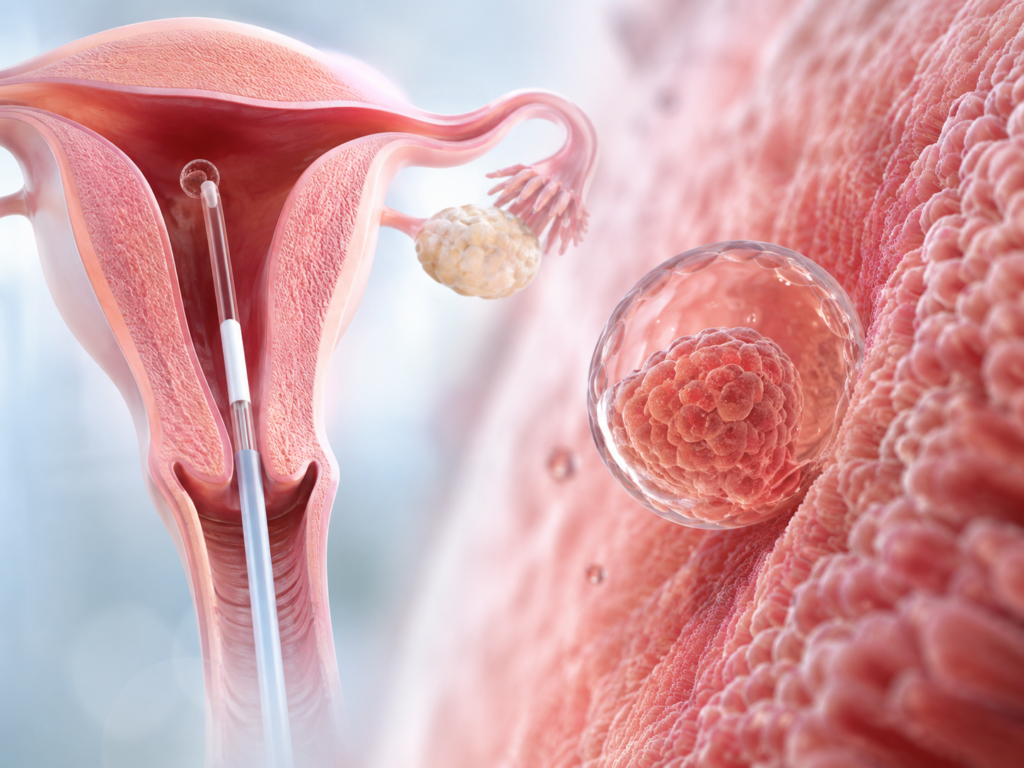
The practice of infusing human chorionic gonadotropin (hCG)—often called the pregnancy hormone—directly into the uterus just before embryo transfer began with precisely that hope. The rationale was that delivering signals supporting implantation directly to the uterus in advance might help the embryo settle down more effectively. In practice, some fertility clinics have utilized this as an additional treatment to boost implantation rates.
Yet, recent research results have delivered a rather firm verdict: adding it does not increase live birth rates.
Published in the July/August 2026 issue of the international reproductive medicine journal Human Reproduction Update, a study re-examined randomized trials that infused hCG into the uterus prior to embryo transfer.
Rather than simply pooling and calculating results from past papers, the researchers re-analyzed individual patient-level raw data from 7 studies that met stringent reliability criteria, encompassing a total of 2,244 patients.
The findings hovered close to “no difference.” The odds ratio comparing the likelihood of a live birth between women who received intra-uterine hCG and those who did not was 0.99—practically identical to the baseline value of 1. Furthermore, no distinct benefits were confirmed in clinical pregnancy, ongoing pregnancy, or miscarriage rates.
In the past, some studies suggested positive effects, leading to its empirical use under the premise of “let’s try it anyway” for patients with recurrent implantation failure or implantation anxieties. However, this study carries significantly greater weight because it filtered out low-quality studies or those with inaccessible raw data, re-analyzing only high-reliability trials.
Ultimately, the research team concluded that omitting intra-uterine hCG infusion prior to embryo transfer from supplementary IVF treatments is the advisable course of action.
In simple terms, the notion that “adding one more thing to help implantation can’t hurt” lacked any evidence showing it actually translates to actual childbirth.
Natural Cycle Frozen Transfers and Progesterone Supplementation
Conversely, another study published in the same journal yielded somewhat divergent results, focusing this time on progesterone supplementation commonly utilized during frozen embryo transfers (FET).
A natural-cycle frozen embryo transfer utilizes a woman’s natural ovulation to time the embryo transfer. Unlike hormone replacement cycles, which employ estrogen from the outset to artificially build the endometrium, natural cycles leverage the hormonal flow generated naturally by the body.
The question has long been whether progesterone supplementation remains necessary even in a natural cycle. Treatment practices have varied across clinics, with opinions divided between “it’s unnecessary since natural ovulation occurred” and “supplementation is preferable to aid implantation.”
Synthesizing and analyzing 70 studies yielded intriguing results.
In “completely natural cycles”—where women experienced an endogenous luteinizing hormone (LH) surge and ovulated naturally—supplementing with vaginal progesterone elevated live birth rates. The relative risk compared to cases without progesterone use was 1.43, indicating that statistically, the probability of a live birth appeared roughly 43% higher.
Conversely, in modified natural cycles where ovulation timing was coordinated via an hCG injection such as Ovidrel, the story differed. Adding progesterone did not markedly increase live birth rates; the relative risk stood at 1.04, reflecting virtually no major difference.
Distinguishing Between hCG Uses
One distinction is easily confused here.
The hCG scrutinized in the first study is a treatment administered directly into the uterus right before embryo transfer. In contrast, Ovidrel in the second study functions as an ovulation-inducing injection given to time ovulation. While utilizing the same hormone, their objectives and administration routes diverge completely.
These findings should not prompt the takeaway that “using Ovidrel is ineffective.”
The core takeaway is that adjunctive treatment involving intra-uterine hCG infusion before embryo transfer failed to raise live birth rates, whereas in natural cycles, the efficacy of progesterone supplementation can shift depending on the specific method by which ovulation was achieved.
Conclusion: Shifting the Paradigm of IVF Care
During IVF cycles, patients and medical teams share a persistent dilemma: a willingness to try anything if it can elevate success probabilities by even 1%. This sentiment has spawned countless supplementary treatments, including embryo glues, immunotherapy, intrauterine infusions, and various injections and adjunctive regimens.
Yet, adding another treatment does not automatically drive up pregnancy probabilities. Costs rise, injections and medications accumulate, and patient burdens multiply.
The joint message delivered by these two studies carries meaningful weight: boldly discard interventions lacking evidence, and precisely apply necessary treatments tailored to a patient’s specific cycle and circumstances.
Particularly for women preparing for natural-cycle frozen embryo transfers, the approach should extend beyond a simplistic “use progesterone or not” binary; it must account for whether the cycle is a completely natural one with spontaneous ovulation or a modified natural cycle induced by triggers like Ovidrel.
Naturally, the progesterone research also relies on a limited number of studies directly comparing actual live birth outcomes, underscoring the need for further investigation.
Even so, the trajectory is growing increasingly clear.
The competitive landscape of IVF treatment is shifting away from “what can we add?” toward “what can we subtract and leave behind?”
The secret to maximizing implantation success may lie not in adding yet another drug or injection, but in delivering proven treatments to the right patients at precisely the right moment.
※ This article was synthesized based on the latest research findings published in the July/August 2026 issue of the international journal Human Reproduction Update. It does not replace a specific individual’s diagnosis or treatment, and actual medical judgment must be made through consultation with a specialist.
※ Images: Created using generative AI (ChatGPT, OpenAI); depicts fictional individuals, not real people.