
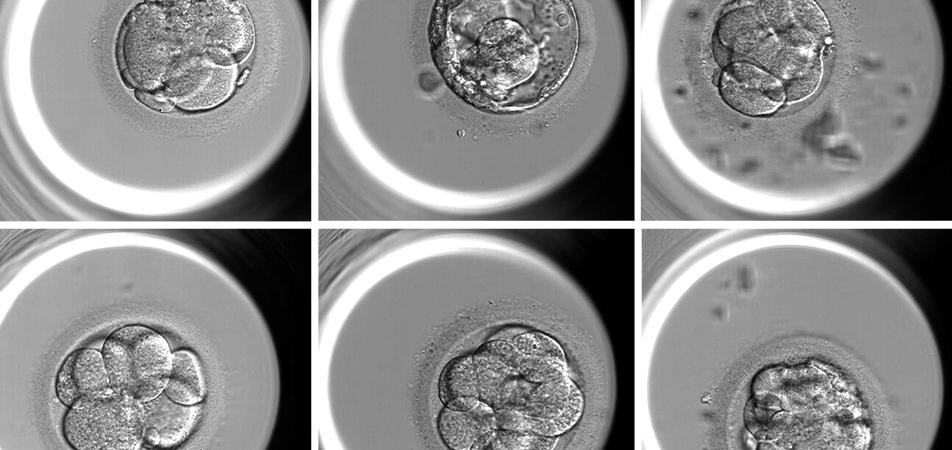
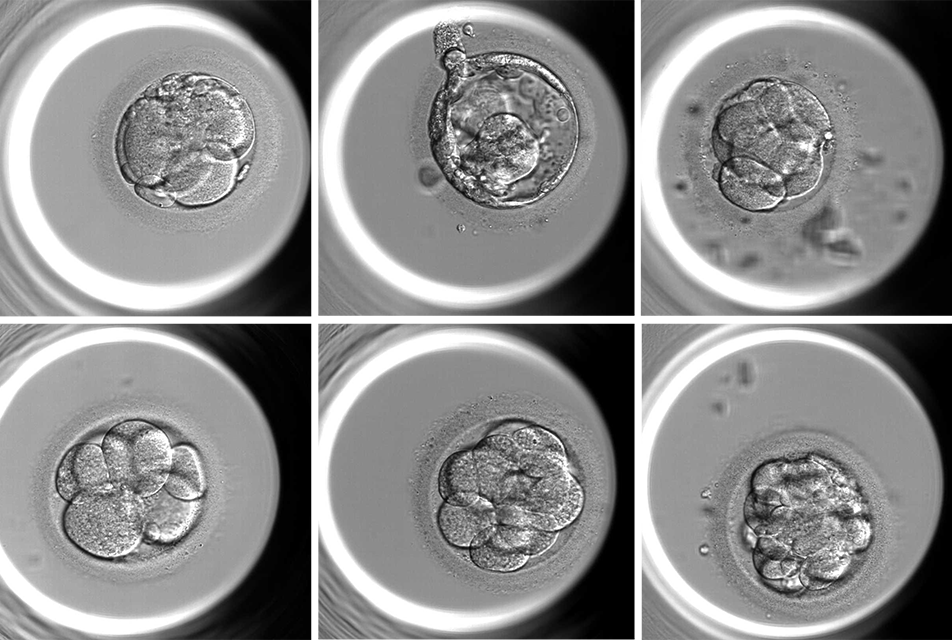
The scene inside the clinic is quiet. The physician glances at the monitor and states, “This embryo is normal; this one is abnormal.” The patient nods. In that moment, several embryos are silently discarded—or rather, “not selected.” This decision is driven by a single test: PGT-A (Preimplantation Genetic Testing for Aneuploidy), a technology that has quietly become the “answer key” in modern IVF.
The logic behind PGT-A is deceptively simple: transplant only embryos with normal chromosomes to increase pregnancy rates. Consequently, many clinics present this test as an almost mandatory step. “It’s a choice to increase your odds,” they say. For a patient, it is a difficult offer to refuse; why deviate from what is framed as the “better” path? Thus, PGT-A has evolved from a choice into a standard.
However, recent studies and updated guidelines are beginning to unsettle this familiar premise. Cumulative live birth rates have not surged as anticipated; in some cases, they show no significant improvement or may even be lower. While miscarriage rates do decrease, a crucial question arises: Are we performing this test to achieve more babies, or merely to reduce failures? These are entirely different goals, yet they are often conflated in clinical explanations.
The PGT-A Debate: An Exact Science?
The problem runs deeper than statistics. PGT-A does not analyze the entire embryo; it biopses only a small fragment of the outer layer—the trophectoderm. This tiny piece is used to judge the entire entity. Yet, an embryo is not a uniform mass. A condition known as “mosaicism” occurs when the outer layer may appear abnormal while the inner cell mass is normal. Recent research repeatedly confirms that some of these “mosaic” embryos can develop into healthy, normal infants. Nonetheless, many are excluded from transfer simply because they were labeled “abnormal.” Potential is discarded before it is ever given a chance.
The results appear definitive—labeled as “normal,” “abnormal,” or “mosaic” in neat tables and graphs. To patients, it feels like an objective, scientific verdict. In reality, however, the test is a matter of probability, not an absolute truth. When these tests are treated as a final, absolute standard, a dangerous gap widens.
The clinical landscape is slowly shifting. While mosaic embryos were once treated as “to be discarded,” we are now seeing an emergence of conditional transfer attempts. Some guidelines now advise against the routine use of PGT-A for all patients, recommending a more selective approach. This is not merely a technical debate; it is a sign that our very approach to life itself is being re-evaluated.
Patients continue to ask, “Is this the best path?” Physicians must now answer: “Are you choosing to reduce the odds of failure, or are you choosing to shorten the time to pregnancy?” This distinction is becoming increasingly critical. PGT-A is not a technology that creates pregnancy; it is a technology that classifies embryos. And evidence is mounting that these classification criteria are far from perfect.
From the perspective of a fertility-specialist journalist, the fundamental issue with PGT-A is not its performance, but its placement. It has been transformed from a tool into a standard—a probability turned into a verdict. In that space, patients are often forced into a constrained choice. They opt for what appears to be the “safer” path, but that path may not always be the one that leads to the greatest number of lives.
Ultimately, one question remains: Are we truly selecting better embryos, or are we erasing too many possibilities? The essence of IVF remains unchanged: it is not about evaluating embryos, but about creating the conditions in which life can thrive. And today, we are once again returning to that most fundamental of all questions.
Source: Practice Committee of the American Society for Reproductive Medicine. “The use of preimplantation genetic testing for aneuploidy (PGT-A): a committee opinion.” Fertility and Sterility. 2024.
Disclaimer: This content is provided for informational purposes, based on reporting on infertility and various public data. Medical judgments and treatment decisions must always be made in consultation with professional medical personnel. Image: AI-generated (ChatGPT, OpenAI) / Visual reference for illustrative purposes only.