
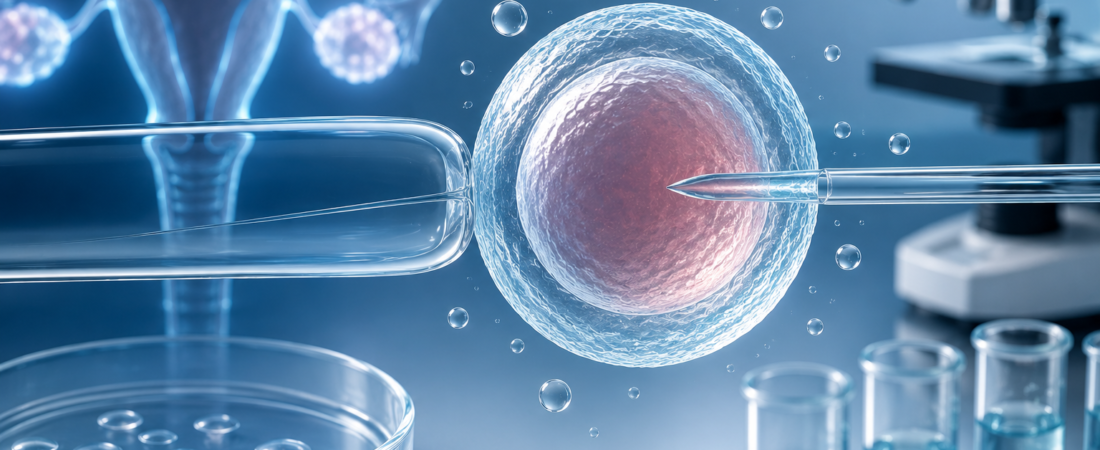
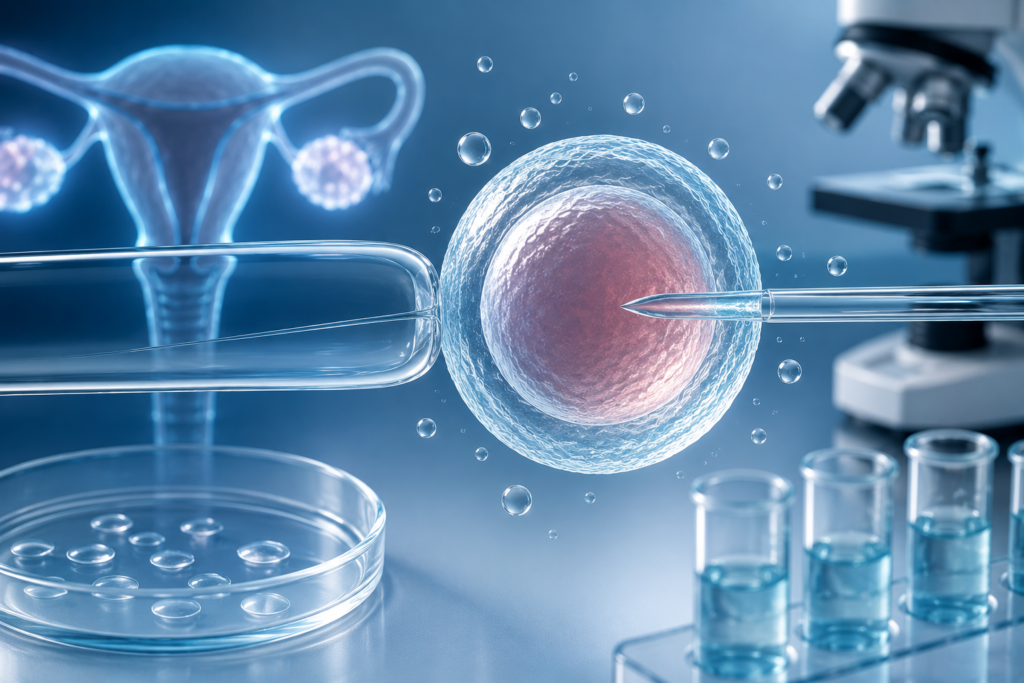
For many women in their 40s or those diagnosed with premature ovarian insufficiency, the first encounter with fertility medicine is defined by a single, daunting number: their Anti-Müllerian Hormone (AMH) level. When a patient sees a reading in the 0.1–0.5 ng/mL range, it often feels like a premature curtain call on their reproductive future.
However, medical experts are increasingly shifting the narrative: an AMH in the “0-point range” is not an absolute barrier; it is a signal to stop competing for quantity and start competing for precision.
The Fallacy of “More Stimulus” Historically, IVF protocols favored high-dose gonadotropin stimulation to maximize the number of retrieved oocytes. The logic was simple: more eggs equaled more embryos and a higher statistical chance of pregnancy. For women with robust ovarian reserves, this remains a valid strategy.
But for patients with severe diminished ovarian reserve (DOR), applying the same “more is better” logic is biologically futile. The ovary is not a factory that can be forced into higher production with more raw material; it is a warehouse with limited inventory. If the follicular pool is nearly empty, increasing the dose of stimulation hormones will not conjure new follicles out of thin air. It merely risks exhausting the patient—physically, financially, and emotionally—without improving the outcome.
The Rise of Natural and Minimal Stimulation IVF In this context, specialists are revisiting Natural Cycle IVF and Minimal Stimulation IVF.
- Natural Cycle IVF: This approach focuses on the single, dominant follicle that the body naturally selects each month. The goal is to capture this oocyte at its most viable moment without attempting to recruit non-responsive, quiescent follicles.
- Minimal Stimulation: A hybrid approach using low-dose injectable or oral ovulation induction agents to reduce the burden of treatment while optimizing the chance of retrieving the highest-quality egg available that month.
Crucially, these methods are not “guarantees of superior quality.” As Dr. Baek Eun-chan of Bundang Jeil Hospital explains, “Natural selection does not guarantee chromosomal normalcy. The goal of these strategies is not to promise ‘better’ eggs, but to ensure that the few oocytes the body manages to produce are not missed.”
The Danger of Clinical Inertia The most significant risk in DOR treatment is not the low AMH itself, but clinical inertia—the tendency to repeat high-dose stimulation protocols cycle after cycle despite poor responses. When the ovaries do not respond to increased dosages, persisting with the same strategy is akin to placing repeated orders to an empty warehouse.
A New Strategy for the “Zero-Range” AMH The focus must shift from “harvesting” to “capturing opportunity.” Success in this range requires a clinical roadmap that accounts for every variable:
- Biological Nuance: Differentiating between a 38-year-old and a 44-year-old with the same 0.3 AMH reading.
- Cycle-to-Cycle Strategy: Recognizing that some months may require more aggressive stimulus to prompt any response, while others are better suited for natural, low-stress collection.
- Dynamic Response Tracking: Adjusting the protocol based on real-time follicular growth, maturity, and developmental potential of the previous cycle’s embryos.
Conclusion: Time, Not Numbers, is the Currency “The treatment for AMH 0-range patients is not a competition to extract the most eggs,” says Dr. Baek. “It is a battle against time, requiring us to be more honest, more delicate, and more agile in our strategy.”
For these patients, IVF is not a “one-and-done” treatment. It is a series of limited, precious opportunities. The measure of a successful fertility center for these women is not its ability to force a massive egg retrieval, but its ability to read the signals the ovary is sending and seize the “most appropriate moment” for capture. In the end, the challenge of low ovarian reserve is not about the numbers on a lab report; it is about the meticulous stewardship of the few remaining possibilities.
Sources: Perspectives from Dr. Baek Eun-chan (Bundang Jeil Hospital); clinical research on diminished ovarian reserve (DOR) and minimal stimulation protocols.
Disclaimer: This report is for informational purposes. Fertility treatment strategies must be highly individualized and determined by a reproductive endocrinologist based on the patient’s specific clinical history.