
For a young woman in her early thirties, a diagnosis of Premature Ovarian Insufficiency (POI) is often delivered as a sudden, devastating blow. Characterized by the cessation of ovarian function before age 40, POI has long been shrouded in mystery. For years, the clinical response for many patients was a frustrating “idiopathic”—a medical term for “unknown origin.”
However, modern reproductive medicine is moving past this ambiguity. Recent research suggests that POI is rarely a singular event; it is a multifactorial syndrome where genetic, immunological, and environmental stressors converge to accelerate the “biological clock” of the ovary.
1. The Genetic Blueprint Women are born with a finite pool of oocytes. Recent studies have pinpointed specific genetic mutations that regulate folliculogenesis and DNA repair. Some women are born with genetic predispositions that cause their ovarian reserve to deplete at a significantly faster rate than their peers. In essence, the “biological speed limit” of their ovaries is pre-determined by their genetic code.
2. The Immune System’s Misdirected Attack A significant breakthrough in POI research is the link to autoimmunity. The immune system, designed to protect the body from external threats, can sometimes mistake ovarian tissue as an adversary. Emerging evidence shows a strong correlation between POI and other autoimmune conditions, such as thyroiditis and Addison’s disease. In these cases, the ovary isn’t failing on its own—it is under a chronic, localized assault from the body’s own defense mechanisms.
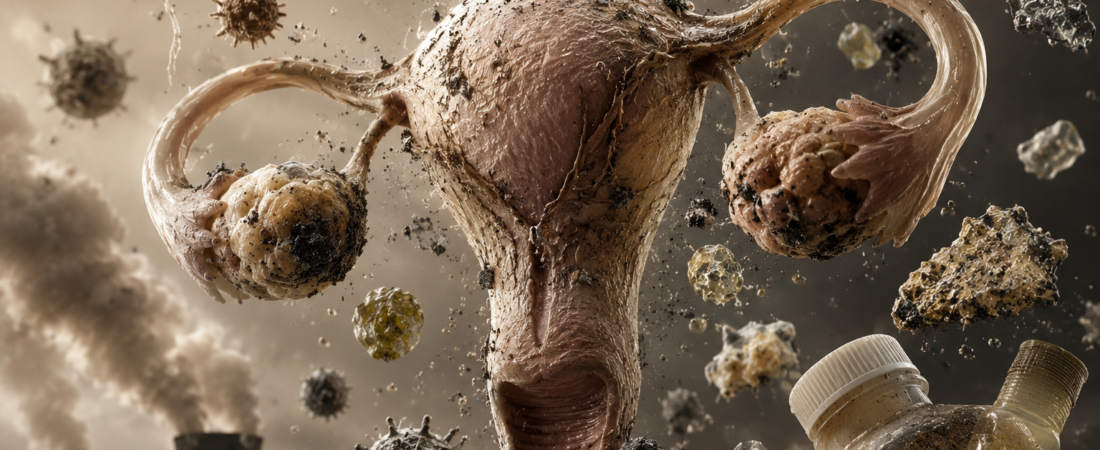
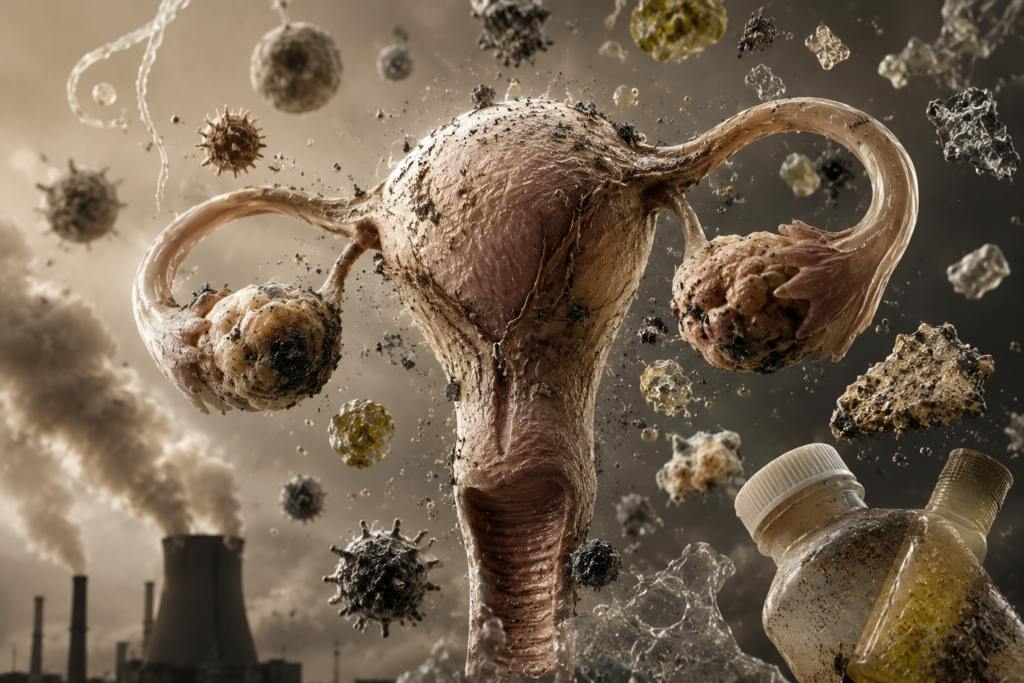
3. The Environmental Assault Perhaps the most alarming driver identified in recent years is the environment. Chronic exposure to microplastics, endocrine-disrupting chemicals (EDCs), heavy metals, and air pollutants has been linked to increased oxidative stress within ovarian cells. While proving direct causality in humans remains a clinical challenge, researchers argue that these environmental toxins cumulatively degrade cellular integrity, potentially triggering early ovarian exhaustion.
The “Convergent Model” of POI The latest clinical consensus is that these factors do not act in isolation. A woman with a genetic predisposition may navigate her reproductive years successfully until an environmental trigger—combined with a secondary immune flare-up—tips the balance, leading to the clinical manifestation of POI: irregular cycles, hormonal fluctuations, and diminished fertility.
A Call for Preemptive Awareness The ovary is a “silent organ”; it does not broadcast its distress through pain or visible symptoms until the damage is advanced. Dr. Seo Dong-ho, Director of Dongtan I-Hope Clinic, emphasizes the importance of vigilance: “POI is no longer a rare anomaly. Even if immediate pregnancy is not your priority, awareness of your reproductive health is vital. If your cycles suddenly become irregular or flow diminishes, do not dismiss it as mere fatigue. Consult a specialist for a formal ovarian assessment.”
Conclusion: Moving Beyond “Bad Luck” The era of labeling POI as “bad luck” is coming to a close. By tracing the hidden fingerprints of genetics, immune pathways, and environmental toxins, reproductive medicine is shifting from passive diagnosis to proactive monitoring. While we have yet to reach a stage where POI can be fully prevented or reversed, we are finally moving from the darkness of “we don’t know why” into a new era of understanding the complex, interconnected threats to the female reproductive system.
Sources: International POI clinical guidelines (2024–2025); recent review papers on reproductive genetics, immunology, and environmental toxicology.
Disclaimer: This report is for informational purposes. Medical diagnoses and treatment decisions must always be made in consultation with a qualified reproductive endocrinologist.