
60,000 Danish Women Tracked: Childhood Obesity Associated with a 44% Lower Likelihood of Childbirth After Age 35 No Clear Correlation with Clinical Infertility Diagnoses… “Biological and Social Factors Must Be Considered Together”
A person’s weight in early childhood leaves its mark on much more than adult health checkup scores. A large-scale tracking study has revealed that women who followed an obese weight trajectory starting around age six were significantly less likely to have children in adulthood compared to those who grew up with an average body weight.
This disparity began to emerge as early as the mid-20s and widened sharply after age 30. However, the proportion of women diagnosed with clinical infertility at a hospital showed no distinct differences across groups. This suggests that rather than obesity directly causing medical infertility, a complex interplay of factors over a long period—such as fecundity, partner selection, family formation, and childbearing decisions—may be at play.
A research team led by Professor Jennifer L. Baker at Bispebjerg and Frederiksberg Hospital, Copenhagen University Hospital, analyzed the relationship between childhood body mass index (BMI) trajectories and adult childbirth by linking school health examination records and national registry data for 60,086 women born in Copenhagen. The findings were published in the American Medical Association journal JAMA Network Open.
Tracking Over 60,000 Women Across Decades
The study participants comprised women born in Copenhagen between 1950 and 1989. The research team categorized their BMI change patterns from ages 6 to 15 into five trajectories—below average, average, above average, overweight, and obese—and tracked their childbirth status and infertility diagnoses from ages 18 to 45.
The analysis showed that 47,669 women, accounting for 78.3% of the total cohort, gave birth to their first child at an average age of 27.2 years. Conversely, about 22% had no record of childbirth by the end of the study period.
The most prominent differences emerged among women with a childhood obesity trajectory. Compared to women who grew up with an average BMI, these individuals were 22% less likely to give birth between the ages of 25 and 29. This likelihood dropped to 42% for ages 30–34 and 44% for ages 35–45.
Women who were overweight in childhood exhibited a similar trend. Compared to average-weight women, their probability of giving birth was 9% lower at ages 25–29, 26% lower at ages 30–34, and 18% lower at ages 35–45.
Separating Medical Infertility from Childbearing Patterns
A noteworthy finding involves the relationship with clinical infertility diagnoses. Across the entire cohort, the proportion of women diagnosed with infertility at a hospital ranged between 9.3% and 11%, but no clear differences were confirmed according to childhood BMI categories.
This implies that the study results should not be simply interpreted as “obesity prevented pregnancy.” Clinically diagnosed infertility is primarily recorded when individuals attempt to conceive for a specific duration without success. In contrast, actual childbirth rates encompass a much broader range of scenarios, including cases where pregnancy was never attempted, a partner was not found, marriage and childbearing were delayed, or family formation was forgone due to health, social, or economic reasons.
The research team suggested that both biological and social factors likely contributed to the pathways through which childhood obesity lowers the probability of childbirth.
Biologically, obesity can affect the hypothalamic-pituitary-ovarian axis, which regulates female ovulation and reproductive function. Egg quality, the endometrial environment, and metabolic health may also be influenced over the long term.
Social impacts are likewise difficult to dismiss. Obesity originating in childhood may affect self-esteem, interpersonal relationships, partner selection, the timing of marriage, and the process of family formation. Indeed, childbearing is determined not merely by medical reproductive capacity, but by a combination of personal relationships, economic conditions, and social environments.
Implications for Lifecourse Health and Public Policy
This study demands heightened attention amid the simultaneous rise of declining fertility rates and increasing rates of childhood and adolescent obesity. In some Western European countries, approximately 20% of women born around 1965 remained childless throughout their lives. However, the proportion of women who chose from the outset not to have children is estimated to be much lower, at around 5%.
Ultimately, this means the childless status of a substantial number of women cannot be explained by personal choice alone. It may represent the cumulative result of health, relationships, and social conditions built up over a lifetime.
Professor Baker explained, “A woman’s reproductive health does not suddenly begin at the point when she starts preparing for pregnancy. Physical and social experiences accumulated from early childhood can influence the process of forming a family in adulthood.”
She further emphasized, “We need to examine more precisely how childhood overweight and obesity relate to unintended childlessness. We must support women’s health and reproductive capacity long before family planning even begins.”
While this study did not prove that childhood obesity definitively causes infertility, it carries limitations, such as not accounting for all individual variables that could affect childbirth status, such as marital status, pregnancy intentions, lifestyle habits, or adult weight changes.
Even so, the research poses a clear question: Rather than concentrating low-fertility countermeasures solely on marriage and childbirth subsidies, should we not manage women’s reproductive health across the entire life course, starting from childhood?
Childbirth may begin at age thirty, but the health timeline that builds the capacity for childbirth may be starting much earlier than we think.
※ This article was synthesized based on research findings from the Copenhagen University Hospital research team published in the American Medical Association international journal JAMA Network Open. It does not replace a specific individual’s diagnosis or treatment, and actual medical judgment must be made through consultation with a specialist.
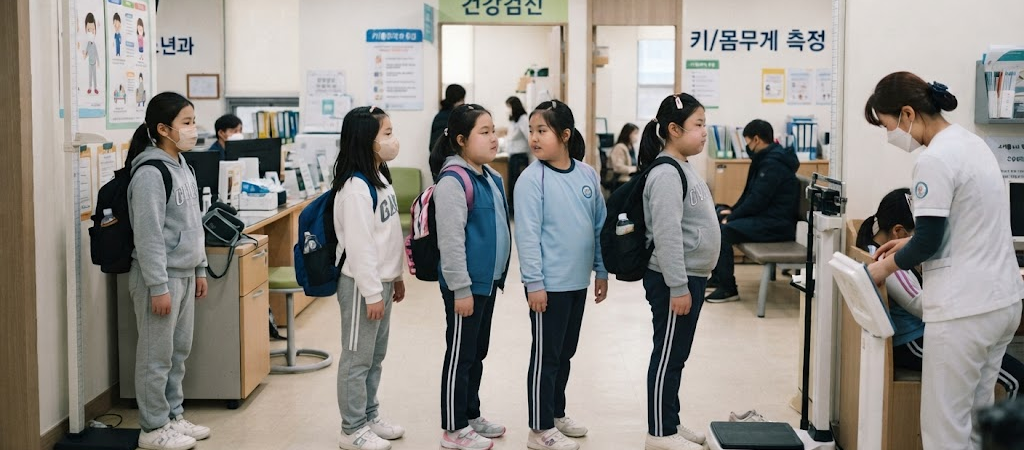
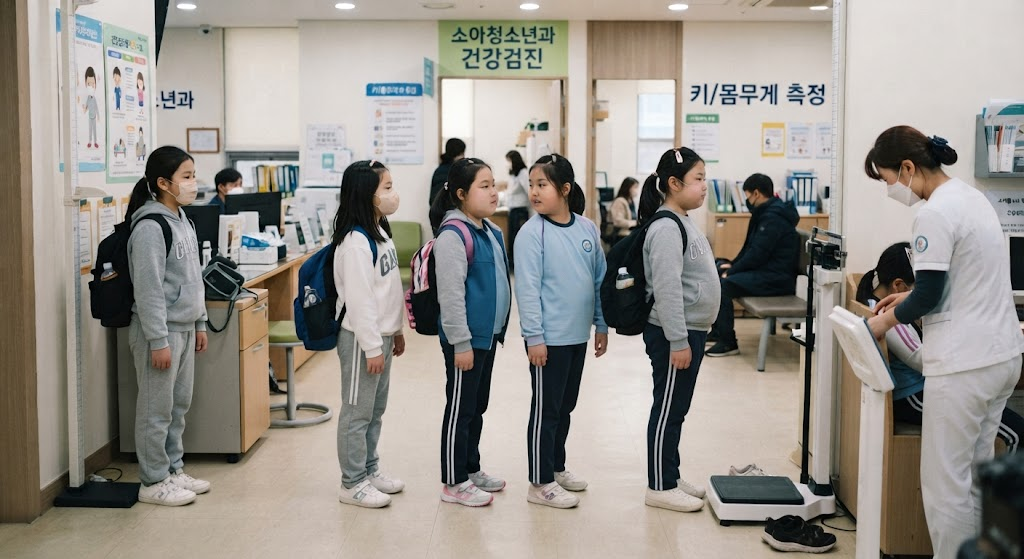
※ Images: Created using generative AI (ChatGPT, OpenAI); depicts fictional individuals, not real people.