
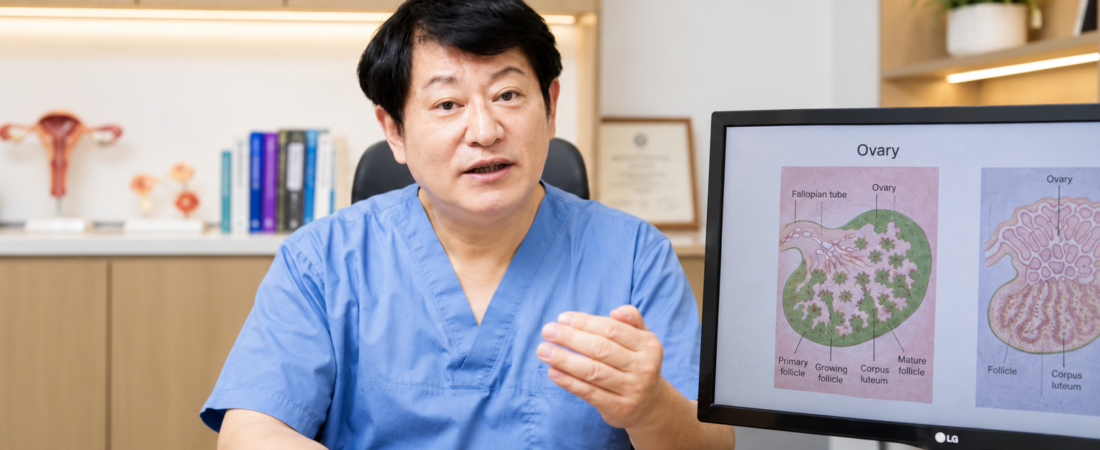
Endometrioma sclerotherapy offers a different approach to ovarian cyst treatment: drainage followed by a sclerosing agent. In this interview, Dr. Cho Jung-hyun explains his clinical approach to preserving ovarian reserve. His experience should be considered alongside comparative evidence, recurrence risks and individualized treatment planning.
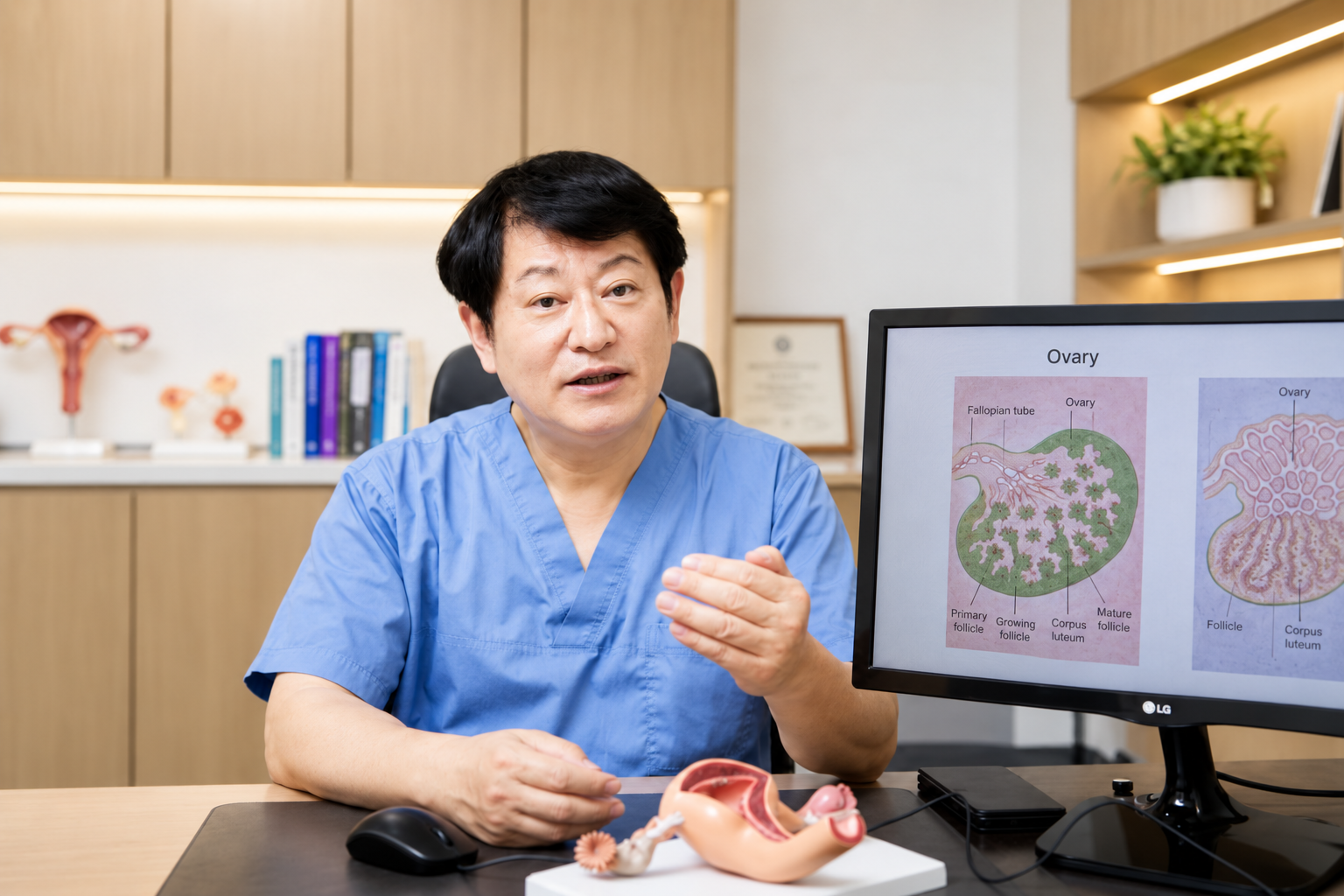
For the one in ten women of reproductive age suffering from endometriosis, every menstrual cycle can be a source of chronic pain and a ticking clock for fertility. When endometriosis manifests as an “endometrioma”—a cyst on the ovary—it presents a difficult clinical dilemma.
Dr. Cho Jung-hyun, a specialist with 39 years of experience in reproductive medicine at Sarang-I Fertility Center in Seoul, argues that the prevailing strategy of surgical removal is often flawed. “We must not lose sight of the primary goal: preserving ovarian reserve,” he says.
The Surgical Dilemma: The Risk to Fertility
Size alone does not determine whether an endometrioma should be removed; symptoms, diagnostic concern, reserve and treatment plans also matter. However, Dr. Cho cautions that the surgery itself carries a hidden cost. “The removal of a cyst often inevitably removes healthy ovarian tissue, which can drastically reduce a patient’s ovarian reserve. To ‘catch the flea,’ we often end up ‘burning down the house’.”
A Precision Alternative: Alcohol Sclerotherapy
Dr. Cho advocates for Alcohol Sclerotherapy as a fertility-preserving alternative. Guided by ultrasound, a fine needle—the same type used for egg retrieval—is inserted into the cyst. The “chocolate-colored” fluid is aspirated, the cyst is washed with saline, and pure alcohol is injected to sclerose (harden and kill) the pathological cells lining the cyst wall.
“This method allows us to treat the lesion while sparing the healthy ovarian tissue,” Dr. Cho explains. Having performed over 2,000 procedures, he notes that this precision is highly effective.
The interviewee’s timing strategy
Dr. Cho describes the timing he favors in his practice. “The ideal protocol is to proceed directly to IVF within three months of the procedure,” Dr. Cho says. “Pregnancy is, in itself, the best treatment for endometriosis.”
Pregnancy is not a cure or a recommended treatment for endometriosis. Symptoms may change during pregnancy, but lesions can persist and later symptoms can recur. ESHRE advises against recommending pregnancy solely to treat the disease; the interviewee’s statement above should be read in that context.
The “Science of Experience”
While alcohol sclerotherapy is a skill that can be taught in theory, Dr. Cho emphasizes that clinical mastery is paramount. “It is not just about injecting alcohol; it is about navigating the anatomy of the ovary and potential pelvic adhesions in real-time under ultrasound guidance. You need a specialist who has seen countless variations of these adhesions to manage unexpected situations safely.”
Advice for Patients
Dr. Cho offers three core pieces of advice for women navigating the infertility journey:
- Seek Senior Expertise: “Medicine is a science of experience. Especially for complex cases—such as repeated implantation failure or severe endometriosis—the intuition and clinical depth of a senior specialist can be the difference between failure and success.”
- Discuss ovarian reserve: Ask about the likely benefits and risks of surgery and alternatives, including the strength of evidence for each approach.
- Don’t Lose Hope: “Even after five or more failed IVF cycles, if we can effectively control the underlying reproductive diseases like endometriosis or adenomyosis and optimize the embryo-to-endometrium environment, success is still within reach.”
Conclusion
The goal of fertility treatment is not just to clear a scan of cysts, but to build a body capable of bringing life into the world. By shifting the focus from invasive surgery to precision, fertility-sparing techniques, Dr. Cho believes we can provide a safer, more effective roadmap for women who have long been told they have few options left.
Disclaimer: This summary is based on an interview with Dr. Cho Jung-hyun. Medical decisions should always be made in consultation with a qualified fertility specialist based on individual patient pathology.
Monitor labels in the photograph have been localized in English.
Read clinical experience alongside guidance
The interview reflects the clinician’s approach. Comparative evidence and ovarian-reserve risks matter; pregnancy is not a treatment for endometriosis. ESHRE endometriosis guideline (2022).
Related reading
Ovarian Cysts Should Not Always Be Removed… The Reason AMH Plummets After Surgery