
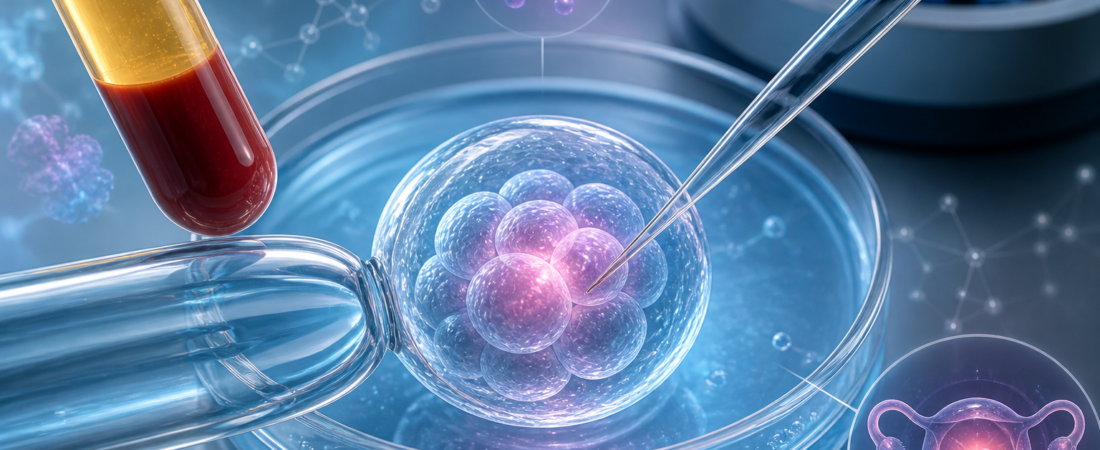
PRP in embryo culture proposes adding platelet-derived products to the laboratory environment. This is different from injecting PRP into the uterus or ovaries. Evidence from those other routes cannot establish that embryo-culture supplementation improves development, pregnancy or live birth. Standardization and reproductive safety remain central questions.
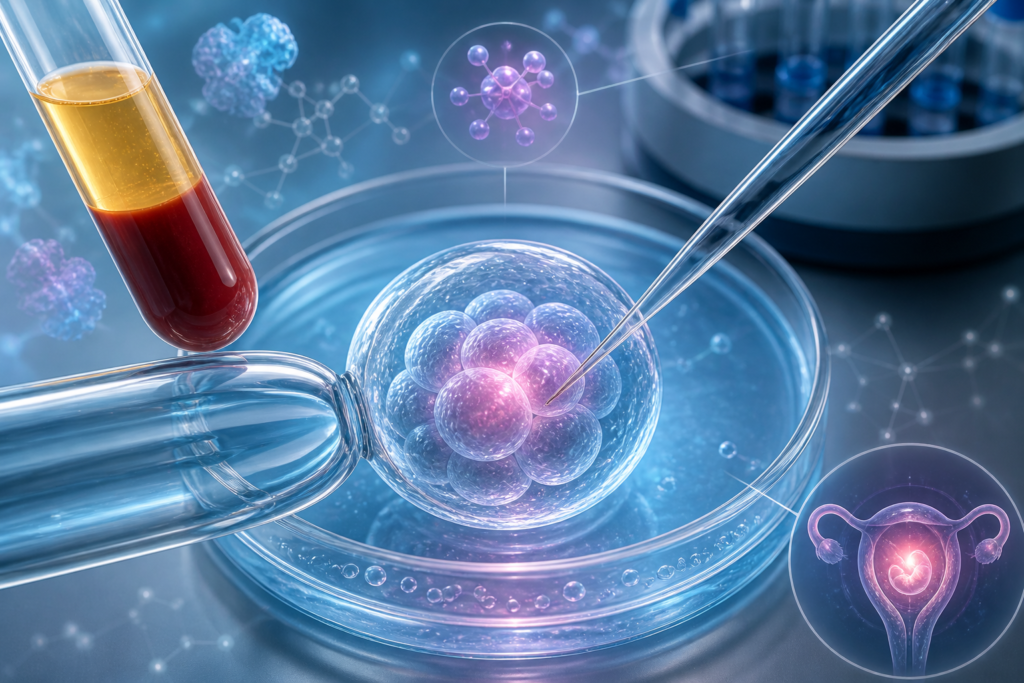
PRP in embryo culture is an experimental proposal to alter the environment surrounding an embryo. Interest in growth factors does not make it an established improvement over validated culture media.
Define the route
Adding platelet-derived material to culture medium is distinct from intrauterine infusion or ovarian injection. A patient-derived product is not automatically standardized or safer.
Embryo appearance alone cannot predict every outcome. That limitation does not show that PRP supplementation corrects the underlying problem.
No verified embryo-culture evidence is provided here for the previously quoted 1.8-fold pregnancy claim. Results from uterine PRP must not be assigned to culture supplementation.
Laboratory innovation needs endpoint-specific evidence
Incubation, monitoring and media changes answer different questions. A plausible biological environment is not proof of clinical benefit.
Before routine adoption, studies would need to address:
- Standardized Manufacturing Protocols: Ensuring that PRP preparation is consistent and reproducible across clinical settings.
- Large-Scale Clinical Data: Validating long-term safety and efficacy through randomized controlled trials.
A hypothesis to test
The goal of improving embryo development is important. The proposed method must demonstrate benefit and safety rather than borrow credibility from other interventions.
Disclaimer: This content is provided for informational purposes, based on reporting on scientific advancements and public data. Medical judgments and treatment decisions must always be made in consultation with professional medical personnel. Image: AI-generated (ChatGPT, OpenAI) / Visual reference for illustrative purposes only.
Do not transfer evidence between routes
The HFEA assessment concerns intrauterine and intraovarian PRP. It does not validate adding PRP to embryo culture medium. HFEA: PRP evidence assessment.
Related reading
PRP Embryo Culture: Breakthrough, Add-on—or a Category Mistake?