
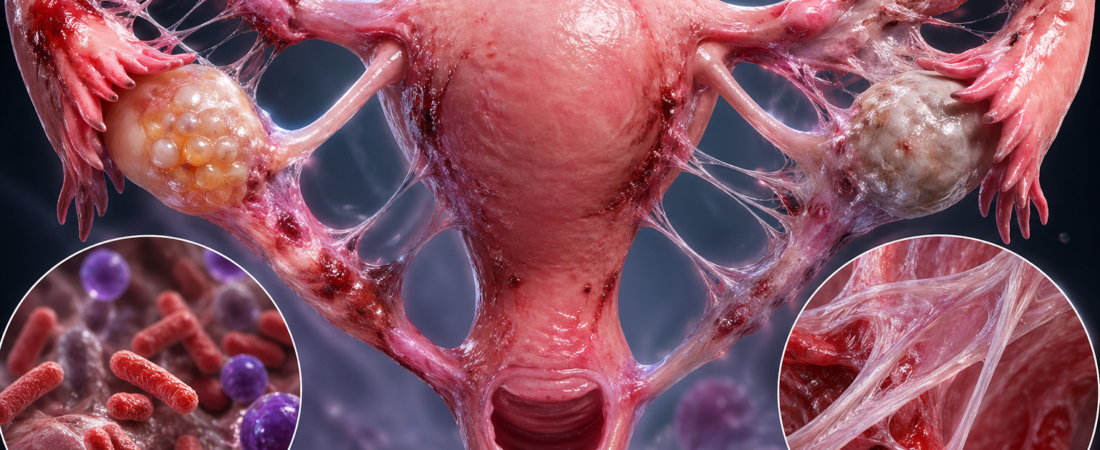
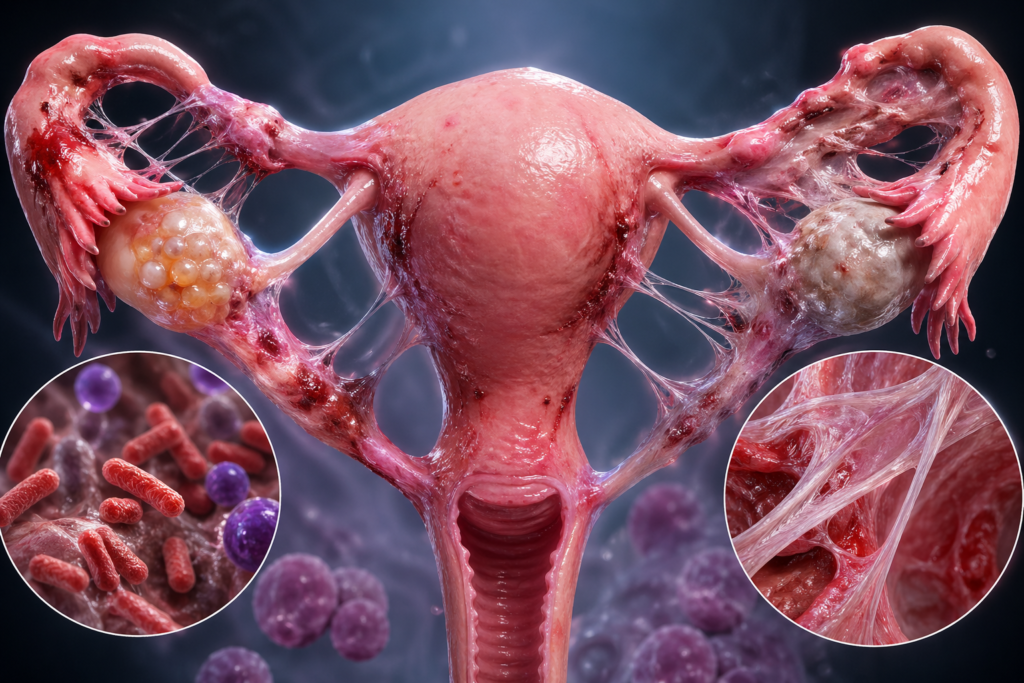
The moment you assume safety because you lack symptoms, it may already be too late. In modern reproductive medicine, Pelvic Inflammatory Disease (PID) is no longer categorized merely as an acute infection. It is being redefined as a “silent fertility-destroying disease,” characterized by chronic inflammation, microbial dysbiosis, and antibiotic resistance that quietly dismantles reproductive function.
The Catastrophe of Repetition The most critical danger lies in recurrence. A single bout of inflammation may leave microscopic damage on the fallopian tubes, but two or three consecutive episodes often lead to a catastrophic loss of both structure and function. Even if the tubes appear “open” in imaging tests, the delicate cilia responsible for transporting the embryo can be permanently paralyzed. This explains the rising clinical paradox: patients who appear normal on standard diagnostic tests yet struggle indefinitely with infertility.
The Evolution of Pathology The etiology of PID has shifted. Once attributed to specific, identifiable pathogens, today’s cases frequently present as “polymicrobial infections,” where multiple microorganisms work in tandem. This microbial landscape—a breakdown of the natural vaginal balance—is becoming increasingly complex. Furthermore, rising antibiotic resistance means that inflammation lingers longer, and the longer the infection persists, the deeper the structural scarring in the fallopian tubes.
The Parallel Threat: Endometriosis PID is not the only culprit. Endometriosis, a non-infectious inflammatory condition, acts as a parallel threat. Whether the inflammation is triggered by infection (PID) or by the cyclical shedding and bleeding of ectopic endometrial tissue, the results converge: the environment necessary for embryo implantation is systematically dismantled. Adhesions distort the anatomy of the ovaries and tubes, creating a chronic inflammatory climate where embryos fail to take root, regardless of tubal patency.
The Latent Progression A disturbing clinical trend has emerged: cases of mild, symptomatic PID are declining, while cases of severe, hospitalization-requiring PID are on the rise. Because initial symptoms are often subtle or ignored, patients miss the window for early intervention. During this silent progression, the fallopian tubes sustain cumulative, irreversible damage.
Infertility following PID is not caused by one single mechanism but by a triad of failure:
- Structural Damage: Adhesions and tubal deformation.
- Functional Impairment: Loss of ciliary transport ability.
- Environmental Disruption: Chronic inflammation that alters the endometrial receptivity.
The Physician’s Warning: Treatment vs. Recovery Veteran fertility specialists offer a sobering perspective: “Pelvic Inflammatory Disease is treatable, but the damage it leaves behind is often permanent. Antibiotics can stop the infection, but they cannot restore a destroyed fallopian tube.”
Ultimately, the outcome of this disease is determined not by the treatment itself, but by the “timing of discovery.” PID begins silently, progresses quietly, and reveals its impact only in the devastating moment when a patient finds they cannot conceive.
Sources: CDC STD Treatment Guidelines (PID); NIH/NCBI pathophysiological analysis; ASRM guidelines on endometriosis; Human Reproduction Update.
Disclaimer: This content is provided for informational purposes, based on reporting on public health and clinical research. Medical judgments and treatment decisions must always be made in consultation with professional medical personnel. Image: AI-generated (ChatGPT, OpenAI) / Visual reference for illustrative purposes only.